








DIAMOND BLOG

Triple X Diamonds: What are triple excellent diamonds?
by Diana Jarrett, Content Writer
With so much money at stake today, getting it right the first time when shopping for diamonds is paramount for jewelry consumers. Serious diamond collectors may hear the expression Triple X Diamonds to describe an elite group of expertly polished stones.
Triple cut diamond, triple x diamond, triple excellent diamond, triple diamond chart—are you getting confused yet? Even without knowing all the insider’s language, buying a diamond can be intimidating until you learn what the language means. We’re here to sort it out for you and arm you with straight talk to put you in control when diamond shopping.
You can’t know all the ins and outs of diamond quality but you can learn the intricacies of shopping for diamonds—then make your own informed decision. Sound good? Let’s go.
Did you recently go shopping for a diamond? Did the salesperson bring up terms like triple x, triple ex diamond or even a bit more confusing triple diamond chart? While these inter-exchangeable terms all revert back to the modern concept of triple x diamonds---and there’s so much to learn about it.
While it’s a trade term, consumers are beginning to hear it referenced when examining a superb diamond. And as a trade word, you may occasionally hear the phrase triple cut diamonds. It means the same thing. If you hear triple excellent, or even triple ex-diamond, don’t let these throw you off. They are essentially the same expression. Now you know.
Exploring Triple Excellent Diamonds
But what does triple X diamonds mean in plain language to the consumer? The expression Triple X Diamond refers to a stone with excellent cut, polish, and symmetry –hence the triple X ranking. These traits will appear on the GIA diamond report—however GIA does not use that exact terminology—they simply state the ranking of those traits.
LEIBISH 5.20 carat, F Diamond, Round Shape, SI2 Clarity, GIA Triple Excellent
A Journey into Grading
More importantly, does it actually matter that a stone has Triple X rankings? You bet! The more excellent the cut and so on, the better the stone looks. It will have superior brilliance, scintillation, and dispersion. Those aspects of a diamond allow the stone to exhibit a superb light show—and sparkle far across the room as it’s being worn.
Significance of Triple X
So while you don’t see that terminology on a GIA diamond certificate, if you’re being shown a diamond in a retail setting, you will want to know what this means—since the salesperson will likely mention it when showing you a top-notch diamond. Triple X lays it all out for you, so whether you remember all the subtleties of the Triple X diamond grade or not—you can have assurance of getting a superb stone.
Beyond the Grading—The Nuances of Brilliance
Let’s examine things one at a time to better understand this trio of quality factors. After all, you’ll discover so many contributors to brilliance—and each one plays a role. Together, this nuanced array of quality factors adds up to one brilliant diamond.
Impact of Cut on Appearance
CUT:
This aspect of a diamond is considered to be its most crucial trait, because the cut determines the stone’s proportions —both its depth and each of the angles of its facets. A well proportioned diamond cut will allow the stone to exhibit the greatest amount of sparkle. It’s taken centuries for diamond polishers to understand the effect of cutting on a diamond’s brilliance. So diamond polishing and shaping has evolved continually over time to where it is today.
Smooth Surfaces and Crisp Light
The Triple Excellent diamond ranking assures the consumer of the most polished smooth surfaces possible on each facet. The result? Crisp light bouncing off every facet back to the eye.
This in turn is key to how light bounces around inside a diamond before returning to the eye. Poorly cut diamonds allow much of the light to leak out of the back or sides of the stone causing a dull look to the diamond.
LEIBISH 3 Stone Round White and Fancy Intense Yellow Diamond Halo Ring - Excellent Cut
Misconceptions and Pitfalls
There’s myth and then there’s reality when it comes to diamond quality. By learning what the top traits are in diamonds, you can aim for the moon.
Myth vs Reality
Some diamonds, while not earning a rating of Triple Excellent Diamond, are beautiful stones, because they possess many of the characteristics that fall into the Triple X category. So, don’t disregard a diamond automatically because you don’t see that Triple X ranking. Study it, get familiar with it and let your own judgement direct your decisions.
Pitfalls of solely relying on Triple X
But realistically, you may come across a diamond that doesn’t fall exactly in the Triple X diamond niche—but it’s gorgeous. And that’s fine. When you’re happy with your diamond selection, you’re more likely to enjoy its unique traits that make it all yours.
But back to our Triple X diamond line-up. We’re talking cut here---take a look.
An Excellent cut grade means that a diamond has been cut within certain pre-assigned parameters which in turn allows the diamond to give off its most intense brightness, sparkle, and fire. It also ensures the stone will have an even pattern of light and dark areas that are critical to its dazzle. Poorly cut diamonds, by contrast, may be observed having excessively large light or dark areas that make a stone appear dull or without ‘bounce’ as it is called.
What about symmetry, then? Aren’t all diamonds completely symmetrical to their desired shape? Not so much, experts say. Much of the polishing is done by hand, and that’s where human error or negligence can come in.
SYMMETRY:
Symmetry is an explanation of the exactness of a diamond’s intended shape. It can be round, called a Round Brilliant, or oval, or any of the other fancy shapes that are popular today.
So symmetry refers to several things that ultimately impacts its overall appeal. For example, when gauging symmetry, the expert looks for how well-aligned every one of the facets are and how identical the same types of facets are in shape, angle to each other and so on. This is a big concern as symmetry impacts the shape and proportion In a diamond.
With a stone displaying excellent symmetry, all of its facets should meet precisely at the girdle (the widest part of the stone that encircles it in the middle when viewed from the side angle).
And looking at the points of the kite-shaped facets appearing on the crown (top of the diamond when viewed in a setting) should align with those points of the wedge-shaped facets on the pavilion side of the stone. This is the bottom portion of the diamond most often hidden by the mounting.
Looking at the large table facet appearing in the center of the stone, with excellent symmetry, it should be centered perfectly. Examining the pavilion side of the diamond, one should observe facets on the bottom meeting in a perfectly centered point at the underside tip of the diamond.
LEIBISH Extraordinary Fancy Deep Brown Yellow Pear Shape Halo Diamond Earrings - Excellent Symmetry
What effect does all this complex data have on the diamond? A stone graded as having excellent symmetry greatly enhances the diamond’s light return (the light returning to the eye after it has entered the stone). Without understanding why for the novice, excellent symmetry makes a diamond appear more harmonious and perfectly balanced to the eye.
Let’s move on to the last of this trio of these Triple X diamond quality factors.
POLISH:
Focusing on the diamond’s polish grade includes assessing the quality of a diamond’s finish on each of the facets. That means how smoothly (or not) the surface of a diamond has been polished. That’s a difficult task for even the expert polisher to accomplish and some polishers don’t go the extra mile of creating a polish that appears completely smooth under a microscope or jeweler’s loupe.
A diamond graded as “excellent polish” exhibits no polish defects visible at 10× magnification which is the jeweler’s loupe. During the polishing process, minute surface defects, including pits and polish lines, are actually often created by the polishing wheel during the polishing process itself. So they need thorough scrutiny before being considered completely done.
These tiny imperfections can often be removed through another step of re-polishing. Keep in mind that we’re talking about microscopic imperfections that are usually invisible to the unaided eye. On the other hand, a conscientious polisher wants to remove these since having these surface defects will dim the brightness and sparkle of the diamond.
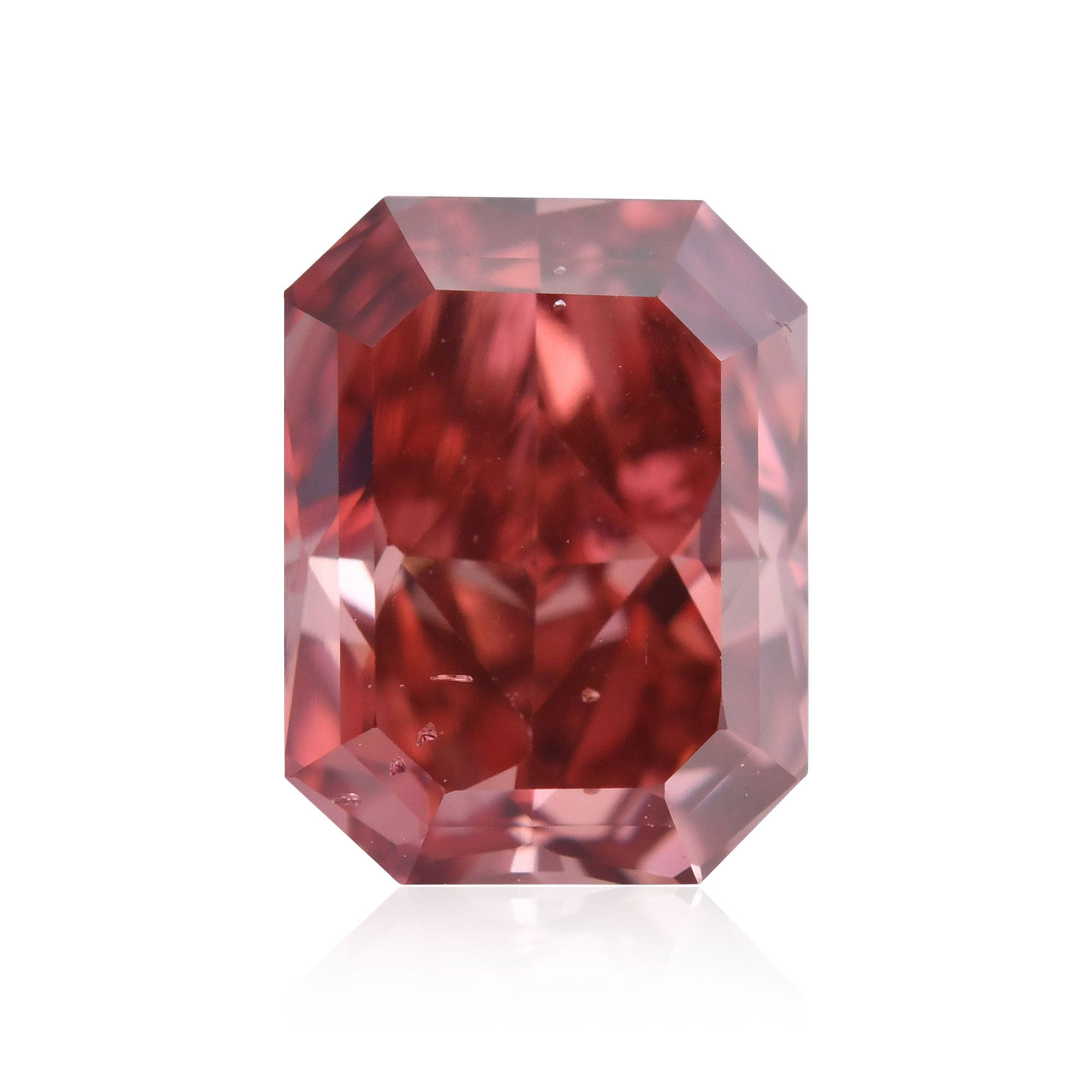
LEIBISH Extraordinary Fancy Light Pink Brown Radiant Diamond Side Stone Ring - Excellent Polish
When visualizing polish on a diamond, think of that stone’s many facets to function as mirrors. The smoother the polished surface, the greater will be the stone’s reflection. A diamond gathers light through its facets which operate like mirrors from all directions by the observer. A diamond having the perfect proportions and exacting symmetry turn that diamond into a dazzling light show. The viewer may not be able to articulate just why the stone looks so brilliant, but he or she can certainly see the results of such expert work. These are stones which display fire and outstanding scintillation.
Factors Beyond Grading
Fluorescence Considerations
The Triple X Diamond ranking is but one of several factors to consider when looking for that all important diamond to cherish. Other elements, like fluorescence for example can impact the appearance of your diamond.
When a diamond is subjected to UV lighting can have specific responses. Perhaps some 25-35% of all natural diamonds will show some reaction under this light. But is it bad or good? There are two camps of thinking. Some say it makes the stone look sleepy especially if it has a strong fluorescent reaction. But others remark that it can also help a lower color diamond appear more white! That’s what we want.
Proportions Matter
Outside of the Triple X consideration there are other things you may be drawn to or rather not have. Proportions are sometimes a personal thing. With emerald cut diamonds, or pear shaped stones for instance, there is a range of proportions. Some stones are more elongated and certain shoppers love that. Some prefer ratios of length to width that are ‘chubbier’ so to speak. The only way to see what you like is to look at several and then form your own opinion.
These qualities may seem complex to understand at first. And you may ask yourself, does it really matter to me? Do I ‘need’ a Triple X Diamond? While the only person who can answer that question is the consumer there are a few things to help make the decision.
Choosing the Right Triple X Diamond
A diamond engagement ring is the most cherished piece of jewelry a woman will have for her entire life. There is so much sentiment attached to this diamond---commitment, love and a sense of forever more. When viewed in this context, while a Triple X diamond will cost somewhat more than lesser grade diamonds, the extra cost seems to pale when considering this diamond will be enjoyed daily for the rest of her life. A beautiful diamond tells the story of a couple’s love for one another which is also a thing of beauty to behold.
LEIBISH 0.51 carat, Fancy Purplish Pink Diamond, Round Shape, SI1 Clarity, Triple X GIA
Vendor Selection
How rare are Triple X diamonds? You might be surprised to learn that in today’s diamond landscape they are not as rare as you would think. We mentioned earlier that diamond cutting evolved over the centuries to become the sparkly jewels we love today. By going to a reputable vendor you’re free to ask to see several diamonds—in different qualities and shapes. Your opinion is formed after looking at many options—so the more inventory the vendor has, the better it is for your ultimate choice.
Knowledge is power we know. So armed with this information, you can embark on a search for the diamond of your dreams, and not be caught off guard by the jargon of the business. You’re in charge here and you should be able to get the best quality diamond within your budget—then you’ll know you have a treasure to be proud of for years.
Consider Additional Performance Reports
Did you know some diamonds carry more than one diamond certificate? Or the vendor may not utilize GIA diamond certificates at all. They may utilize the services of other reputable labs to grade their stones. That’s fine. Take a look at the performance report and inspect it for the quality components that you care about most of all.
Conclusion
The Triple X diamond cut is the one to go for—being all other factors are equal. This means that you can rely on a superior cut when your diamond has a Triple X ranking. But you need to take a holistic approach. Examining the entire stone for its clarity and color also has great value to you. Do you like the stone you’re considering? Does it stand out for you? These are valid questions only you can answer.
So don’t rush to purchase. Now that you’re more aware of what goes on with diamond polishing and the effects each of these factors have on the overall beauty of the stone, your eye is definitely more trained for the subtle aspects of diamond perfection.
When you’re at the sales counter looking at diamonds, take your time, and ask yourself, do I love this stone—compared to the others in this tray? Is there a stand-out quality about a diamond that catches your eye? Some experts claim that diamonds ‘speak to the customer’ telling them which one to select. We think that’s probably true. After inspecting a few in your price range, you’ll narrow it down to one or two that really stand out for you.
Don’t be afraid to ask questions other than if the stone is a Triple X. Things like fluorescence, clarity and its color grade are all important. While knowledge is power—and there’s no denying that---we also know that your heart will lead you to the perfect diamond for you.

Diamond Cleaning Techniques: How to Clean Diamonds at Home?
by Benji, Content Manager
By now the 4 ‘C’s associated with selecting a diamond – Cut, Color, Clarity, and Carat – should have become entrenched in the minds of consumers as the factors to consider when purchasing a diamond. However, selecting the perfect stone is only three quarters of the pie. In order to complete the circle, you need to know how to care for your purchase, including diamond cleaning.
You have finally taken the plunge and bought that fancy color diamond that had your name written all over it – what now? The color of a fancy color diamond will never fade; however, over time, if you do not care for your diamond in an appropriate manner, it will detract from its luster and shine. After all, the defining characteristic of a fancy color diamond is its color. Should dirt, grit, or grime enter the setting or rest on the stone itself, it can diminish from the stone’s brilliance.
Diamond jewelry worn on the body will attract dirt from the environment and from your body. A diamond ring or bracelet has the highest probability of being knocked about and attracting debris as it is worn on the hand. A diamond pendant faces less risk of abuse.
Diamonds are made to be worn and there is no need to change your behavior because you are wearing a diamond, as diamonds are one the hardest minerals in the world and are virtually scratchproof.
For diamond cleaning, it is recommended to have it professionally cleaned by a jeweler once or twice a year. Jewelers may clean diamond jewelry with steam or ultrasonically. However, it is possible to obtain excellent results at home with the following easy to find accessories – a jewelry cloth, a jewelry brush, and cleaning solution.
The Materials
Use a jewelry cloth to wipe the diamond clean before and after cleaning. A flannel cloth or piece of cotton can be substituted for a jewelry cloth.
The jewelry brush is used to scrub the diamond and setting of debris. A soft-bristled toothbrush can be substituted for a jewelry brush.
Gently cleaning the diamond with a jewelry cloth
The diamond cleaning solution helps to loosen the minerals and dirt from the diamond jewelry. Dishwashing liquid, window cleaning solution and ammonia can be used for making your own cleaning solution.
The Diamond Cleaning Process
Before cleaning, ensure diamond jewelry is secure in its setting. You do not need to be an expert to feel if a stone is loose. If a stone is loose, place the jewelry in its jewelry pouch or box and take it as soon as possible to a jeweler you trust to be repaired. If all diamonds are secure, remove any hair or dust and run the jewelry under a tap for a few seconds.
At this stage, diamond jewelry and loose diamonds are cleaned in different solutions. Clean diamond jewelry in hot water with a detergent free soap, such as dishwashing liquid. Loose diamonds should be cleaned in warm water with a solution of 3 parts water to one part ammonia. Window cleaning solution contains a similar formulation and can be used just as effectively. It is best not to let ammonia come in contact with metals as it can damage their color.
Let the diamond soak in the cleaning solution for 3-5 minutes to help loosen the dirt
Soak jewelry and loose diamonds for 3-5 minutes and then scrub with the brush. Repeat this process 2-3 times. Then dry with the jewelry cloth.
Finally, store your diamonds or jewelry properly. It is best to store diamonds in a soft cloth jewelry pouch or its presentation box.
Store the diamond jewelry in its original packing box
Caring for your diamonds, and in particular cleaning them, should not be a chore. Use the opportunity as a chance to “bond” with and rediscover your diamonds. And although cleanliness does not affect a diamond’s market value, it usually affects the stone’s value in the eye of the beholder.
How to clean diamond jewelry at home?
Cleaning diamond jewelry at home requires gentle care to maintain its sparkle and brilliance. Here are some tips for the best way to clean diamonds.
Tips for cleaning diamond necklace at home
Fill a bowl with warm water and mild dish soap.
Soak the necklace for 20-30 minutes.
Use a soft-bristled toothbrush to gently scrub the necklace, paying attention to intricate areas.
Rinse thoroughly with clean water and pat dry with a soft cloth.
Tips for cleaning diamond chain at home
Mix warm water with a few drops of mild dish soap in a bowl.
Soak the diamond chain for 15-20 minutes.
Gently scrub the chain with a soft-bristled toothbrush.
Rinse with clean water and dry with a soft cloth.
Tips for cleaning diamond earrings at home
Create a diamond cleaning solution of warm water and mild dish soap.
Soak the earrings for 10-15 minutes.
Use a soft-bristled toothbrush for diamond cleaning.
Rinse well with water and dry gently with a soft cloth.
Tips for cleaning diamond rings at home
Prepare a mixture of warm water and mild dish soap.
Soak the diamond ring for 15-20 minutes.
Use a soft toothbrush to clean the diamonds and setting gently.
Rinse thoroughly with clean water and dry with a soft cloth.
Tips for cleaning diamond watch at home
Dampen a soft cloth with warm water and mild soap.
Gently wipe the diamond watch with the cloth, focusing on the diamonds and metal parts.
Use a soft-bristled toothbrush to remove dirt and grime.
Rinse with a damp cloth and dry with a soft, lint-free cloth.

Where do Colored Diamonds Come From? Yellow, Blue, Pink, Black, Brown, Green and Red
by Benji, Content Manager
Natural fancy color diamonds are not only stunning, but also incredibly rare. In fact, only one of every 10,000 diamond carats that are mined is that of a color diamond. Though they are few in comparison to their colorless counterparts, color diamonds are found in nearly every corner of the globe.Read about the most frequently asked questions about colored diamonds.
From Australia to Africa to Siberia and India, color diamonds are mined all around the world. Here is a breakdown of the various countries where different color diamonds are found and a little information regarding the mines responsible for uncovering them.
Yellow Diamonds
Let us begin with one of the more commonly found color diamonds: the yellow diamond.
The different color intensities of natural yellow diamonds
This joyous colored stone is found primarily in Africa, including Angola, Central Africa, Congo, and Sierra Leone. Additionally, where are yellow diamonds found? They have been discovered in Brazil, Australia, and Borneo. The Ellendale mine in Australia was known to produce about half of yellow stones in the market, but it appears they are no longer operating this year since they suspended operations back in July 2015.
LEIBISH Yellow Diamond Rings
Mostly cape diamonds and low grade colorless stones are found in Angola, but every once in a while the news comes in of a pure yellow diamond discovery of something with a significant size. Central Africa produces very few diamonds, but among those stones are some yellow rough. The Congo is a great example of how more does not necessarily mean better. The country produces a great deal of diamonds, but most of them are low-grade industrial stones.However, every now and then, important finds are made such as yellow diamonds with a strong hue, and even orange and brown diamonds.Lastly, Sierra Leone's diamond production is an essential part of the country's economy. With an annual production average of over 400,000 carats, more than half of that number (over 200,000 carats) was considered gem quality. That is an astronomical percentage. In fact, Sierra Leone is such an important player in the yellow diamond industry that one of its mines, the Zimmi mine, coined the term 'Zimmi Yellow,' after having produced some of the most extraordinary vivid yellow diamonds with the highest levels of saturation on the planet. Borneo mostly has yellow and brown diamonds, and Brazil finds plenty of yellows and browns as well, but has a reputation for producing lower quality stones.
Pink Diamonds
Pink diamonds do not need any introduction, as they are extremely popular and loved by all due to their unique soft hue. But where do pink diamonds come from?
The different color intensities of natural pink diamonds
It is believed that roughly 90% of the world's pink diamonds are found in Australia, in the famous Argyle mine. That mine, however, produces other diamonds as well and yet is mainly known for its pink stones.Borneo, Brazil, and sometimes Central Africa are also known to produce the beloved pink gemstone. Borneo mainly produces brown and yellow diamonds but can also occasionally produce green, pink, and blue diamonds. Brazil also mainly produces brown and yellow diamonds, but their stones are known to have a florescence that gives the diamonds a greenish color. In addition to the more commonly found brown and yellow diamonds, Brazil sometimes produces very rare red, green, blue, and intense pink diamonds. The main types of diamonds found in Central Africa are yellow and black diamonds. However, sometimes there are rare pink, blue, and green diamond finds.
Blue Diamonds
The Argyle mine in Australia may be famous for its pink diamonds, but the mine also produces a fair number of smaller blue diamonds.
The different color intensities of natural blue diamonds
Blue diamonds are not often found in Borneo, but can be some of the rarer Borneo diamond finds. Brazil and Central Africa also don't generally produce blue diamonds, but when they do, are known to produce noteworthy blue diamonds.Now, where does blue diamonds come from? Though India is not well known for its blue diamond findings or its mines, it is the country responsible for two of the most famous diamonds in the world: the Hope Diamond and the Wittelsbach-Graff Diamond.South Africa is home to the Culinan mine (owned by Petra Diamonds), previously the Premier mine, the most important producer of high quality natural blue diamonds in the world. Known for its diamond production in general, South Africa is now almost synonymous with fancy blue diamonds.
Orange Diamonds
The uniquely colored diamonds are found in Congo, which is mostly known for producing low-grade diamonds, but can also produce deep yellows, oranges, browns, and combinations of the three colors, here and there.
The different color intensities of natural Orange diamonds
Brown Diamonds
Another commonly found color diamond; where is diamond brown from ? Brown diamonds are mined in Angola, Borneo, Brazil, Congo, and Australia.
The different color intensities of natural brown diamonds
In Borneo and Brazil, brown diamonds are some the most commonly mined diamonds whereas in Angola and Congo brown diamonds are considered rare finds. Australia, or the Argyle mine for that matter, is famous for its pink diamonds but actually supplies the world with a great deal of its champagne brown diamonds.
Purple Diamonds
Aside from its famed pink diamonds, the Argyle mine in Australia is known to produce a great deal of brown diamonds, as well blue, red, and even purple diamonds. However, the winner of the "main purple diamond producer" title goes to Siberia.
The beautiful and rare natural purple diamonds
Green Diamonds
Where do green diamonds come from? Green diamonds, renowned for their rare and captivating hue, originate from select regions across the globe.Among the notable sources, the majority of green diamonds are mined in countries such as Brazil, Australia, and South Africa. Brazil, known for its diverse range of colored diamonds, yields some remarkable green specimens. Similarly, Australia, despite its fame for pink and champagne brown diamonds from the Argyle mine, also produces a notable quantity of green diamonds. South Africa, with its rich diamond mining history, contributes significantly to the green diamond market, albeit with fewer occurrences compared to other hues.
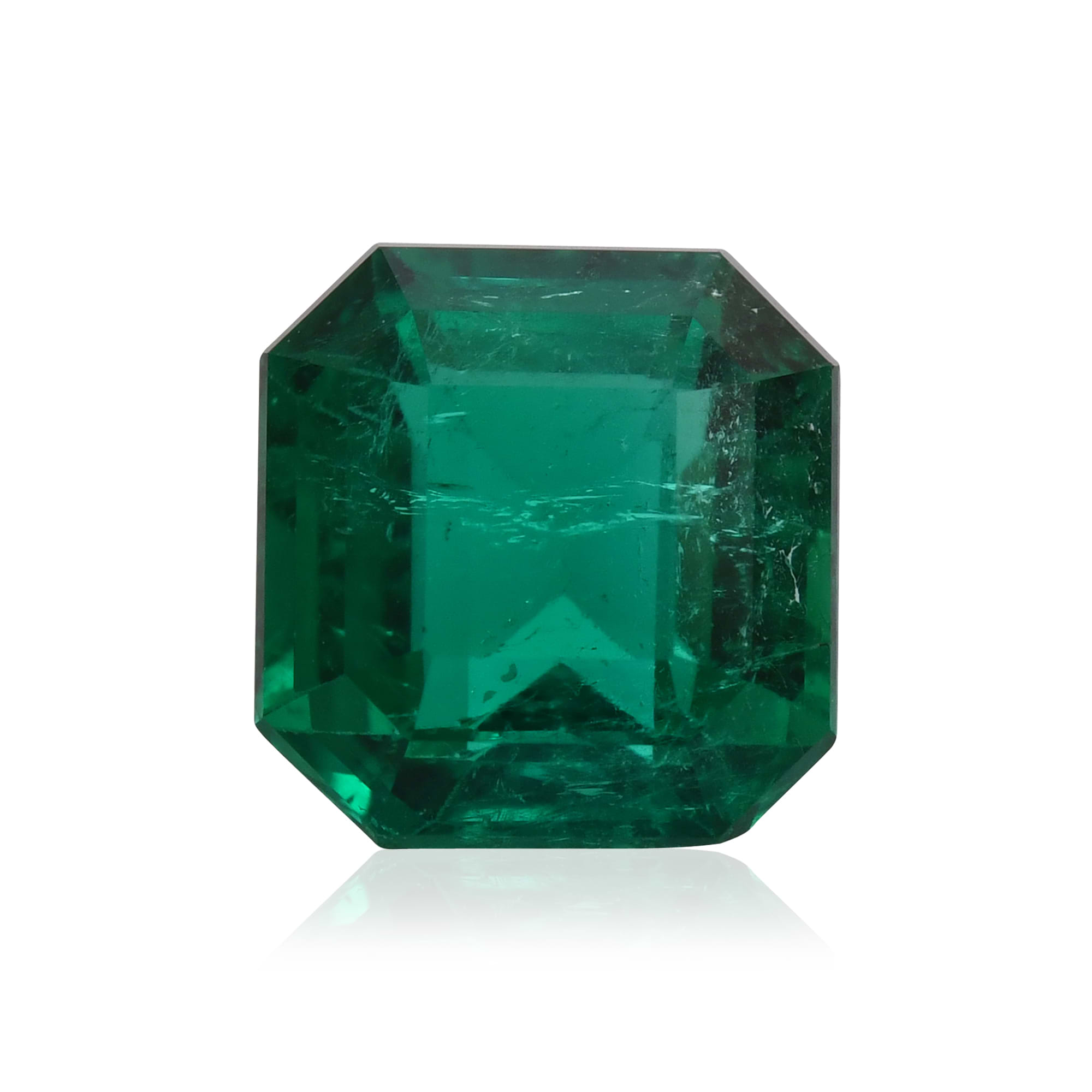
LEIBISH 0.50 carat, Fancy Deep Green Diamond, Cushion Shape
Red Diamonds
Red diamonds, among the rarest and most coveted of all colored diamonds, are sourced from only a handful of locations globally. The majority of red diamonds are discovered in the Argyle mine in Australia, known for its production of pink diamonds as well. However, red diamonds from the Argyle mine are exceptionally rare, comprising only a minute fraction of its output.Other notable sources include mines in Brazil and South Africa, although occurrences of red diamonds in these regions are sporadic. Due to their extreme rarity, red diamonds command astronomical prices in the market and are highly sought after by collectors and enthusiasts alike. This begs the question: where are red diamonds found?
LEIBISH Fancy Red Diamond
Black Diamonds
If you are wondering where do black diamonds come from, they are mainly found in Central Africa, which doesn't have a big diamond production to begin with. Most of its production is black diamonds and yellow diamonds, but pink, green, and blue diamonds have been found there as well.
Natural black diamonds
The origins of the main color diamond colors have accounted for almost every continent, but there are also diamonds found in less common locations such as Canada and the United States. That accounts for six of the seven continents, which says a whole lot.Given the fact that the various diamond colors are caused by a variety of natural elements and factors, it is understandable that each type is typically found in certain regions. Every region has its own type of 'material,' which essentially refers to the compound elements most common in the ground of that area. With the diamond supply at currently operating mines in a state of decline, it is possible that the constant search for additional diamond deposits will result in even more color diamond locations.

Diamonds vs Amethysts: Rarity, Value, Color, Durability
by Benji, Content Manager
As February comes to an end, why not take a look at this month’s birthstone: the amethyst. Many of us are not familiar with all of the birthstones, aside from the most precious ones such as diamonds, rubies, and emeralds. However, the remaining birthstones have much beauty to offer, including the amethyst. The stone’s coloring is purplish, though the shades can vary greatly. Purples, reds, and violets are warm colors, quite suitable for the winter month. Though an amethyst is no diamond, it is still a beautiful gem and looks great combined with colored or white diamonds.
The amethyst is a type of quartz with a violet hue. There was a Greek myth that amethysts were able to keep drunkenness away and was therefore worn as an amulet around the neck in order to prevent intoxication. For the same reason, amethyst goblets were used for drinking alcoholic beverages.
Iron impurities are what cause the purple coloring. Most amethyst stones found today come from Brazil and Uruguay. Before these amethyst locations were discovered, Sri Lanka, India, Germany, and Russia were the primary sources for the amethyst quartz.
LEIBISH 33.04 carat, Amethyst, Radiant Shape
Amethyst change color when heated. An amethyst can take on a bright yellow or brownish-red after being heated to a temperature of only 250 degrees. Since the stone is so sensitive to heat, amethyst jewelry should not be worn in direct sunlight.
In contrast to diamonds, amethysts have actually decreased in value. The famous amethyst bracelet belonging to Queen Charlotte of England at the beginning of the 18th century was valued at 2,000 pounds sterling. Two hundred years later, the bracelet was only worth 100 pounds. The decline in price is related to the discovery of amethyst in abundance. An amethyst can also vary greatly in price based on its quality. Nevertheless, amethysts are gorgeous stones, especially when set against diamonds. The result is so spectacular that synthetic imitations are always attempted.
Though traditionally diamonds are used for engagement rings, an amethyst can be used as the center stone to reduce the cost, and diamonds used as secondary stones. Otherwise, an amethyst ring surrounded by diamonds can be a terrific gift. Amethysts look great on bracelets and necklaces as well. A line of white diamonds around the amethyst can help showcase the stone’s color, or alternatively, a variety of purple diamonds can be used. The combination of the gemstones used is spectacular.
LEIBISH Amethyst & Diamond Oval Drop Earrings
Rarity and Value
Diamonds are renowned for their rarity and value, often fetching high prices due to their scarcity and popularity in jewelry. On the other hand, Amethyst, while not as rare as diamonds, still holds significant value, especially in its finer qualities.When considering the rarity factor, the comparison between a purple diamond vs amethyst reveals that while purple diamonds are exceptionally rare and consequently command high prices, amethysts, particularly those with deep, vibrant hues, remain relatively more affordable and attainable for many.While amethysts are generally more affordable than diamonds, the worth of an amethyst can vary depending on factors such as size, color intensity, and clarity. So, are amethysts expensive? It depends on various factors, but generally speaking, they are more accessible to a wider range of consumers compared to diamonds.
Color and Appearance
Diamonds come in a range of colors, but the most sought-after and valuable are typically colorless or near-colorless. However, purple diamonds, while rare, exhibit a captivating hue that rivals that of amethysts.Amethysts, on the other hand, are prized for their distinct purple color, ranging from pale lilac to deep violet. What colors does amethyst come in? The spectrum of colors in which amethysts can appear is fascinating; while the most prized are those with deep purple shades, they can also occur in lighter tones, including pinkish-purple and reddish-purple variations. This diversity in color adds to their allure and versatility in jewelry design.
LEIBISH Amethyst briolette, Iolite and Diamond Pendant
Symbolism and Meaning
Diamonds are often associated with purity, strength, and eternal love, making them a popular choice for engagement rings and other romantic jewelry.
Amethysts, on the other hand, carry a different symbolism. They are often linked to spirituality, wisdom, and clarity of mind. As the birthstone for February, amethysts are believed to promote inner peace and balance, making them a meaningful choice for those seeking spiritual alignment and serenity.
Durability and Maintenance Diamonds are renowned for their exceptional hardness, ranking as the hardest natural material known. Amethysts, while not as hard as diamonds, still boast good durability, suitable for use in jewelry with proper care. However, they may be more prone to scratches and damage compared to diamonds, so regular maintenance and care are important to preserve their beauty over time.While amethysts do not typically change color, exposure to extreme heat or sunlight can sometimes cause fading or alteration in hue.
Whether you or your loved one has a February birthday, or you just like shades of purple and violet, an amethyst can be a fine addition to a piece of jewelry as well as to your jewelry collection. If you are looking for a stone to combine those colored diamonds with, this may be it.
LEIBISH Fancy Deep Pinkish Purple Diamond

4 Essential Tips On How To Photograph Your Diamonds
by Benji, Content Manager
Achieving a quality photo of a diamond that will show it off in all of its glory takes quite a bit of skill, knowledge, talent – and practice. There is a noticeable difference between a picture taken by a professional and one snapped by an unseasoned amateur. Here are some tips from our diamond photographer for capturing a diamond in the best light, highlighting its undeniable and all-around beauty.
The various different color intensities of natural fancy pink diamonds
Sharpness
In order to capture the true essence of a diamond (check out the photography in our diamond catalog) or a piece of jewelry (check out the photography in our jewelry catalog) from a technical standpoint, a sharp, crisp focus is needed. The best way to achieve this on a digital camera is by putting the camera on the “spot focus” mode. This way you can control in the most precise way what the camera is aimed at. However, this trick will only get you so far when the subject of the picture is a small stone. For even better results, a camera with a quality manual focus capability is needed.
LEIBISH's Diamond Photographer Capturing the Purple Orchid Diamond
Lighting
Diamonds photograph best in soft lighting. This means no on-camera flash, which will not only lead to overly lit photos, but it will also cast shadows in the pictures. Continuous diffuse lighting works best for diamond photo sessions.
Stability
Getting a great, focused image of a product is critical, so you will want to make sure it won’t move at all while photographing it. In addition, you will often find yourself looking for a shot with the jewelry piece placed in a somewhat awkward position, where there is no way it will stand on its own. Therefore, familiarize yourself with prop wax!
Using wax to connect multiple jewelry pieces
By using this product you can basically position the piece however you see fit and simply edit it out when cleaning the up the final picture.
Bulbs and Tripods
As mentioned before, soft, natural lighting works best for photographing diamonds. In terms of bulbs, daylight balanced compact fluorescent bulbs are ideal. These bulbs produce very little heat and can be left on for long periods of time without overheating. Additionally, using a tripod or other camera support is a must. A sturdy tripod is preferred, but anything really is better than no tripod at all.
Positioning
Have you ever heard the term ‘a picture is worth a thousand words.’ The angle from where the photograph is taken will show details about the piece that are almost impossible to explain with text. No matter how good the content writer may be, without an image, there are some things that will simply be missed. A good photograph with the right positioning can be the difference between selling an item and having it sit in the safe for a few years.
LEIBISH Fancy Intense Yellow Cushion Diamond Drop Pendant (3.99Ct TW)
Props for Contrast
Jewelry is special because each piece has a story to tell. When it comes to telling a story, sometimes all you need to do is be creative. As you can see in the images below, the photographer here combined the natural elements of the stone with beautiful plants or flowers of a similar color.
LEIBISH pair of Argyle Diamonds from the Tender 2017
Seeing Through the Diamonds
LEIBISH Yellow Diamond Ring photographed by Ben
Knowing the technical ropes of photography is key to a successful diamond photo, but it is not the only knowledge required for obtaining an honest diamond image. Understanding what a diamond is and what it does for us as emotional beings is crucial. This means feeling it, seeing it, and digesting what feelings it exudes. Diamonds evoke emotions in human beings.
Just like with art, the shapes, forms, and sparkles of diamond arouse sentiment and often stir up memories in anyone beholding their beauty. In a way that differs completely from other objects such as clothing or other fashion accessories, diamonds and jewelry pieces are there to represent one’s personality and heritage. The camera should pick up on this difference that sets every single stone apart from one another, for no two stones are exactly alike. As a result of the cut, the facets may reflect light differently. Therefore, there is a need to adjust the stone accordingly.
Editing
How you finish the photograph is sometimes just as important as the photograph itself. Through a good photography software tool, you can learn how to properly manipulate the colors of the image in order to contrast off of the lighting and effects within the image.
An unedited image next to an edited image
Another unedited image next to the edited photo
Just like anything in life, photographing diamonds takes practice, and lots of it. Even if one is a professional, shooting diamonds can be a challenge if it has never been attempted before. With the help of these tips, the rare and extraordinary stone can be appreciated and represented suitably in a two-dimensional version. Trial and error will eventually end with perfection.
Ben Yagbes - LEIBISH's Photographer

About Natural Fancy White Diamonds
by Benji, Content Manager
Natural Fancy White diamonds are beautiful opaque white colored diamonds. The term ‘white diamonds’ is often used by members of the trade and many others when referring to the standard transparent, colorless diamonds. However, they are not transparent and colorless like people mistakenly understand. Fancy White diamonds are the natural phenomenon of color diamonds that display a strong white face-up color.
LEIBISH 0.62 carat Fancy White heart shaped diamond
Colored diamonds are an anomaly in the natural world. Colorless diamonds outnumber color diamonds at a rate of about 10,000 to 1. Diamonds can come in many different naturally occurring colors, and the different colors occur due to different causes. White diamonds are diamonds that have a perceived color hue resembling white powder or refined sugar, and actually demonstrate an inherent opaque snow-white color. Unlike the characteristic cause in the rest of the colors of natural fancy color diamonds, the color white in fancy white diamonds is not the result of a compound element. They are actually colorless diamonds that contain a high concentration of submicroscopic inclusions that scatter light, yielding a distinctive frosty "milky" white face-up color. The nature of these submicroscopic inclusions is unknown, although they are thought to be the result of nitrogen within the diamond’s pure carbon structure.
LEIBISH 4.02 carat Fancy White diamond ring and fancy pink diamond halo
As White is a neutral color, Natural Fancy White Diamonds are not measured by their level of saturation but rather designated only as Fancy White. Fancy White diamonds are extremely clouded, and are not divided by degrees of clarity. Fancy white diamonds are quite difficult to find, although LEIBISH offers a selection in assorted shapes and carat weights.
LEIBISH 0.64 carat Fancy White diamond

Scott Disick Mourns Death of Parents a Year After Being Knighted
by Benji, Content Manager
One TV genre that is constantly dripping with jewels and lavish clothing is reality TV, and when it comes to reality TV, Keeping Up with the Kardashians and all of its franchises is the king. Recently, one of the main stars of the show, Kourtney’s boyfriend Scott Disick, experienced a double loss: his parents passed away just three short months apart at the young age of sixty-three. Scott is an only child unlike his girlfriend who is one of ten children (including step siblings.) His relationship with the Kardashians and the Jenners has not always been hunky dory, but rather, quite dramatic and controversial. Scott has gone from being knighted to becoming an orphan in a year and a half.
The Untimely Deaths
Unlike Kourtney’s family, Scott’s parents very much did not like being in the spotlight and thus never appeared in the many of episodes of the reality show. They found Hollywood life very daunting and intimidating and did not quite fit in to Kris Jenner’s world. Interestingly enough, their son Scott blended in just fine. Scott was crushed by the passing of his mother who died three months ago after a long battle with an illness. Now, once again, Lord Disick found himself in a New York cemetery burying yet another parent. The atmosphere was very somber with every guest fully aware of the tragedy’s significance. Though not a child, Scott is now left alone in this world without any immediate family.
Scott Gets Knighted
On one of the most memorable episodes of Keeping Up with the Kardashians, Scott and some fellow costars traveled to England where Scott became obsessed with royalty and adding a title to his name. Scott did end up being knighted, but not the way many think he did. The Queen of England was not after Scott Disick, insistent that the reality star become knighted. No, Scott bought himself the title, as can anyone with a credit card. Scott had his knighting ceremony at a pub called “The Mayflower” where he received the title “Lord.”
Scott’s strong and sometimes arrogant personality has many viewers either hating him or loving him, but this tragedy has already shown Scott’s softer side, as he is completely ripped to shreds. It is only a matter of time before Lord Disik returns to his old tricks, arguing with the lovely diamond-clad Kardashian ladies.

Rare Pink Diamonds – Size, Color, and Clarity
by Benji, Content Manager
Pink diamonds are among the rarest of all the colors of diamonds, but some of them are even rarer than others. In general, colored diamonds with more intense and purer hues are more valuable, but size plays an important role as well. However, it really gets exciting when several rare traits appear in merely one stone. Here is a look at what are considered the rarest types of pink diamonds.
Size
Just like colorless diamonds, the larger sized colored diamonds tend to stick out and become the rarest of that specific type. With colored diamonds it is even more uncommon to come across very large stones, particularly with pink diamonds. Therefore stones exceeding 20 or so carats are generally quite rare. If these diamonds display an intense color, they are all the more rare. Some pink diamonds of certain shapes do not even have to be that large to make them rare. The Williamson Pink, which now sits upon the Queen of England’s brooch, is a round brilliant 23.6-carat flawless pink diamond. It is one of the largest round pink diamonds in the world, along with the Martian Pink.
Color
Another aspect that contributes to the rarity of a pink diamond is its color and color intensity. These are two separate factors. The former refers to the purity of the color. After all, a pink diamond can be a pure pink, but it can also contain traces of other hues. Ideally, a diamond should be as pure colored as possible. The second trait refers to the intensity of the color. Two diamonds can both display a pure pink color, but one can be a dark, intense pink, while the other can be a very light, pale pink. The more intense the color in a diamond, the rarer and the more valuable the diamond becomes. The Graff Pink, for instance, is only 24.78 carats but has a Fancy Intense Pink color intensity. This is the third to highest color intensity level available for pink diamonds. The Steinmetz Pink, which will likely replace the Graff Pink as the most expensive pink diamond ever to be sold at auction, has the best of both worlds. It is large, an impressive oval-shaped 59.6-carat stone, cut down from over 100 carats in the rough, and has a Fancy Vivid Pink color, the second to highest color intensity level there is.
Pink Overtones
Clarity
Most people who know anything about color diamonds vs. colorless diamonds know that despite the importance of clarity in diamonds, color is the most important factor for color diamonds. Though this fact remains true, it is always a contributing factor when a diamond is also internally flawless. The Steinmetz Pink, in addition to being a very big and intensely colored stone, is also internally flawless. The Pink Orchid, a 22.84 purplish-pink diamond, the Pink Sunrise Diamond, and the Graff Pink Supreme, are all internally flawless diamonds. Aside from the first stone, which is certainly a groundbreaking diamond, the diamonds are not extraordinarily large or intensely colored. Rather, their superb clarity is their claim to fame.
Diamonds are complex items, and when you add the color element, it only complicates things further. Ideally, a truly rare pink diamond is one with the best qualities across all spectrums, and though some do come along from time to time, there is usually one spectacular component that makes a pink stone rare. Such diamonds are hard to come by and are therefore highly sought after. Unbelievable sums of money are shelled out in these circumstances and it can be quite astonishing for how much a pink diamond will be valued.
Argyle Diamonds
When it comes to rare color diamonds that speak directly to the woman’s heart – an automatic correlation is made with the Natural Pink Diamond. This passionate and extremely feminine colored stone has the second highest market demand next to Yellow Diamonds. Furthermore, now that certain colors such as Yellow and Pink have been making more of a mainstream appearance their beauty and mesmerizing appearance is admired worldwide by both diamond enthusiasts and the general public.
Different shapes and shades of Argyle pink color diamonds
Regardless of their origin, many Pink diamonds are extremely beautiful and have been used in couture jewelry designs for decades. However, along with their pleasant appearance, those of the Argyle diamond mine are also considered wise investment opportunities.
Emerald-cut Argyle Pink Diamonds
Pink Diamond Production
Josephine Johnson, manager of Rio Tinto's Argyle Pink Diamonds, said that they produce over 90% of the worlds Pink diamonds. Although, as a result of these diamonds being so rare, it isn't easy for even the most revered diamond retailers to get their hands on these stones. There are very few companies around the world, Leibish & Co. included, that hold a relatively large stock of Argyle Pink Diamonds. Furthermore, in comparison to their ‘regular’ inventory of Pink stones, the Argyle collections are usually far and few.
There is no question that even though only a handful of their diamond production is Pink, the Argyle Diamond mine produces most Pink diamonds in the market today. Other diamond mines around the world, such as those found in Brazil, Africa, Russia, and Canada, have produced less, but also the colors are not always as strong.
The Argyle Diamond Mine
Argyle diamonds are recognized worldwide to have a more potent, or vivid colors. Reports have been written that state Argyle diamonds are known to be harder than diamonds mines elsewhere, but this is rather difficult to confirm. Above all, the value of an Argyle Diamond can sometimes reach double or even more than some that are strikingly similar, but known to have an origin of another mine.
So what is so fantastic about Argyle diamonds, enough to make them so much more in demand than other pink stones? Well, their fantastic marketing power couldn't hurt!
Marketing Power
I ‘take my hat off’ to the Argyle mine for their impeccable marketing accomplishments over the past decade. The Argyle mine managed to brand their pink diamond name so well that having an Argyle certificate and inscription will almost double the value of an already expensive stone.
They also hold an annual Argyle Pink Diamond Tender which is known to produce the finest stones available in the market and prices that reach hundreds of thousands of dollars for diamonds less than two carats.
Furthermore, the Argyle Diamond mine developed their own pink diamond color grading scale that was quickly recognized worldwide. Specifically for a Pink diamond an Argyle certificate is considered just as prestigious than the well known GIA who grades millions of diamonds and precious stones each year.
The Argyle Diamond Mine marketed their own brand so well over the past 15 years that they now grade certain diamonds on their own according their own color grades
No one company can confirm with certainty that no other diamond mine will begin producing beautiful pinks in the future, but even if one was found today, it wouldn't take them approximately seven years until they were operational. What can be said with certainty is that as a result of fantastic marketing techniques and the magnificent material found, there is no doubt that Argyle Pink diamonds now retain the most value per carat.

Color Diamond Prices - The Value of Fancy Color Diamonds
by Benji, Content Manager
Everyone who knows of fancy color diamonds will agree that they are absolutely exquisite. When an image of say, a Fancy Vivid Blue is promoted on any of the most prominent social media platforms, the amount of shares and likes are phenomenal, and often more impressive than that of a white stone. Only, there are still many who are not even aware of their existence or fully understand how readily available colored diamonds are.
Furthermore, even those that have heard and even seen some of the rarest colored stones assume that they are far too rich for their budget.
Well, LEIBISH wants to be of the first to come out and tell them that they are mistaken!
Some color diamond are expensive, such as the one mentioned above. However, many others are affordable and some are surprisingly even less expensive than their colorless counterparts! The world of color is vast and the options available are almost endless. Consider the fact that color diamonds can be found in almost any size, they have different clarity grades, different shapes, different cuts, different color combinations, and multiple intensity grades. Each and every diamond characteristic directly affects the overall value of the stone. Hence, there are many strikingly beautiful stones that can be purchased for extremely competitive prices.
Fancy Color Diamonds
Depending on certain diamond characteristics, some of these stones come at an extremely high cost and are considered very luxurious pieces. Though, as a result of the many options such as color combinations, overtones, size, and more - the ability to price an affordable stone is there.
Breaking Down the Cost of Color Diamonds
As previously mentioned, each diamond characteristic will affect the value of the stone. However, especially with color diamonds, there are certain attributes that weigh in a lot more than the others.
The diamond color is by far the most important aspect of these stones. All 100% natural fancy color diamonds are already known as extremely rare natural resources. Therefore the more difficult it is to find the color or color combination, the higher the value of the stone will be.
The fact that comparing prices of fancy color diamonds is near-impossible is true. Two color diamonds with identical GIA reports can vary enormously in price, and the reality is that it is all in how good the diamond appears. Still, just so you understand the ballpark figures of color dimaonds, listed below is the approximate market value for high quality (VS+ clarity and a VG/VG+ make) 0.20 carat and 1.00 carat stones. Each color is listed at different intensity levels as well.
(Still, it is important to keep in mind that depending on many characteristics the prices can change quite drastically.)
Yellow 2012
Weight
Fancy Yellow
Fancy Intense Yellow
Fancy Vivid Yellow
0.20 ct
2,200 per carat
3,200 per carat
4,500 per carat
1.00 ct
5,500 per carat
7,500 per carat
13,000 per carat
Pink (not Argyle) - 2012
Weight
Fancy Pink
Fancy Intense Pink
Fancy Vivid Pink
0.20 ct
12,000 per carat
20,000 per carat
60,000 per carat
1.00 ct
90,000 per carat
180,000 per carat
400,000 per carat
Updated Pricing - 2015
Weight
Fancy Pink
Fancy Intense Pink
Fancy Vivid Pink
0.20 ct
14,000 per carat
24,000 per carat
75,000 per carat
1.00 ct
110,000 per carat
210,000 per carat
460,000 per carat
Blue - 2012
Weight
Fancy Blue
Fancy Intense Blue
Fancy Vivid Blue
0.20 ct
40,000 per carat
75,000 per carat
150,000 per carat
1.00 ct
180,000 per carat
300,000 per carat
500,000 per carat
Updated Pricing - 2015
Weight
Fancy Blue
Fancy Intense Blue
Fancy Vivid Blue
0.20 ct
45,000 per carat
90,000 per carat
170,000 per carat
1.00 ct
200,000 per carat
400,000 per carat
850,000 per carat
Red - only found in one intensity, 'Fancy'
Weight
Fancy Red
0.20 ct
300,000 per carat
1.00 ct
1,300,000 per carat
Green
Weight
Fancy Green
Fancy Intense Green
Fancy Vivid Green
0.20 ct
15,000 per carat
60,000 per carat
200,000 per carat
1.00 ct
50,000 per carat
180,000 per carat
500,000 per carat
Champagne - there is no 'Fancy Intense' or 'Fancy Vivid'
Weight
Fancy Brown
0.20 ct
1,000 per carat
1.00 ct
3,000 per carat
Black - only found in one intensity, 'Fancy Black' - and smaller stones are not often cut
Weight
Fancy
-
-
1.00 ct
2,000 per carat
Price Points to Consider
The price is affected by a number of different diamond characteristics that all translate to the appearance of the stone. Though everything essentially affects the price, following are the most dominant points to consider.
Overtone Colors
A straight pure color will always hold a higher value than a stone with a secondary hue other than one specific color combination. Specifically with pink diamonds, a Purplish Pink Diamond is valued just as high as a straight Pink. Although, the color diamond family presents so many differences of appearance due to the many characteristics, such as the different color combinations. See for example the image below which contains all the green color diamonds from the World of Color.
Color Intensity
Fancy color diamonds are found with nine different intensity grades, and the higher the color intensity the more expensive the stone. Not every color possesses each of the 9 intensity grades. For example, a Champagne or Yellow diamond only start from Fancy Light and a Red diamond is only found in one intensity grade, a Fancy Red. Stones with a higher intensity are always priced higher than those with a lower grade.
Diamond Weight
Needless to say, the heavier the stone, the more it will go for. Natural color diamonds are not regularly found, and when they are the rough isn’t usually so large. From the rough, the cutter will try to retain as much stone as possible while keeping it a nice shape at a good quality.
Diamond Clarity
Especially with color diamonds, the clarity is not considered nearly as valuable as the color. None the less, it is one of the 4Cs, the main attributes by which the quality of the stone is defined. So even though the higher the clarity the more expensive the stone, it is quite regular to find a high value color diamond with a lower clarity grade.
Which Color is Better?
The beauty of a color diamond is that there is no one color that is better than the others! People are different from one another, and colors talk to people in different ways. Choose the color that fits you best and play around with the wide range of options. It is up to you to adjust the diamond price to your budget.

Internal and External Imperfections of a Diamond
by Benji, Content Manager
All diamonds found have some sort of inclusions. However, it is the type, location, and the size of the inclusions that affect the clarity grade of the stone. Although it is not the most significant of the four attributes by which diamond quality is assessed, the clarity does have an effect on the value of the stone.
All diamonds may contain imperfections, only the inclusions that are measured on the GIA clarity scale vary between those that can be seen with the naked eye through to those that can be found with a 10X Magnification (Diamond loupe) or 30X magnification (Diamond microscope).
LEIBISH 10X Magnification Diamond Loupe
Diamond inclusions incorporate either internal or external imperfections in the stone. The tables below depict the icon, name, and description of the various types of inclusions found in a diamond. Each inclusion found will be noted in the GIA diamond certificate.
Screenshots from the diamond certificate that points out the inclusions found in a Heart-shape and Round diamond
Internal Characteristics
Internal inclusions can reduce the value of the stones. However, depending on the location of where the imperfection is found, specifically the diamond clarity in fancy color diamonds, might not necessarily affect the appearance of the diamond. As a result of the appearance certain inclusions can make, the locations in the stones where the inclusions are found have a significant effect to the overall value of the diamond.
Due to the richness of color in many fancy color diamonds, some internal imperfections can actually blend in with the color of the stone.
Icon
Name
Description
Cloud
Groups of many microscopic inclusions in the diamond
Chip
A small fragment of stone either cut or knocked out of place
Feather
A small fracture inside the stone that resembles a feather
Graining
Additional internal crystals that cause a grainy or foggy appearance
Indented Natural
A natural piece of the stone that penetrates within
Bruise
Minimal surface crumbling often caused by a very hard knock
Cavity
A small hole in the stone
Cleavage
A crack in the stone that opens wider in one specific direction
Knot
Tiny minerals that go against the grain of the stone and often project externally
Laser Drill Hole
A microscopic drilled tunnel caused from the KM procedure in order to melt down black inclusions
Needle
Very thin, long internal mark
Pinpoint
A tiny mark that resembles the damage a pinpoint would cause
Twinning Wisp
Internal lines that resemble an internal black ripple
Beard
Small streaks that go from the surface towards the middle of the stone
External Characteristics
Many external imperfections, otherwise known as blemishes, can often be polished away. Depending on the type, size, and location, sometimes it is worthwhile slightly polishing away the damaged section to improve the diamond clarity. Still, professionals sometimes prefer to leave the blemish in order not to lose the additional weight.
Below is a list of the known external imperfections together with the icon that is shown on the GIA certificate.
Icon
Name
Description
Abrasions
Small marks along the surface
Burn Mark
As a result of overheating the stone, white or foggy facets can appear
Extra Facet
Additional facets (one or more) in the build of the stone
Natural
A small section of the original rough that is not cut or polished. Naturals are usually left if it is a green diamond or if it will cause the weight to drop another carat size
Nick
A section purposely made, most often in the rough, that states where it should be cut or cleaved
Pit
A tiny opening that looks similar to a white dot
Polish Lines
A collection of surface lines or even tiny scratches left from the polishing
Scratch
A small scratch mark on the external side of the stone
Surface Graining
Parallel lines on the surface of the stone

How to Tell if a Diamond is Real vs Fake - Don't be Fooled!
by Benji, Content Manager
A diamond can be a girl's best friend, as the famous saying goes, but it can also be her worst enemy. If the stone turns out to be a fake and you don't know how to recognize if a diamond is real, a girl's world can come crashing down around her. The knowledge to detect a fake diamond seems like something only a professional gemologist or jeweler would or should need to know. Believe it or not, there are too many con artists out there trying to sell you a piece of plastic or glass, claiming it is a valuable stone. In fact, not too long ago, a very thoughtful woman gave her daughter-in-law-to-be a beautiful 2-carat diamond engagement ring only to come to the devastating discovery that it was worthless.
LEIBISH Extraordinary 2.22Ct TW fancy intense purplish pink and F+ colorless pears, floral designed diamond earrings
Buying diamonds is unlike any other purchase you will ever make. You are buying a rare commodity that is in high demand, which can go for very steep prices. In order to prevent such a horrible scenario, you need to take precautions and become educated in regards to markers pointing at a true diamond. So, we decided to specify a few points that might help.
1. Diamond Certificate of Authenticity
First and foremost one should always request the proper certification for any potential diamond purchase. A grading authority such as the GIA, IGI, AGS, as well as an independent appraiser who is affiliated with a professional organization, are the best sources to use as a basis for a diamond's authenticity.
A GIA diamond grading report
2. How to Tell if a Mounted Diamond is Real
Some of the best diamond imitations have even succeeded in fooling diamond experts, so using your eyes alone to determine whether or not a diamond is real can be tricky, but it can be done. If a diamond is mounted, you should not be able to see through to the bottom of it, if it is in fact a real diamond. The reason is simply because of the way the light passes through the many facets of the stone. If an unmounted diamond is placed face down upon a newspaper, you should not be able to see the writing, and if you can – it's a problem.
3. Can You See Through a Diamond?
Only rarely, when the cut is disproportionate, can one see through a real diamond. But, since this is rare, if you can read the text, or see through to the setting, bring it in to have it checked.
4. Diamond Reflection Test
A diamond's reflection says a lot. A real diamond will reflect in shades of gray. If you are seeing shining rainbow colors, the diamond is likely a fake.
Sometimes one of the only way to identify a genuine natural fancy color diamond is through knowledge and experience
5. Do Diamonds Show Up on X-Ray?
While a cubic zirconium can go unnoticed in an X-ray, a real diamond cannot. If you have it X-rayed and the stone does not appear, it is not authentic.
6. Do Real Diamonds Sparkle?
Two other quick and simple ways to spot a real diamond is by looking at how it sparkles in light and how much you can see through it. A real diamond appears gray and white inside (brilliance) when held to the light and can reflect rainbow colors (fire) onto other surfaces. A fake diamond will display rainbow colors within the stone when held up to light.
LEIBISH Yellow Stone - Look at how the light sparkles off and through the stone
7. What Does a Real Diamond Look Like?
As it can be difficult for the untrained eye to determine what a real diamond looks like, it's always recommended to purchase from a reputable source.
LEIBISH Engagement Rings collection
8. How to Tell if a Diamond is Real at Home
Use this simple test to ensure a diamond is real.
Find a normal sized drinking glass and fill it ¾ of the way with water. Carefully drop the loose stone into the glass.
If the gemstone sinks, it’s a real diamond. If it floats underneath or at the surface of the water, you have a fake on your hands.
A real diamond has high density, so the water test shows if your stone matches this level of density.
9. How to Tell if a Diamond is Real using Sunlight
The way that diamonds reflect light is unique: the inside of a real diamond should sparkle gray and white while the outside should reflect a rainbow of colors onto other surfaces.A fake diamond, on the other hand, will have rainbow colors that you can see inside the diamond as well.
10. How to Identify a Real Diamond using a Mirror
This test, also known as a “scratch test” used to be considered the easiest way to test a diamond. The test is to simply scratch the loose stone against a mirror. The idea is that if the stone is hard enough to scratch the mirror, it’s probably a diamond. However, with today's fakes being made of strong durable materials, this is not a reliable method.
11. Heat Resistance
Glass will shatter when brought close to a heat source whereas an original, authentic diamond will be left unharmed.
Applying heat to the setting
12. Does it Fog up?
Another really quick way to detect a fake is whether it fogs up. (However, I wouldn't recommend you base your decisions purely off of this test.) A synthetic stone will not be able to absorb heat, and so, by simply breathing on a diamond you may be able to get a hint of whether it is real or not. A real diamond will fog (but will immediately clear up) whereas a fake diamond should not be affected at all.
13. Type of Setting
While this is not a foolproof method, it applies most of the time. If the diamond is set, check to see if the metal of the ring you are looking at is a poor quality metal such as one with a 'C.Z' stamp, it is most likely that the stone is not real. On the other hand, rings made with 10K, 14K, or 18K gold or that are marked 585, 750, 900, 950, PT, or Plat, are probably holding real diamonds.
LEIBISH Fancy Vivid Yellow Cushion Diamond Halo Ring set in a platinum
14. Sand it Down
This method might sound somewhat frightening, but keep in mind that diamonds are the hardest natural elements found. You can physically rub a diamond with sand paper and the stone will appear as if it was untouched. If you notice any damage to the stone, it is likely a fake. However, I will be honest. Although I believe this is true, I have never personally tried this method. If you are super brave, let me know what happens, because there is no way I am sanding down my diamond, fake or not!
15. Weigh It
Well this one will only work if you have access to a cubic zirconia, a substance often used to replace real diamonds, of a similar size. Interestingly enough, a diamond weighs less than a cubic zirconia. If your stone weighs 55% less then what the cubic zirconia weighs, yours is a real diamond. If it weighs the same, it may very well be a fake.
Unfortunately, just like in every other industry, there are scammers who are after easy money. As time goes by there are more and more imitations, but there are also more ways of detecting them before it is too late. Go only to jewelers who you trust, or have qualified reviews proving they are who they claim to be. Aside for the tips mentioned above, it is also possible to purchase a loupe from a jewelry store or to borrow the one on site and to briefly study a diamond through this tool. A real diamond will generally have some imperfections while a fake one will appear completely perfect. Familiarize yourself with what the common imperfections are that appear in diamonds and ask the jeweler any and all questions that you may have.
By educating yourself prior to purchasing a diamond you will be protecting yourself from financial loss and emotional strain. In the long run, it is worth the effort.
Browse our collections of Loose Colorless Diamonds or Fancy Color Diamonds.
We also invite you to take a look at our collection of Fine Diamond Jewelry and Fancy Color Diamond Jewelry.

It’s Raining Diamonds on Jupiter and Saturn
by Benji, Content Manager
It has been alluded to many times in song.
It was almost 50 years ago today that Sgt. Pepper taught the band to play and The Beatles famously sang about Lucy in the Sky with Diamonds. More recently, Rihanna sings about diamonds in the sky. Now it seems as though singers may know something that science has only very recently discovered.
There are certain things that are reasonably well known and documented when it comes to diamonds. Diamonds are usually associated with glamour, engagements, the rich and famous, and all things extravagant. Diamonds come from kimberlite or lamproite pipes that are very difficult to discover and bring into production. Diamonds are formed when carbon, under enormous pressure and extremely high temperature deep in the Earth’s mantle, is brought close to the surface via volcanic eruptions that occur under the surface. However, finding diamonds in the sky or rather in outer space may soon be a fact of life.
Drops of Jupiter
A recent discovery by California Specialty Engineering in Pasadena, California, following research conducted by two planetary scientists, reveals that diamonds may actually be floating in the helium and hydrogen in the deepest atmospheres of Jupiter and Saturn. And not just any diamonds – diamonds so large that researchers referred to them as ‘diamondbergs.’ And whereas they may be floating in the upper atmosphere, it is believed that it could be raining diamonds in the lower depths due to the extreme pressures and temperatures actually melting the gems.
Scientists think that the diamond formation process on Saturn and Jupiter occurs when elemental carbon created by enormous lightning storms on the planet enters the deep atmosphere of the planet where the pressure turns it into a diamond. As the diamonds near the core they turn into liquid. Similar to how the diamonds we know are formed way beyond the depths of the earth and can contain a combined element, which in turn may produce natural fancy color diamonds, it isn't all that farfetched to imagine how that can happen in outer space.
It has long been believed that diamonds may exist on Neptune and Uranus, planets that are relatively cold, but the revelation of the much hotter planets of Jupiter and Saturn as possibly bearing diamonds is a true discovery.
Where to from Here?
It may take the likes of legendary billionaire entrepreneur and adventurer Richard Branson, founder of Virgin Records and also the founder of Virgin Galactic which is looking to take space travel to the public at large. The next step for him could involve sending robots to mine diamonds in space.
Diamonds have always had a galactic pull on people, drawing them into their orbit and keeping them transfixed. One thing is for sure, it is only a matter of time before man will find a way of accessing these ‘diamondbergs;’ it may take decades, there may be sovereign battles over rights to mine, but you can never bet against people and their insatiable appetite for diamonds.
Diamond Heels Become Some of the World’s Most Expensive Shoes
by Benji, Content Manager
Shoes may be made for walking, but not the diamond encrusted heels handmade by Kathryn Wilson, which took over fifty hours to create. These sensational pumps are now one of the world’s most expensive shoes, and are almost too beautiful (and expensive) to wear! A total of 21.8 carats of diamonds adorn the unusual footwear, as well as lace and additional embellishments. The diamond shoes, which come with a heavy price tag of approximately $423,357, were designed to look like Cinderella’s shoes. The idea was to create a pair of heels that women dream of, and that would make one truly feel like a princess. Known simply as “The Diamond Shoes,” this diamond-studded pair was specially made for the Ronald McDonald Children’s Charity Auction.
New Zealand’s designer Kathryn Wilson, who had a vision of creating the ultimate Cinderella fantasy that exuded utter and complete luxury, masterminded the entire production. Together with the help of Auckland’s Orsini Fine Jewelry Company’s Sarah Hutchings, the long and painful creative process began. The entire operation mirrored a medical procedure, with the precision of a surgeon used to guide the tweezers, place the adhesive, and attach each and every diamond to the shoe, one at a time.
Much time and thought went into planning the design of the shoe as well, which was originally black. In order to bring out the utmost brilliance from the diamonds, it was decided to paint the shoe white. A design was then stenciled in pencil, keeping in mind all along how many carats of diamonds would be needed, as well as lace and further embellishments. Many late nights, as well as sore fingers, resulted in a work of art.
The final product is housed in a shatterproof box, which was made especially for the launch. During the creation of these highly valuable shoes, security guards were hired to chaperon the shoes in order to protect them and the many diamonds used to adorn them. Though these unbelievable shoes are not for retail, they will be auctioned off to benefit the Ronald McDonald charity foundation, which assists the families of children undergoing medical treatment.
“The Diamond Shoes” join several other pairs as some of the world’s most expensive shoes. These include Stuart Weitzman’s Retro Rose Pumps worth $1 million and his $2 million Cinderella Slippers, the $2 million Tanzanite Slippers by Stuart Weitzman and Eddie Le Vian, the Rita Hayworth Heels worth $3 million, Harry Winston’s Ruby Slippers with the equivalent value, as well as a few others. Another noteworthy pair is the unique pair of Custom Air Force 1 Nikes, worth $50,000. These diamond-encrusted sneakers feature 11 carats of Fancy Brown (Brown) diamonds.

Are Colored Diamonds Real and More Colored Diamonds FAQ
by Benji, Content Manager
Everyone is fully aware of what a colorless diamond is. In fact, if you don't have one on your finger or if you don't wear one around your neck, there is no doubt that just about everyone else you know does. Naturally, people like to be unique and allow themselves to step outside of the box. Only, when it comes to selecting the perfect gift, a stable investment, or better yet the diamond engagement ring, no one wants to veer too far off track. However, there is one suitable option to use as a replacement that some are not even aware of. This unique and precious stone is known as a natural fancy colored diamond.
Fancy Color Diamonds
Over the past ten years colored diamonds have attracted a lot of attention. Only, many still don't know exactly what these fantastic gifts of nature really are. Compared to colorless diamonds are they as authentic, are they real, and most importantly do they really have the ability to retain value as much as some say? A lot of questions have come up whether people want to remain traditional with a colorless stone or add a little color to their life. The latest fashion trends are shouting yellow diamond jewelry and fancy pink diamond engagement rings, but there is still so much to know about these treasures, hence we decided to focus on the most frequently asked questions about fancy colored diamonds.
How are Colored Diamonds Made?
The way natural colored diamonds are made is a process that takes place over millions and millions of years. Yeah, that's right, the stone on your finger is really, really, really old! Under conditions of immense pressure and unimaginable heat, Carbon elements form together into rough diamond rocks. The addition of color is simply other elements that compound themselves together with the Carbon. Studies show that high levels of Nitrogen can cause Yellow coloring whereas Boron would cause a bluish tint. Different elements can have different affects to the stones we see. Also, other natural causes, such as radiation which is known to influence a greenish tint, can happen and that will affect the color as well.
Are Colored Diamonds Natural?
Natural fancy color diamonds are completely authentic in every way. The colors were developed within the stones through nature and over millions of years formed into the rough stones found in the mines throughout the world. Experienced diamond polishers then work on the rough stones and create the final products we see today. But again, the colors seen are 100% natural unless otherwise stated.
What is the Rarest Diamond Color?
Questioning the rarest natural diamond color is actually quite a disputed topic. The majority of people in the trade will adamantly declare that natural red diamonds are in fact the rarest color found. Although it might be true, absolutely pure violet diamonds are seen more infrequently then red diamonds. Therefore, if you were to ask us, we would say Violet, Red, and even Purple are among the rarest colors found.
How do Fancy Colored Diamonds Compare to Colorless Stones?
With colorless diamonds the absence of color is what makes them so precious. However, with fancy colored diamonds, it is the presence of color and the intensity of how it shines which makes these pieces so incredible and unique. Colored diamonds are in essence the very same things, only the colors with which they are found make them 10,000 times rarer than the more common colorless stone.
LEIBISH colorless Round diamond next to a Fancy Vivid Pink and a Fancy Vivid Yellow Radiant shape Diamonds
Both colorless stones and natural fancy colored diamonds are assessed by the same four main diamond attributes (color, clarity, cut, and carat). However, unlike colorless stones where they are all considered equal value, the color is significantly more important in fancy colored diamonds. As a result of the rarity of these stones, not only are they used in the most fantastic and articulate pieces of diamond jewelry, but they are collected, traded, and utilized as exceptional sound investments as well.
Are Color Diamonds Real?
People often get worried when considering such an important purchase, that they won't get an authentic product. That is actually one of the most common reasons people steer away from natural colored diamonds. However, these people couldn't be any more wrong!
The addition of color to the diamond is the minerals that exist in the compound element. It is actually the atomic structure of the stone itself. Having that said, as long as they can assure (with the help of a diamond certificate from GIA, IGI, EGL) that it is a NATURAL fancy colored diamond, there is nothing to worry about. Colored diamonds are just as "real" as any colorless stone out in the market today.
Is the Color Authentic?
As nice as natural colored diamonds are, some people tend not to approach these stones because they are simply not familiar with the trend. Though these diamonds are beautiful, they are different and unique. However, the colors we see in the diamonds are natural and authentic.
Since some natural fancy colored diamonds are so unique, many can often demand a higher cost. As a result, in order to make it more affordable, there are a number of artificial enhancements that some companies make to their stones. First off, there is nothing "wrong" with purchasing an artificially enhanced diamond. However, cubic zirconium for example, which is a great example of a "fake" colorless stone, is not considered by the general public as an authentic stone as it is not a "real" diamond. Artificially enhanced colored diamonds fall in a similar category. When searching for a colored diamond, make sure it is certified NATURAL, and you have nothing to worry about.
LEIBISH NATURAL Fancy Deep Blue Oval diamond
What colors do diamonds come in?
In order to classify the types of diamonds available, the Gemological Institute of America (GIA) developed a uniform list of 12 main colors, 90 secondary hues, 9 different intensity levels, and over 230 color combinations. Diamonds are found with dominant colors of Yellow, Pink, Green, Champagne, Gray, Violet, Blue, Orange, Chameleon, Purple, Fancy White and Fancy Black. The 9 different intensity grades are Faint, Very Light, Light, Fancy Light, Fancy, Fancy Intense, Fancy Vivid, Fancy Deep and Fancy Dark.
How Rare are Colored Diamonds?
The market demand of certain diamond colors over the others has a strong affect on its price. However, the rarity of a natural fancy colored diamond is actually one of the most influential characteristics of its value. Unlike colorless stones, where the "more beautiful" the stone the more expensive it will cost, fancy color diamonds work on an entirely different price scale. Granted, beauty is essential for any product to sell, but "beauty" is the least of any quality diamond's troubles.
The rarest diamond colors, such as red, pink, violet, and blue diamonds can be found. However, even the "more common" colored diamonds, such as brown and yellow stones account for less than 0.1% of colorless quality diamond carats. Natural fancy colored diamonds are the rarest gemstones on the planet.
Are Colored Diamonds Natural or Manmade?
We live in amazing times, and given that fact, people today will find a way to do or create almost anything. Science has proved it possible to artificially enhance diamonds and actually influence the colors we see in the stones. However, one they are enhanced, because these stones are not natural, the World Federal Diamond Bureau (WFDB) and the Gemological Institute of America (GIA) said that any stones have been artificially enhanced absolutely must make mention on the certificate as not to fool the consumer.
Are Colored Diamonds Used in Engagement Rings?
The first thing any of these lucky ladies will be flaunting after announcing the engagement will be the precious stone on her finger. What better way to prove how unique your love is than to present something that shows her love is like no other. People enjoy standing out from a crowed and there is no better way to do it than a sparkling colored diamond engagement ring.
LEIBISH Yellow and red diamonds set as engagement rings
In fact, this fashion trend has attracted so much attention that some of the most famous celebrities have been seen about with their pink or yellow diamond engagement rings.
Which Colored Diamonds are the Most Recommended Investment Pieces?
When assessing the price performance of colored diamonds over the past fifteen years, it seems that just about any colored diamond has appreciated in value. However, we recommend that those looking for the right stones to invest in should focus on Argyle Pink Diamonds and high quality Fancy Intense Yellow diamonds above 2.00-carats.
LEIBISH Argyle Pink Diamond
As a result of a depleting supply and a very high demand, the realized prices paid at auction for these colors has increased at a phenomenal rate far beyond other investment options one may consider.
Are Colored Diamonds Valuable?
When it comes to value there are almost no other assets that retain value as well as colored diamonds. Even the strongest alternative investment options in the market, such as Platinum or Gold, have seen a shaky ground through history. However, as a hard asset which people physically claim into their possession, together with the ease of mobility, fancy colored diamonds have recently become sought after by some of the most influential economists as exceptional investment options.
Are Colored Diamonds Worth More?
In general, natural fancy color diamonds are indeed worth more per carat than white diamonds. However, the diamond characteristics will determine the value of the stone. That means that although a natural fancy vivid yellow diamond is worth far more per carat than a white diamond, if it was only 0.50 carats with a low clarity grade and the value was compared with a 50.00 carat flawless white diamonds, logically the white diamond would be worth a lot more.
Which are Considered More Beautiful?
One of the greatest benefits of a colored stone is that one cannot say that any specific diamond color is more beautiful than another. When looking at a colorless stone one can clearly say that a whiter stone, a D color for example, is indeed more beautiful than a J-H-I colored stone. However, colors speak to people in different ways since people familiarize certain color tones to certain moods or special moments in their life. Regardless of how rare the stone is, some might prefer a blue diamond because they see luxury or prestige while others go for a pink because of the passion and femininity.
Fancy color diamonds are made with 12 main natural diamond colors, 9 intensity grades, and over 230 color combinations. Just have a look at the World of Colors to get a clearer idea of how many variations each stone offers! The image below depicts Pink, Blue, and Green Diamonds with only single colors at different intensity levels.
Fancy Color different intensities as shown in Pink, Blue and Green diamonds
Can the Everyday Person Afford a Colored Diamond?
Some people scare from the words like luxury, thinking this is definitely not for their crowed. Especially after reading such stories of high price tags, or how fancy colored diamonds broke over 13 price records between 2007 and 2012 in the largest auction houses in the world. However, what most people don't realize is that not all colors or intensities are considered "high priced." In fact, a nice Champagne diamond sells for about 30% less than a comparable Yellow diamond and can cost half of what a quality white diamond of the same quality would run them.
The prices of colored diamonds vary according to the rarity and market demand. Meaning, that through the wide selection of stones available it isn't all that difficult to find one that fits within your price range.
Take all the information you have learned and browse through some of the loveliest precious stones available in the market. You would be surprised at some of the products you can find!

All Your Blue Diamonds Questions Answered by The Experts
by Leibish Polnauer, President & Founder
Blue diamonds are considered extremely rare and quite valuable. They are among the rarest colors in the color diamond family. Since they are so unique, there are many questions that are frequently asked regarding their rarity, authenticity, color origin, and value. Here are several of these questions with relevant and insightful answers.
1. Are Blue Diamonds Real?
Yes, natural blue diamonds are absolutely real. They occur naturally with their blue coloring. However, some diamonds are artificially treated to achieve a blue color; these are not considered natural blue diamonds. There's a significant price difference between natural blue diamonds and artificially color-enhanced ones. LEIBISH only sells natural color diamonds and not treated or color enhanced diamonds,
2. What is a natural Blue Diamond?
A blue diamond is a genuine diamond that has not been treated or enhanced in order to receive its color. It is important to verify that the stone is natural by looking at the GIA certificate where it says origin. If it is a real one the origin will say “natural.” Blue diamonds come in several shades including straight blue, grayish blue, violet-blue, and greenish blue.
Types of Blue diamonds, by color scale:
1st row: Light Blue, F. Light Blue, Fancy Blue, F. Intense Blue, F. Vivid Blue, F. Deep Blue, F.Intense Violetish Blue,
2nd row: F. Light Grey-Blue, Fancy Grey-Blue, F.Dark Grey-Blue, F.Greyish Blue, F.Deep Greyish Blue, F.Light Greenish Blue, F.Intense Greensih Blue
3rd row: F. Vivid Greenish Blue, Fancy Green- Blue, F. Intense Green-Blue, F. Vivid Green- Blue, F. Deep Green- Blue, Fancy Greyish Greenish Blue.
3. How Rare are Blue Diamonds?
With regard to the various colors available, blue diamonds are among the rarest, with Violet, Pink, and Red stones. In general, colored diamonds are much rarer than colorless diamonds, but some colors are more common than others, such as yellow and champagne stones. Blue diamonds are Type IIb diamonds, which are extremely rare and valued very high. Most blue diamonds are rare, but those with a very high color intensity that displays a deep blue color are the rarest. Of course, large stones are even harder to come by and much pricier.
LEIBISH 1.10-Carat Fancy Grayish Blue Pear Shaped Diamond, IF
4. How Blue Diamonds are Made?
Similar to all other fancy colored diamonds, natural blue diamonds are made by nature. Though the process that diamonds go through, including cutting and polishing, can have an effect on a diamond’s color, blue diamonds are actually found with their beautiful blue color tone. An impurity called boron, along with nitrogen, is the cause for the color.
5. How are the Blue Diamonds Formed?
The formation of all diamonds is something that happens over millions if not billions of years. Under conditions of immense pressure and heat, Carbon elements form together into rough diamond rocks. The addition of the blue color is simply other elements that compound themselves together with the Carbon. Studies have shown high levels of Boron are the actual cause to the bluish tint, but other elements can have different affects as well depending on the levels that the stone contains.
6. Where do Blue Diamonds Come From?
Blue diamonds are found in a few mines worldwide, including the Cullinan mine near Pretoria, South Africa, and the Argyle mine in Australia. Historically, they were also mined in India's Golconda region.
7. The Price of Blue Diamonds
Blue diamonds are more valuable than most colored diamonds, but just like all other diamonds, their prices are determined based on the diamond’s color, color intensity, size, and clarity with an emphasis on the intensity of the color. Blue stones are highly sought after by diamond collectors and enthusiasts worldwide. A very small blue diamond can cost a few thousand dollars, and a large one such as the Wittelsbach-Graff diamond can cost millions. Because they are so rare, they tend to get snatched up very quickly and fetch very steep prices. Nevertheless, no diamond collection is complete without a blue diamond.
Different intensities of natural blue diamonds
8. Blue Diamonds vs Blue Sapphires- How to Tell the Difference
Blue diamonds grading scale varies from faint blue, very light blue, light blue, fancy light blue, fancy blue, fancy intense blue, fancy deep blue and fancy vivid blue (as seen in the image above), and derive their color from boron impurities. As the content of boron increases, so does the intensity of the blue color.
Sapphires can also display a variety of shades, from a pale sky blue to a rich, royal blue. The higher the concentration of titanium in the sapphire, the more saturated the hue. While blue is the most traditional and classic color for sapphire, Sapphires are actually found in a variety of different colors.
The best way to know for sure whether you are looking at a blue diamond or a blue sapphire is to have a certified gemologist or gem lab examine it for you.
9. What Are The Prices of Blue Diamond Rings?
It is no surprise that more and more people these days are looking for blue diamond engagement rings, as not only does blue symbolizes loyalty and trust, but it is also one of the rarest color diamonds in existence. It is also a symbol of wealth and associated with royalty. Unfortunately, it is quite challenging to find natural blue diamond rings in today's market as these stones are so rare. If you manage to find a blue diamond ring, or if you choose to build your own, by first choosing the diamond and then creating the setting, you can expect to pay a hefty price, due to their rarity and increasing desirability.
Dive into an ocean of colors and designs to find the blue diamonds that suit you best.
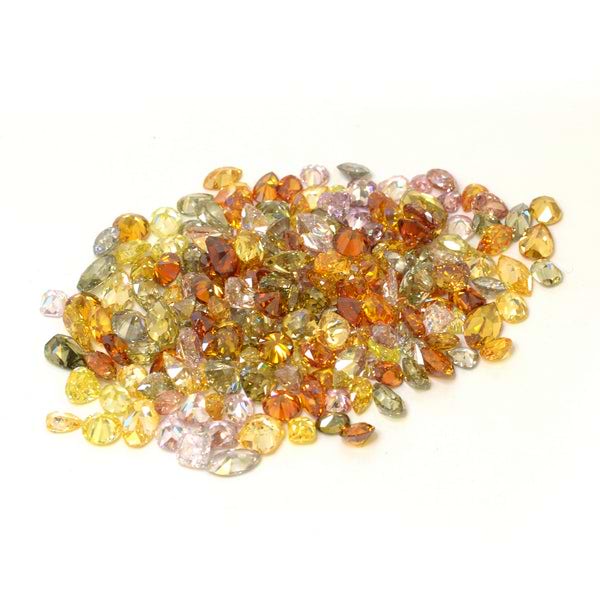
The Most Expensive Lighter - Diamond Lighter
by Benji, Content Manager
When you have the money, you have the money. That is the bottom line. Even mundane items such as a lighter can become a fashionable accessory. Believe it or not a lighter can be decorated with anything from crystals to actual diamonds. Though lighters should be obsolete, some of those who still use them to choose to carry them around in style. Here is a look at some of the priciest lighters around.
The all-time most expensive lighter is the $79,000 Ligne 2 Champagne gold and diamond lighter by S.T. Dupont, a French luxury firm. Made famous by Daniel Craig in his role as James Bond from the movie Casino Royale, Dupont lighters are the kings of all lighters, but this 18K white gold and diamond edition puts the others to shame. Also available in solid yellow or rose gold, the lighter boasts 468 brilliant-cut diamonds, totaling 5.2 carats of GVS quality diamonds. Each lighter is packed in a unique gift box. For such a price, S.T. Dupont could have done without so many colorless diamonds and used a couple of colored diamonds instead.
Although they don’t include diamonds, Zippo, a leading name in the lighter industry, has created several embellished lighters including a gold zippo and one with diagonal lines on the top. Both of these lighters date back to 1933 and have been sold on ebay for as much as $37,000. Today, Zippo sells their Zippo Classic solid gold lighter for $15,621.60. It comes in a custom crafted cherry wood gift box.
If you are in the market for a unique gift, or would like to jazz up yet another one of your day-to-day items such as iPads, iPhones, belts, and video cameras in Yellow diamonds, Blue diamonds and more, these lighters might give you some ideas. Whether or not you approve of smoking, the thought that went into these handy accessories could be used toward a number of other objects.

The Hancock Red Diamond
by Benji, Content Manager
The Hancock Red is one of the most famous red diamonds in the world and Red diamonds are among the rarest diamonds on the planet. The Hancock Red, named after the famous collector Mr. Warren Hancock, is not famous for its size, but rather, for its rare purplish red color.
Red diamonds are so rare that only about twenty to thirty true red diamonds are known to exist, and most are less than half a carat in size. Since the red diamond, like the pink diamond, derives its unique color from defects in the crystal lattice and not from impurities such as nitrogen and boron, it is special and highly sought after.
The Brazilian Hancock Red diamond, weighing in at 0.95 carats, is a one-of-a-kind brilliant-cut round diamond. There are larger famous red diamonds such as the De Young Red, but that one boasts a brown overtone, which is far less desirable than a purplish red.
Another reason for the Hancock Red’s fame is the price it was sold for back in 1987. It was purchased at Christie’s in New York for $880,000, instantly giving it the title of the most expensive diamond per carat, at the time. At a whopping $926,000 per carat, the Hancock Red held its title for twenty years. The sale placed the price at seven times the price of the previous record-holding diamond. That auction made history, especially since Mr. Hancock had supposedly bought the diamond in 1956 for a mere $13,500.
Mr. Hancock had been a colored diamond collector all his life, until his early death at the age of 65 in 1981. The Montana rancher began collecting in the 1950s, and had the honor of having this rare stone named after him after he purchased it 1956.
Though more expensive diamonds have been sold since the Hancock Red Diamond, it still remains one of the most famous colored diamonds of all times due to its remarkable red color. Mr. Hancock sure knew a keeper when he saw one. We probably will not encounter another “Hancock Red” in this century, if ever at all. It is for this reason alone that the Hancock Red Diamond is an important historic and scientific artifact.

The LEIBISH Prosperity Pink - 1.68ct Vivid Argyle Pink Diamond
by Benji, Content Manager
The Meaning Behind the Lucky Number 168
Many clients of the Chinese persuasion strongly believe that specific numbers have lucky meaning. One of the luckiest combinations of numbers in the Chinese language is 168, pronounced as "yi1 liu4 ba1" meaning "one-six-eight". The numbers rhyme with yāo liù bā” which is translated to “Forever Wealthy.” The term in Chinese sounds very similar to the words "一路發" pronounced as "yi1 lu4 fa1". Translated into the English language, “yi1 lu4 fa1” loosely means "to keep being rich”, “to keep making money”, “want smooth prosperity”, or "road to prosperity”.
LEIBISH, one of the world’s leading online resources for fancy colored diamonds, is fortunate to deal with some of the most beautiful diamonds in the world on a daily basis.
Shmulik Polnauer louping the LEIBISH Prosperity Pink Diamond. A 1.68-carat Fancy Vivid Purplish Pink, Radiant-shape
Similar to many other industries, the company attends various diamond exhibitions, events, and tradeshows. In 2011, Shmulik Polnauer, LEIBISH’s GG GIA Chief Buyer, took part in the exclusive Argyle Pink Diamond Tender. The tender is an invitation only event, where the attendants are allotted the opportunity to submit a single bid on the very best Pink diamonds or Red diamonds extruded from the Argyle mine of Australia that year. The highest bid for each stone wins. LEIBISH was very excited to learn that they had won six of the 55 stones tendered.
The LEIBISH Prosperity Pink Diamond, 1.68-carat Fancy Vivid Purplish Pink
Leibish and Shmulik Polnauer with the LEIBISH Prosperity Pink Diamond
Shmulik Polnauer made the decision to re-polish one of the stones he won in this year’s tender. The stone was originally a 1.71-carat, Fancy Intense Purplish Pink, Radiant-shaped diamond. By re-cutting the stone, he managed, losing only three points, to significantly upgrade the color intensity. Now, LEIBISH is delighted to be the proud owners of the 1.68-carat, Fancy Vivid Purplish Pink, Radiant-shaped diamond.
Shmulik Polnauer Louping The Leibish Prosperity Pink Diamond, 1.68-carat, Fancy Vivid Purplish Pink
Polnauer said “The exceptional size of the 1.68-carat stone with such pure vivid color saturation is in of and itself a rarity. We haven’t seen a vivid Argyle pink diamond over 1.5 carats for a long time in the market. The reddish color flashes and the exiting strawberry touch are unique markers of a real Australian Argyle Pink diamond. With its combined magic and lucky number 168, recognized by those of the Asian persuasion as a “Road to Prosperity,” we decided to call this amazing stone The LEIBISH Prosperity Pink Diamond.”
Specifics of this magnificent stone are noted below:
Diamond Weight: 1.68 Carats
Diamond Color: Fancy Vivid Purplish Pink
Diamond Shape: Radiant
Diamond Clarity: I1
Diamond Measurements: 7.03x6.37x4.55
Diamond Total Depth: 71.4%
Diamond Intensity: Fancy Vivid
Diamond Polish: Very Good
Diamond Symmetry: Good
Diamond Certificate: GIA & Argyle
This stone was Lot# 6 of this year’s, 2011 Argyle Pink Diamond Tender. It is one on largest Argyle vivid pinks available in today's market.
1.68-carat, Fancy Vivid Purplish Pink ARGYLE, Radiant-shaped Diamond + GIA Certificate
Even some of the most precious stones have been re-polished by experienced diamontiers who see the potential to reveal an even greater quality diamond. For example, in 2008 Laurence Graff purchased the Wittelsbach diamond, a 35.56-carat, Fancy Deep Grayish Blue diamond with VS2 clarity, from Christie’s auction for $24.3 million. Graff re-cut the diamond, losing 4.45-carats, to 31.06-carats in order to remove damage to the girdle and enhance the color. That stone, which was renamed to the Wittelsbach-Graff, is now a Fancy Deep Blue, Internally Flawless stone.
Interestingly enough, the term used in the diamond industry when any diamond exchange is made is “Mazal.” The translation from Hebrew to English “Luck”, “Prosperity”, and “Success” has the very same meaning that is taken from the Chinese 168.
Aside from its obviously extreme rarity and exquisite beauty, this 1.68-carat, Fancy Vivid Purplish Pink, Radiant-shaped diamond is now considered by many to be a true sign of a path to prosperity.
The LEIBISH Prosperity Pink set in a ring
For more information regarding this amazing 1.68ct Fancy Vivid Purplish Pink, please don't hesitate to contact us at:
Email: info@leibish.com
Phone: Toll free 1-855-LEIBISH, international 972-3-6132122
The "LEIBISH Prosperity Pink" was mentioned in many important magazines and papers, here are a few of those articles:
The New-York Post - Business Insider
Jewelry News Asia
The Israel Diamond Industry
Diamonds.net (Rapaport)
Idex online

The "Urban Legends" of Some of the Most Famous Diamonds
by Benji, Content Manager
An urban legend is a form of modern folklore, consisting of stories that may or may not have been believed by their tellers to be true. And whereas urban legends are often a test to credulity and revolve around outrageous incidents, they may also relate to something more realistic but with a certain allure and mystique. However, regarding urban legends that pertain to fancy color diamonds, are they really urban legends or maybe just slick marketing ploys?
Perhaps the most legendary diamond in the world is the Hope Diamond. The pear-shaped, cushion cut, 45.52 carat, Fancy Deep Grayish-Blue, VS1 diamond (previously “Le bleu de France”) is the largest deep blue diamond in the world.
Legend has it that the original form of the Hope Diamond was stolen from the forehead or the eye of a sculpted statue of the goddess Sita in a Hindu temple. The temple priests then laid a curse on whoever might possess the missing stone and the “curse” of the Hope Diamond was born.
The diamond came into the possession of King Louis XIV and passed to the hands of his great-grandson King Louis XV. Both kings had the stone re-cut. The grandson of King Louis XV and husband of Marie Antoinette, King Louis XVI, then inherited the diamond.
Many who came in contact with the stone thereafter, met rather gruesome ends which only reinforced the urban legend connected to the original curse.
A similar saga was associated with the Black Orlov, a 67.50 carat, cushion-cut diamond. Legend has it that the Black Orlov, also known as the "Eye of Brahma," was an uncut black stone of 195 carats. It is said that a curse was put on any who owned the stone since it was stolen by a rebellious monk from the eye of a statute of the sacred Hindu God Brahma, located in a temple in Southern India. Is this story coincidental or an attempt to ride on the popularity of the Hope?
The Darya-i-Nur is a table-cut, 186 carat, pale pink diamond. It is considered to be the most celebrated diamond in the Iranian Crown Jewels, and one of the oldest known to man. The oval brilliant-cut, 60 carat, pale pink Nur-Ul-Ain diamond is the centerpiece of a tiara designed by Harry Winston for the wedding of the Empress Farah to the last Shah of Iran in 1958. Both were apparently plundered from the Mogul Emperor of India by the Persians in 1739.
Both the Darya-i-Nur and the Nur-ul-Ain are believed to have been cut from the same rare, pale pink, enormous, 400-carat diamond, referred to as "Diamanta Grande Table" (the Great Table Diamond), by Jean Baptiste Tavernier, the 17th century French traveler and jeweler who sold the Hope to French royalty.
Plundered from an emperor? Tavernier? India? A trend seems to be developing here.
If a disputed multitude of owners is sufficient to attain urban legend status, then look no further than the Florentine: the legendary and irregular, 137.27 carat, nine-sided, 126-faceted double rose cut stone, that was once the great yellow diamond of the Medici Family.
The diamond is believed to have been acquired by the Medicis after the Portuguese Governor of Goa, Ludovico Castro, acquired the rough stone from the King of Vijayanagar in Southern India, whose troops he defeated in the late 16th century. The diamond then found its way to Rome, where it was entrusted to the Jesuits. Ferdinando I de Medici eventually purchased the rough diamond.
An alternate version states that the diamond was acquired by Charles the Bold, Duke of Burgundy (1467 to 1477). This is about a 100 years before the alleged acquisition of the stone by Ludovico Castro. The diamond was worn by Charles on his military campaigns, which all invariably resulted in victory for his army. Talk about a diamond imbuing extraordinary power.
To add to the fascination of the Florentine, its current whereabouts are unknown. It is believed to have been re-cut to an 80 carat diamond with no hint as to what occurred of the remainder.
In the case of the diamonds mentioned above, the old adage, “Never let the truth get in the way of a good story,” springs to mind. Some think that marketing is an invention of the twentieth century. However, the diamond industry presents quite an interesting possibility that they might be mistaken.

The Cora Sun Drop Diamond
by Benji, Content Manager
Mark the date, location and vital statistics in your diary – 15th November, 2011, Sotheby’s Geneva, 110.3 carats and USD 12.36 million. So, what gives?
The “culprit” was an enormous pear-shaped diamond that was auctioned for the first time, and goes by the moniker of the Sun Drop Diamond. The diamond was certified by gemmologists as "fancy vivid yellow," the rarest and most desirable color for a yellow diamond. The price, inclusive of commission and taxes, sets a world record for a yellow diamond and was the top lot at Sotheby’s semi-annual jewellery sale. It was sold to a private individual phone bidder who preferred to remain anonymous.
This result is further evidence of how much of a safe haven fancy color diamonds are, particularly in times of economic and social uncertainty. However, like the Sun Drop, the stones must be of the highest order.
The Sun Drop is one of the largest diamonds of any color to have ever appeared at auction. The stone, which was discovered in South Africa in 2010, had a pre-sale estimate of $11-15 million. It was cut, polished, and put up for auction by New York-based, Cora International.
But the Sun Drop wasn't the only diamond sold at the auction. The president of SAFDICO USA Inc (South African Diamond Corporation), Hoda Esphahani, bought two yellow diamonds of his own – an unmounted cushion-shaped old stone and a fancy vivid yellow set in a simple ring.
SAFDICO is the manufacturing arm of world renowned, London-based jeweller Graff Diamonds, owned by the legendary Laurence Graff. It is Esphahani’s belief that yellow diamonds have become rarer and are achieving higher prices. In her opinion, "I think top vivid diamonds are still now underpriced. I think they will go much higher because they are rare."
And what would a drop of sun be without the blue of the sky in which to frame it? A 4.16 carat fancy vivid blue brilliant-cut diamond was sold for USD 4,262,587 or just over USD 1 million a carat. This was at the upper range of its USD 3,300,000-4,300,000 estimate.
Let yourself explore the world of Fancy Yellow Diamonds and visit LEIBISH today!


