








DIAMOND BLOG

FRENCH ROYAL DIAMOND HEIST: MARIE ANTOINETTE'S NECKLACE - LEIBISH
by Rinat Perry
FRENCH ROYAL DIAMOND HEIST: MARIE ANTOINETTE'S NECKLACE
For the second part of our Marie Antoinette special, Carol speaks to historian and author Vincent Meylan about the infamous diamond fraud case of 1785, wherein Marie Antoinette's implication had lasting impact on her own fate. Vincent also contributed to thecatalogue for the new exhibition at London's V&A Museum Marie Antoinette Style.
By Carole Woolton
LISTEN NOW

LEIBISH Wins 21 Lots in Rio Tinto’s Beyond Rare™ Historic Final Diamond Tender
by Leibish Polnauer
Rio Tinto Concludes Historic ‘Beyond Rare™ Tender’ with “Into the Light” Collection
[NEW YORK/PERTH/TEL AVIV] – October 22, 2025 – In what is being hailed as an historic grand finale, Rio Tinto concluded its last ‘Beyond Rare™ Tender, including a final collection, “Into the Light”, marking the end to an era for their exclusive colored diamond trove.
LEIBISH Dominates the Final Auction with 21 Rare Diamond Acquisitions
The auction generating intense global competition was dominated by renowned fancy colored diamond specialist, LEIBISH who swooped up 21 of its 52 extraordinarily rare lots.
The final collection from Rio Tinto’s Canadian and Australian diamond mines included legendary Argyle mine material, and spotlights the mining region’s final natural masterpieces. The Argyle diamonds included 1 Fancy Red diamond (GIA-certified), 12 Fancy Violet diamonds, 76 Fancy Pink / Purple-Pink / Purplish-Pink diamonds. Only Natural Diamonds +1 Canada’s Diavik legacy inventory included 2 D-color, Flawless clarity white stones (one a 5.11 ct emerald cut, and a 3.02 ct pear).
LEIBISH Strengthens Position as Global Leader in Rare Colored Diamonds
LEIBISH’s winning bids for the 21 rarities highlights their unrelenting focus upon acquiring the world’s most unique, uncommon natural colored gems. With this acquisition, LEIBISH reigns as the Steward of irreplaceable diamonds for connoisseurs and elite collectors the world over.
"To secure such a considerable portion, 21 of the 52 lots in this final, historic Beyond Rare™ Tender is a tremendous honor and a testament to our dedication to excellence," said LEIBISH's president, Mr Leibish Polnauer. "These Argyle pinks and rare colored diamonds from Rio Tinto’s mines are among the most difficult stones to source globally, and their scarcity makes them a crucial investment for the future. We are thrilled to bring these final treasures to our global clientele.”
1.03 carat, A LEIBISH Fancy Vivid Purplish Pink Argyle Diamond
A Defining Moment in the Legacy of Rare Colored Diamonds
Much like the Argyle Pink Diamonds Tender, The Beyond Rare™ Tender has long been synonymous with rarity and exceptional quality. This was a pivotal moment in the diamond world, underscoring the investment value of increasingly rare colored diamonds.
LEIBISH, the world’s preeminent online resource for fancy colored diamonds and colored gemstone jewelry specializes in sourcing, cutting, and marketing the world’s most exceptional, rare colored diamonds. LEIBISH offers unparalleled expertise and access to its high-end collectors and jewelry designers.

Color Diamonds in a Cryptocurrency World
by Rinat Perry
We seldom meet our clients face to face, since our sales are done in faraway places. But yesterday we had a visitor purchase a Fancy Intense Yellow diamond engagement ring using a crypto payment. Then he came in person to pick it up. He specifically requested to see me which caused me to suspect a problem. But he greeted me with a broad smile as we shook hands.
Fancy Intense Yellow Cushion Diamond Side-stone Ring
Finding LEIBISH
Right away he cut to the chase. “I want you to know that one of the reasons I ordered the ring by LEIBISH is that you don't sell lab grown diamonds. And you are a family owned firm, not a big commercial brand.”
The way he located us also caught my attention. “I found your company on Price Scope. I looked further and found only two companies to choose from, Graff and LEIBISH.” That was the greatest compliment I’ve received in years -- to be compared to Graff. I said, “Thank you for your business.”
Crypto Coming into Focus
But I was curious about his method of choosing cryptocurrency for payment. “It’s just a simple straightforward transaction, without the messing around with the banks,” he explained.
I believe that cryptocurrency will revolutionize the online sale of fancy color diamonds. It offers a new horizon for clients who want to add tangible assets to their crypto portfolio.
Celebrity Power
As we often see, celebrities brought a lot of excitement this year with important diamond sales. Notably, Jeff Bezos proposed to Lauren Sanchez with a truly breathtaking 30-carat pink diamond, exceptionally rare and wonderfully elaborate.
During their Venice wedding celebrations, Lauren stunned guests again with an even larger oval-cut diamond, showcasing two of the most remarkable rings ever seen at a celebrity wedding.
The wedding’s ambiance along with the exciting double pink diamonds on display left the Ambani luxury wedding in India in the dust. A single pink diamond ring was about $3M US dollars. Sanchez 2nd oval ring was estimated to be $4M. But the greatest celebrity event that soon followed was Taylor Swift's engagement to Kansas City Chiefs football star Travis Kelce. The engagement garnered unmatched international cultural attention. The engagement buzz produced 36 million Instagram likes. Not surprisingly, it also had an immediate effect on Important diamonds by reaching fans of the top pop music star and an NFL football icon. This was truly a fusion of all worlds.
Match Made in PR Heaven
Portuguese football legend Cristiano Ronaldo and his longtime partner, Georgina Rodriguez, an Argentine social media celebrity are engaged. The bride-to-be announced the happy news on Instagram recently, showing off her massive oval-cut diamond trilogy ring. Georgina has not stopped gushing over it by flaunting it on her social media posts and on the red carpet.
Eye on the Auctions
Parallel auction houses have been selling important fancy color diamonds with unprecedented vigor and at top prices.
Here’s one we don’t often see. The Christie’s New York Magnificent Jewels sale was an auction for the ages. Its June 17, 2025, event boasted that all 138 lots found buyers. making it a “white glove” sale totaling $87.7M — a record for a various-owner Christie’s jewelry auction in the Americas.
The top 15 lots fetched more than $1M each. These results were somewhat expected given the items for sale. The auction featured both European and Indian royal jewels, an exceptionally large and rare Ceylon sapphire, plus signed pieces from prestigious jewelry houses coming from private collections.
These successes eventually filter down to more regular fancy color business, showing an impact on regular engagement ring sales.
With the hearty rebound of important jewels and celebrity sized diamonds, we see the damage that the LGD fiasco once inflicted on the real diamond brand is starting to heal.
Diamonds & Crypto Hold Center Court
Fancy color diamonds continue to shine while we witness with a growing emphasis on using cryptocurrency for purchasing diamonds. There’s a reason behind both trends.
Auction Sales Keep Color Diamonds Hot
The recent auction of the historical Marie Therese Pink Diamond sold at Christies New York auction for 14 Million dollars.
Rarity Drives Values
Quoting Rapaport, “The report documents the surging interest in these extraordinary stones. With market supply tightening and demand diversifying, the diamond industry could be entering a new era in the fancy-color category. “
Investing with Fancy Color Diamonds
Looking at the figures, we found that 2024 brought $4.5B of wholesale diamonds to the market. Data from FCRF (Fancy Color Research Foundation) indicated those diamonds realized an annual compound rate of 5.7% increase over the past 2 decades.
These impressive figures reveal ---whether building generational wealth or creating assets to use in one’s lifetime. Investors in Asia and the Middle East are bullish on fancy color diamonds for that reason.
“While global trade anxieties have created caution across luxury sectors, the fancy-color diamond market remained impressively composed,” says FCRF CEO Roy Safit. “The data shows a contained, strategic repositioning. It speaks to the market’s growing maturity and the defensive appeal of vivid-color diamonds.”
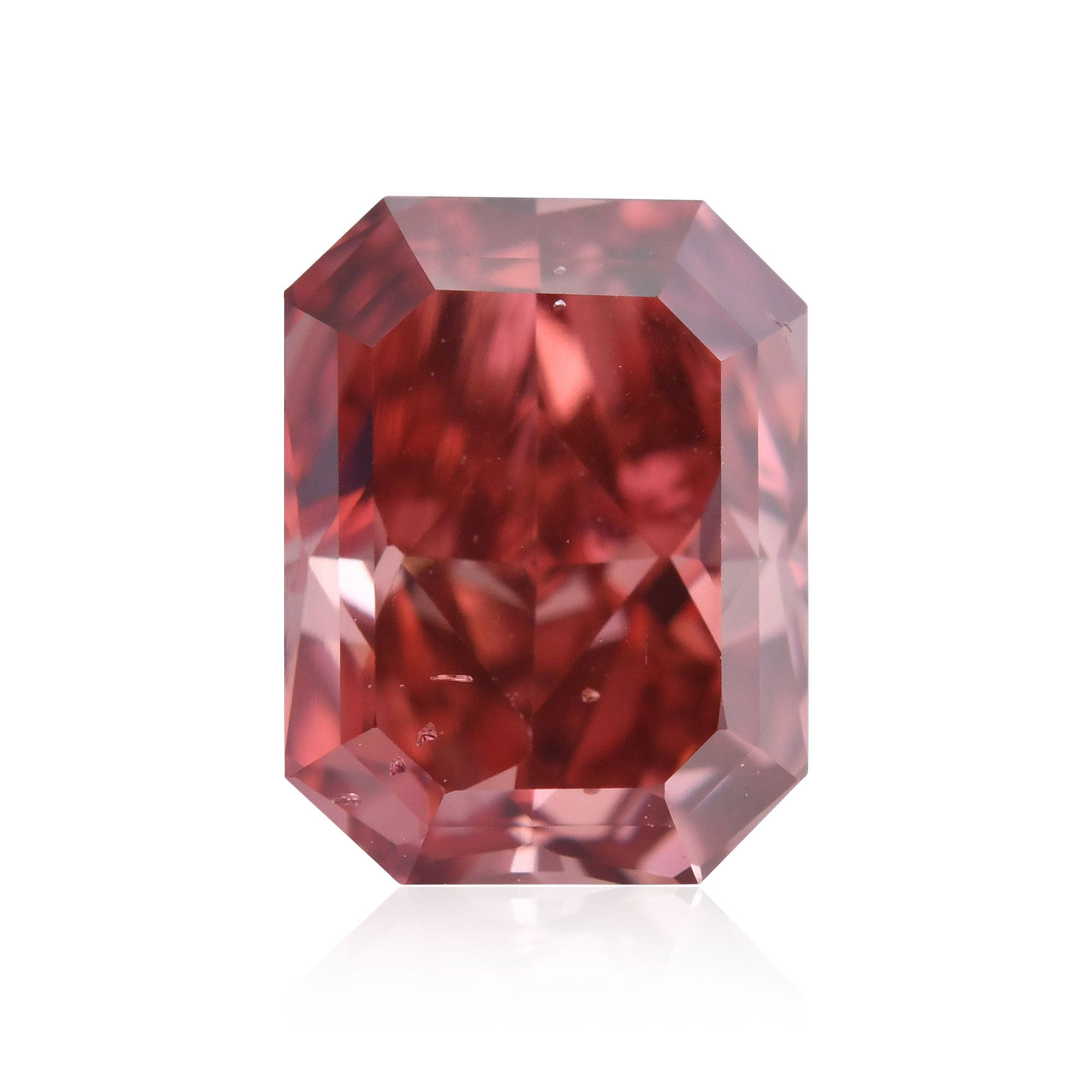
Fancy Vivid Pink Radiant Argyle Diamond
Cryptocurrency Gains Momentum
The appeal of using cryptocurrency is becoming favored amongst investors desiring to streamline their transactions while maintaining a degree of privacy.
Blockchain technology facilitates cryptocurrency transactions to that end. Coin Journal, writing in Blockchain, diamonds and the future of tokenization explains more.
“Diamonds have long been seen as symbols of wealth and luxury. They hold a special place in the world of investing, offering a rare blend of tangible value and timeless appeal.
But as with many traditional markets, the diamond industry has faced its share of hurdlesnamely, issues with accessibility, transparency, and liquidity. That’s where blockchain technology comes in. By bridging the gap between the physical and digital worlds, blockchain is opening new doors for diamond trading and investing.”
Crypto at LEIBISH
We recognize that cryptocurrency sales are becoming more frequent. The crypto community is waiting to find a platform for Fancy Color diamonds as an alternative investment in real assets.
It’s the perfect moment to take some chips off the table and invest a portion of these cryptocurrency holdings into fancy color diamonds. These are timeless value assets.

Admiring Pinks &Purples
by Leibish Polnauer
By Leibish Polnauer & Diana Jaret
Collectors of fancy color diamonds can go on rapturously when discussing pink diamonds. Connoisseurs will tell you that every pink diamond has a story. The ones we present here for instance, have centuries of provenance thanks to their original owners.
But likewise, even newer pink diamonds have a unique tale there are so very few of them in the world. Their contemporary guardians are building a modern day legacy that adds to their ongoing mystique for generations to come.
Pink Pedigree
Christies recently announced its hammer price at auction of the legendary “Marie-Thérèse Pink,” a 10.38 carat fancy purple-pink diamond belonging to France’s Marie Antoinette, which she passed down to her only surviving child, Duchess Marie Thérèse de Angoulême, and later to her niece, Duchess Marie Thérèse de Chambord.
Under Marie Antoinette’s care, the pink sparkler first came to view in a tiara, and later in a hat pin. Its last incarnation was as the centerpiece of a fleur-de-lis motif ring—the symbol of the French House of Bourbon.
Thanks to the Queen’s swift actions during the bloody French Revolution, her priceless jewels were smuggled out of Paris and into the safekeeping of her daughter. Generations later the pink diamond was referenced in the will of Queen Marie Theresa of Bavaria, the diamond’s next known owner, Christie’s said.
The 18th century diamond garnering $14M US, (3X its highest pre-sale estimate) was in all likelihood from Golconda, India. The gem’s important pedigree was safeguarded in a velvet case containing a hat pin bearing the Austrian Imperial Warrant, circa 1868. Queen Marie Theresa referred to the jewel as “a pink solitaire diamond from Aunt Chambord.”
Royal Lineage
Regal jewels tend to stay within royal households. The pink stone was last seen in 1996 at an auction in Geneva, offered by a European royal family member. It remained out of sight for three decades until it came up for sale at Christie’s recently.
Royal backgrounds do lend a certain aura to fancy color diamonds. A jewel boasting a majestic provenance is not simply a jewel anymore; it conveys a piece of history, layering intrigue, luxury, and cultural significance upon each facet.
Legendary stones like the Dresden Green, the Hope Diamond, or the Wittelsbach-Graff are extraordinary stones without equal. Yet, their connection to royalty amplifies their allure, value, and mystique.
Elizabeth’s Pink
Britain’s longest reigning monarch, Queen Elizabeth II was lauded for her extraordinary jewelry collection. Her most iconic pieces were colorless diamonds (like the legendary Cullinan diamonds), but she also owned or had access to rare and historic fancy color diamonds.
The Williamson Pink Diamond, gifted to Princess Elizabeth as a wedding present in 1947 remained a sentimental favorite. The Flawless Fancy Vivid Pink stone weighed 54.5 carats when she received it and was later cut to 23.6 carats.
Preference for Purple
The color purple is as bold as it is elegant. Historically it’s often associated with royalty, sovereignty, and nobility, while eliciting feelings of luxury and creativity. Britain’s beloved Queen Elizabeth II adored purple in all its lovely variations, and found many occasions to flaunt her preference for the regal hue.
The public enjoyed seeing her dressed immaculately in tone-on-tone ensembles exhibiting subtle shades of her favorite color.
Purple Diamonds
In June 2024, global news outlets announced that Rio Tinto had unearthed an unusual purple crystal at its Diavik mine in Canada's Northwest Territories. The vibrant .45 carat diamond lent a sparkling crescendo to Diavek mine’s waning years.
"Diavik diamonds are typically white, so this came as a pleasant surprise," officials said. "The shape of the rough diamond is known as a 'makeable' which means it will likely be cut into a single diamond."
The LEIBISH team has relished a decades-long affair with purple diamonds. Some 12 years ago we cut a remarkable stone we named Purple Orchid, a VS2 Pinkish Purple. A later recut to 3.37 carats improved its color grade to Intense Purple.
Exceptional Fancy Deep Pink Radiant Triple Halo Diamond Earrings GIA
Extraordinary Fancy Light Purplish Pink Cushion Double Halo Diamond Ring GIA
That Something about Purple Diamonds
Pure (or straight) purple diamonds evoke an aristocratic, cool, and understated elegance. However, when they exhibit pink as a modifier, the stone xxxxxxx xxxxxxxx xx x xxxxxxx xxxxxx xxxx xxxxxxx xxxx its come-hither vibe.
The purple tint acts like an exclusive oriental spice – just a touch of purple to a red or pink diamond makes the color soar like a rocket.
How rare are these cherished stones? There are precious few gems above 3 carats that possess purple as its main color. We have polished many purplish reds, most of which originated in Australia.
This 0.52 carat Fancy Purplish Red is one of the finest examples of the enriching influence of the purple shade.
Through mysterious circumstances, many of the finest stones produced at the legendary now-closed Argyle mine have a purple modifying color. Yet, because of their extreme rarity, they seldom display purple as its main hue.
The purple tint is more often a modifying color in stones emerging from South Africa, too.
Yet, some of these coveted anomalies have been found in Canada’s Diavik and Victor diamond mines. Most of them exhibit a pink modifying color like our 2.01 carat FP-P. Its purple tint shimmers with a cool subtle elegance that collector’s crave.
True Purple Exhibits Unmatched Charisma
0.23 carat, Fancy Vivid Purple, pear diamond with SI2 clarity, graded by GIA.
This extremely rare purple diamond displays remarkable argaman color saturation. The stone has Very Good polish and Good symmetry.
Here to Stay
Rare and unique fancy color diamonds never go out of fashion. Their exceptional appeal and timeless elegance insures its lasting value in any collection of world-class gems.

How to Sell a Diamond – Where, How, and What You Need to Know
by Diana Jarrett, Content Writer
Jewelry lovers can tell you that, more than any other gemstone, diamonds are often the most sentimental value they own. Especially if the diamond is part of one’s bridal jewelry, there is a lot of emotion wrapped up in a piece. But even so, there may come a day when you may wonder "How to sell a diamond?" There are so many reasons for this question. But there are also many types of outlets, and they can all depend on your reasons and how quickly you need to convert the -piece. Simply put, how to sell your diamond depends on the situation. In this article, we’ll go through several scenarios—all of which will help you create a plan for how to sell your diamonds.
Before you ask yourself how to sell a diamond, it’s wise to learn its current value, so you’ll have a starting point. Selling your diamond may take a while, with some work on your end. Most importantly, connect with reliable professionals to buy your diamond for a fair price.
Fancy Intense Yellow Cushion Three-stone Diamond Ring
Understanding the Value of Your Diamond
Understand the current market value for selling diamonds. An appraisal conducted by a certified jewelry appraiser with diamond experience is essential. If you have a grading report from a reputable grading lab, that’s great. If not, and your diamond is on the larger size, consider sending it to one of the well-known gem grading laboratories.
An appraisal places a monetary value on your diamond for sale. But a grading report records the quality components of your diamonds like the 4Cs; cut, carat weight, color, and clarity. It does not assign monetary values to your diamond.
Consider getting a personal referral from friends who have had a positive experience with an appraiser or a gemological lab.
How to Sell a Diamond: Different Approaches
You might make appointments with a few types of places before settling on an outlet to sell your diamond.
Jewelry Stores
You might have done business with a local jewelry store before and have established a good relationship with them. That helps. But the store may take your diamond on consignment. That may take a while to sell. If you don’t mind, this could be a safe trustworthy option. They have to make a profit when they sell it—so your proceeds will reflect that.
Pawn Shops
Consider a pawn shop for the flexibility it offers. For instance, you can pawn your diamonds and if at some later point (defined in your contract) you can redeem your diamonds back should you want them returned to you. Many pawn shops are experienced in evaluating diamonds. So they could offer you a cash price. But it will be a final sale if that suits you. They have to hang on to jewelry a lot longer than a jewelry store would. So they will offer you less than a jewelry retailer will in most cases. But quick cash may be the way you choose—so that’s good too.
LEIBISH 1.21 carat, Fancy Intense Blue Diamond, Oval Shape, VS2 Clarity, GIA
Online Marketplace
This option is becoming more popular today as online outlets are flourishing. On the plus side, more people will view your diamond for sale, so you might get a better price—or a quicker sale. Platforms like 1stdibs, eBay, Worthy, Facebook Marketplace, craigslist, and the like are all good places to offer your diamonds for sale. They attract more buyers. If many people show interest in your diamonds for sale, you might end up with a bidding war.
Still, keep things safe. Ask for cash, or a bank transfer service like Venmo, or Zelle. Show your diamond in a safe place, like your bank for instance—or an office where other people are around. Make the sale on your own terms. You could even do the transaction at the police station if they allow it.
Auction Houses
When you are trying to sell your high value diamonds or a rare diamond, an auction house may be your best option. You can make an appointment with one of their jewelry specialists who will give you a professional estimate of the value. There’s usually a ‘reserve’—or a rock bottom price to which you won’t go lower. That’s a good safety valve for you. You want it to be win-win for both the seller and buyer.
If a good auction house is not in your town, that’s not a deal breaker. Many auction houses have secure methods for shipping (insured of course) items to them. They do this routinely, and you can feel confident in doing this with a reputable auction house.
Specialized Diamond Buyers
Conduct an online search for specialty diamond buyers, jewelry buyers, diamond bridal jewelry buyers and that sort of thing. You’re going to be surprised at all the resources available only sell other people’s diamond jewelry, especially bridal jewelry. Circa, M S Rau, and I Do, Now I Don’t are places to start although you’ll discover others. Make a connection with one of the professional associates, and gain confidence in the transaction—before you sell your diamond.
Preparing Your Diamond for Sale
You only get one chance to make that first impression. So prepare your diamond jewelry for sale BEFORE anyone sees it. Thoroughly inspect your diamond jewelry for loose prongs—or missing stones. Are there any parts that need repair before showing to a potential buyer? Have your item looking as new as possible so someone will want it now. Carefully clean your piece, or you take it to a professional jeweler where they can put your items in an ultrasonic cleaning machine and make it sparkle like new.
Fancy Light Brownish Pink Double Halo Ring
After you’ve cleaned and repaired it as needed, store it in a box or jewelry bag to keep it free from dust or fingerprints while you get it ready for sale.
Now assemble your paperwork—appraisals, purchase receipts, insurance paperwork, and lab reports to accompany your diamonds for sale. These steps are key to a successful transaction.
Getting a Fair Price
There’s only one way to know if you’re getting a fair price for your diamonds for sale. You have to get an estimate of its current value. What are similar diamond items selling for on the secondary market? Finally, what are you willing to take for this diamond? By answering all these questions ahead of time—you will be more composed during a sales transaction—and you’ll have a more accurate sense of its worth--- and be prepared for an offer for your diamond jewelry.
Yes, you can negotiate. Buyers want a ‘good deal,’ so be prepared to accept a bit less than the listed price. Only you know how low to go. It depends on how much cash you need and how quickly you need it. Do your homework so you’ll fix a price reflecting current market trends. By approaching the sale realistically –and adjusting your expectations as necessary, you’ll be satisfied with the outcome.
Where to Sell a Diamond for Cash
Cash is King, the old adage goes. If you need to convert your diamond jewelry right now—be prepared to accept a steeper discount on the price. Some jewelry stores will pay cash on the spot for your jewelry if they think they can sell it.
Of course, many pawn shops will cash you out on the spot, too. There’s no harm in shopping around for the best cash price. Don’t neglect to check with some of the better online sellers who sell just diamonds. They already have a large viewership, and often, they can make you a decent cash offer on the spot, too.
LEIBISH Fancy Yellow Radiant Halo Diamond Pendant
Tips for Safe Selling
More important than getting top-dollar for your diamonds is your need to stay safe. Scams happen and if the deal sounds too good to be true—it probably is. You want cash for your property, and you can meet the customer in your bank—or another public spot where you feel absolutely safe. If the buyer will not meet in person, but wants you to send the item, just don’t.
Don’t meet the customer at their place—or a private spot you don’t know. A restaurant where people know you may be a good choice. You can also meet a potential buyer in a jewelry store—that is done frequently. Just chat with the retailer to get their ok first.
Don’t meet a buyer at your home. Although it seems like a good idea at first, you can get into an uncomfortable situation. Your jewelry may be in a safe box at your bank. Meet a buyer there, and if the person doesn’t buy the item---you can place it safely back in the box and eliminate the risk of someone following you to your car. Take a relative or a spouse with you when showing you diamond jewelry. The more back up you have, the safer.
Conclusion
If you’re thinking about selling your diamond jewelry, you’re in good company. Many people are selling their diamonds today. And there are so many types of outlets to help you. It all boils down to how quickly you want to do the transaction or if you can hold off for more money. Think it through before you start the process. Do you need cash now? Can you wait for the diamond jewelry to sell later but for more money?
When considering how to sell a diamond, follow safety guidelines when selling your diamonds by yourself. You can do that successfully. But if you want to remain anonymous, let an auction or a jewelry store sell it for you. This can be a profitable and successful transaction with some preparedness beforehand.

Diamond Terms & Terminology: Key Patterns, Words, & Descriptions
by Benji, Content Manager
Like any other industry, the diamond world is a world of its own and, therefore, requires a certain amount of knowledge in order to make one’s way around the various vendors, dealers, and jewelers without getting completely lost. Some, but not all, individuals who venture into the diamond world are aware of the famous 4Cs: cut, clarity, color, and carat. However, though this concept is crucial for understanding diamonds, it is far from being the only term one should become acquainted with. We have, therefore, compiled a collection of diamond terms and terminology that will help you navigate yourself as you search for the perfect diamond. Take a look at this little diamond glossary and take note, as these words can assist you greatly now and in the future.
Yellow diamonds within the field of rocks
A:
Abrasion
An abrasion is a type of flaw seen in diamonds and gemstones. It is ultimately a scratch on the surface of the stone. In diamonds, this scratch appears to be white and is caused by contact with other diamonds. In gemstones, it is caused by contact with other materials.
Anatomy
The anatomy of a diamond refers to its structural components, which collectively define its shape, brilliance, and overall appeal. The main parts include the Crown, Girdle, Pavilion, and Culet.
B:
Baguette
A baguette is a rectangular-shape that a diamond can be cut into using the step cut.
Blemish
A blemish is another term referring to the flaws included in a stone, similar to scratches, nicks, and natural defects. These generally appear on the exterior of the stone and can affect the finish of a stone.
Brilliance
Brilliance refers to the unique display of light reflected from a diamond. It is determined based on the overall level of a diamonds’ light return.
LEIBISH 10.21 carat, Fancy Yellow Diamond, Cushion Shape, IF Clarity, GIA
Brilliant Cut
The brilliant cut is a cutting style used mainly for diamonds but also for other gemstones. It is the most common cutting technique for diamonds. Through this method the diamond is able to reach the highest level of brilliance possible, hence the name. This cut uses a combination of facet shapes including kite-shaped, octagonal, and triangular.
Bearding
Bearding refers to tiny fractures or hairline cracks that can appear on the girdle of a diamond during the cutting process. These fine lines, also known as "bearded girdle," may extend slightly into the diamond and can affect its appearance if extensive.
C:
Carat Weight
The carat weight refers to the measurement used to weigh a diamond. A carat weight of a diamond is of great importance. The price of a diamond depends greatly on its carat weight.
Cavity
A cavity, like its name implies, refers to an isolated break in a diamond’s surface.
Chip
A chip refers to a shallow surface break on a diamond or gemstone.
Clarity Grade
A clarity grade refers to how clean the stone is of defects. Clarity is one of the 4Cs, along with cut, color, and carat. This particular grade looks at the purity of the stone and takes into account any and all blemishes. It ranges from FL (Flawless) to I (Included). Read more about diamond clarity.
Crown
A crown refers to a part of a faceted diamond or colored gemstone above the girdle.
Culet
A culet is the small facet on the tip of a diamond or gemstone that comes in place of the sharp point that would normally be at the tip of the pavilion. Some diamonds do not have a culet at all while others can have an extremely large culet, which is basically an extended, flat surface.
D:
Diamond
A diamond is a mineral that has crystalized in the cubic system and ranks 10 on the Mohs scale of hardness. Diamonds are divided into two main categories: Type I and Type II.
Durability
The durability of a diamond or gemstone refers to a combination of things. This includes the hardness, stability, and toughness of the stone. It is ultimately the best way to determine how a stone will respond to intense wear.
E:
Emerald-Cut
Emerald cut is a specific cut, used often for emeralds, but for other stones including diamonds as well. It is a rectangular shape with cut corners. It incorporates triangular and trapezoidal facets.
Emeralds
Not to be confused with emerald cut diamonds, emeralds are their own unique type of gemstone.
Eye Clean
Will not be able to determine inclusions or diamond imperfections with your naked eye.
EX-EX-EX
This term refers to the cut of the diamond when it is graded with an excellent cut, and excellent polish, and and excellent symmetry.
F:
Facet
A facet is a small flat surface that is polished on a diamond or gemstone.
Fancy Color
Most diamonds are colorless (void of color.) Fancy Color refers to diamonds that display a unique color which is created by the compound elements of the stone. Fancy Color diamonds are all diamonds of color.
LEIBISH 0.84 carat, Fancy Pink Diamonds, 6PR, Pear Shape, SI2 Clarity
Fancy Cut
Although the round cut is the most popular shape for diamonds and some gemstones, and is on the more expensive side compared to other shapes, all shapes other than round are considered Fancy Cuts.
Feather
A feather is a type of fracture in a diamond or colored gemstone that breaks the surface. It is one of the many types of inclusions that will affect the clarity grade of a stone.
Fire
Fire is the appearance of a rainbow or some color in a diamond or colored gemstone. This phenomenon is caused by the dispersion of color and light in the stone.
Fisheye
The term Fisheye, is used to refer to stones that have a black dot in the center due to the reflection of light between the facets.
FL (Flawless) Grade
This is the ultimate clarity grade, meaning it is void of any imperfections. Very few stones receive this grade and those that do are priced accordingly.
Fluorescence
This is a phenomenon that some diamonds, colored gemstones, and pearls display as a result of being exposed to higher energy wavelengths. Visible light is showcased from the stone. Some diamonds do not have any fluorescence at all while others emit strong fluorescence.
Fracture Filling
Fracture filling is a type of treatment a stone can receive in order to enhance it. Fractures are synthetically filled thus perfecting the stone.
G:
Gemstone
A gemstone can be a rock, mineral, or other organic or inorganic material that is cut and polished for jewelry.
Girdle
A girdle is the narrow band encompassing a polished or faceted diamond or gemstone. It essentially separates the crown (upper section of a polished stone) from the pavilion (the lower section).
Gletz
This is just another term used for an inclusion within the stone.
Grading Report
A grading report is an official document issued by a gemological laboratory, such as GIA. It provides an in-depth assessment of a diamond's key characteristics, including: Carat weight, Cut, Color, and Clarity and additional details like fluorescence, symmetry, and polish. A grading report is essential for verifying a diamond's authenticity and quality.
H:
Hardness
The hardness of a stone is its ability to resist scratching.
Heart Cut
The heart cut is a pear shape with a crevice in the middle of the rounded edge. It is the shape of a heart, hence the name.
LEIBISH 2.01ct Fancy Light Gray Diamond
Hue
A stone’s hue is its primary color impression, which is red, green, or blue.
H&A (Hearts & Arrows)
It describes the visual patterns seen in diamonds with exceptional symmetry, typically in ideal-cut round brilliants. When viewed from the pavilion side, a pattern of hearts appears, and from the crown side, arrows are visible. These patterns are a hallmark of superior craftsmanship and precision cutting, enhancing the diamond’s brilliance and fire.
I:
I (Included) Grade
This is the lowest clarity grade. Stones with this grade have inclusions that are visible to the eye.
IF (Internally Flawless) Grade
This is one of the highest clarity grades.
Inclusion
An inclusion is an internal flaw. This can be a cavity, a crystal, a feather, internal graining, pinpoint, and so forth.
K:
Kimberley Process
This is a certification system that was implemented in order to prevent and discourage the flow of conflict diamonds and gemstones.
Knot
This inclusion can be found in diamonds. It’s an included crystal that has broken to the surface.
L:
Lab-Grown Diamond
Lab-grown diamonds are not natural diamonds. They are synthetic diamonds that have been grown in a lab in a process similar to the natural processes that genuine diamonds have undergone over millions (even billions) of years.
Leakage
This phenomenon can occur in diamonds and colored gemstones. It is when the light that enters the stone fails to reflect back through the crown and is instead dispersed through the pavilion.
Loupe
A diamond loupe is a special lens used to magnify 10x what the human eye is able to see.
LEIBISH Natural Orange Diamond in Loupe
Louping
A phrase used when someone insepcts a diamond through a diamond loupe.
Laser Drilling
A diamond treatment technique that uses laser technology to remove or minimize visible inclusions and blemishes. This process involves creating a tiny tunnel with a laser to access and treat inclusions, often by bleaching them.
M:
Marquise-Cut
A diamond or colored gemstone with an elliptical shape and pointed ends.
Mazal
The term used when a deal between two people from the diamond trade is agreed upon.
Melee
This term refers to faceted diamonds or colored gemstones that are smaller than 0.12 carats.
Mixed Cut
The mixed cut is a combination of the two most popular cutting methods: brilliant cut and step cut.
Mohs Scale
The Mohs scale is used to determine the hardness of a stone. It was created by comparing stones with one another thus placing them in a hierarchy of hardness. Diamonds rank the highest at 10.
Mounting
The mounting is the part of a setting in which a stone is set.
N:
Naked Eye
Inspecting a stone with one's eye as opposed to using some sort of a loupe.
Naturals
Naturals are a portion of the rough diamond left behind by the cutter. They are usually located near the girdle.
Needle
A needle is a thin inclusion found within a diamond or colored gemstone. It is one of several possible inclusions.
Nick
A nick is a minor chip, a surface break.
O:
Opaque
A characteristic of a diamond or colored gemstone that makes it neither transparent nor translucent. This means it does not transmit light.
Oval Cut
A diamond or colored gemstone with an oval shape.
LEIBISH 11.79 carat, Violet, Tanzanite, Oval Shape
P:
Pavilion
The bottom section of a polished diamond or colored gemstone, below the girdle of the stone.
Pear Cut
Pear cut, or teardrop as it is also known, is one of the Fancy Cuts for diamonds and colored gemstones, and is rather popular after the round brilliant and princess cuts of course. Round at one edge and pointed at the other, it resembles a pear or a teardrop.
Pit
A pit is a minuscule indentation that can appear on the surface of a diamond.
Piqu’e
This is another term used to describe an inclusion which will affect the clarity grade of a stone.
Point
Diamonds are measured in carats. There are 100 points in each carat. A 0.50-carat diamond is equivalent to 50 points.
Price Per Carat
One of the main characteristics by which a diamond's price is determined is by the carat weight. However, because the bigger stones are more difficult to come by, the price isn't simply doubled as the carat weight increases. Meaning, a two carat diamond is not two times the price of a one carat stone, and a six carat diamond is definitely not double the price of a three carat stone. Therefore, within the trade, people will often ask or quote the price per carat of any specific stone.
Princess Cut
The princess cut is the second most popular cut for colorless diamonds. It can be either square or rectangular with pointed edges.
Proportions
Proportions refer to the relationship between the various measurements of a diamond. The size of the table compared to the girdle, pavilion, crown, depth, and culet of the diamond.
R:
Radiance
The radiance of a diamond is the amount of light that is refracted and reflected in a diamond. It is also referred to as sparkle.
Rough
A rough diamond is a diamond that has yet to be cut or polished.
Round Cut
The round cut, or round brilliant as it is also called, is the most popular colorless diamond shape. It is a diamond that is cut into a circular shape using the brilliant cut. LEIBISH 5.25 carat, Fancy Orange Brown Diamond, Round Shape, VS2 Clarity, GIA
S:
Saturation
The level at which color is seen.
Scintillation
Scintillation refers to the mirror-like reflections that can be reflected off a diamond’s facets as it is turned in the light.
Scratch
A long, white, shallow mark on the surface of a diamond can be referred to as a scratch.
Solitaire
A jewelry setting containing a single stone.
Step Cut
A style of cutting that utilizes straight facets that run parallel to the girdle. The facets decrease in size as they move further from the girdle, thus resembling steps.
Spread
Spread refers to the perceived size of a diamond when viewed face-up, which is influenced by its proportions and cut.
T:
Table
The table is the top, flat, horizontal facet that appears on polished and faceted diamonds and colored gemstones.
Tone
Tone refers to how light or dark a color appears.
Toughness
Toughness describes a stone’s ability to resist breakage.
Transparency
The amount of light that is transmitted through a diamond or colored gemstone.
Treatment
Various processes and materials used to enhance a diamond or stone’s appearance.
Triangle Cut
A triangle-cut diamond is one with three sides, which resembles a triangle.
Triple Ex
This term refers to a diamond that is cut with a perfect cut grade. When the symmetry, polish, and cut are all graded as an 'excellent cut.'
U:
Ultraviolet Light
Ultraviolet light is light that is not visible to the naked eye because its wavelengths are shorter than wavelengths of visible light.
V:
Variety
A variety is a subcategory, and often refers to various subcategories of minerals. For instance, rubies are a variety of the mineral corundum.
VS (Very Slightly Included) Grade
The VS clarity grade is one of the more common grades of diamonds that the general public acquires.
VVS (Very Very Slightly Included) Grade
The VVS clarity grade is one level between IF and VS. Inclusions within a stone graded with a VVS clarity usually cannot be determined without a microscope.
LEIBISH Argyle Diamonds
W:
Wisp
A wisp is a hair-shaped feature that can appear on a diamond. It can appear on its own or in a cloud-like shape.
X:
X-ray Fluorescence
This is the procedure in which diamonds, colored gemstones, and pearls can emit energy when exposed to a high-energy incident. This is done through secondary x-rays and indicates the chemical properties of these stones.
Understanding diamond terms and terminology is essential for anyone looking to appreciate, purchase, or evaluate these timeless gems. Each term reveals something unique about the craftsmanship and quality of the stone. By familiarizing yourself with these terms, you’ll be better equipped to choose a diamond that meets your aesthetic preferences, quality expectations, and investment goals. After all, each diamond carries its own story, shaped by both nature and artistry.

Moissanite vs Diamond: Which Gem Should You Choose?
by Diana Jarrett, Content Writer
Did you say you were looking for a moissanite diamond? This means you are a true researcher and are eager to learn everything you need to know before making a purchase. Let’s check out what a moissanite vs diamond actually is. First of all, what are moissanites?
What is Moissanite?
Did you know that Moissanite is a natural stone—although when found in nature, the crystal sizes are miniscule. So they are never suitable for Moissanite jewelry.
LEIBISH Natural Colorless Diamond
The Moissanite gemstone we know about from jewelry stores is a manufactured stone created in a laboratory. As such, moissanite is a created stone that looks a lot like a diamond. But there are differences that will help you distinguish between the two once you know what to look for. Diamonds differ in that they are naturally occurring gems found in the earth. Moissanite diamonds, as some people call them, are clear sparkling stones that were created in a laboratory. It enjoys popularity with some consumers because it can mimic a diamond at first glance.
But upon deep inspection, moissanite diamonds cannot replicate the appearance of a diamond nor the appeal of these natural gemstones. Moissanites are created to be all alike with regard to their color and clarity, and they do look like mirror images of each other. Diamond vs moissanite—the eternal conundrum.
What is a Diamond?
On the other hand, each diamond is unique because it was formed deep within the earth. Even its inclusions are important as tell-tale signs of its genuine, natural origin. Because of its natural origin, diamonds will always be considered rare.
Appearance and Sparkle
One of its most alluring traits is the diamond’s ability to sparkle brilliantly—even far across a room. This makes diamonds superior to Moissanite, which can be readily seen as a created stone. This is why couples more often select genuine diamonds for their engagement rings. The elegance and traditional beauty of diamonds are unmatched.
LEIBISH Colorless Diamond Engagement Ring
We’ve all heard the debates of diamond vs Moissanite and wondered if it is as good as a real diamond. Let’s learn more. You will form your own conclusions about this and decide if Moissanite rings vs diamond rings win the comparison. Knowledge is power, right?
Hardness and Durability
How hard is Moissanite? While no stone can ever compare to diamond’s durability—which measures a full 10 on the Mohs scale of hardness. Moissanite has a pretty impressive hardness rating, though—it’s 9.25 on the Mohs scale.
Mohs Hardness Scale Diamond VS Moissanite
Moissanite is certainly a durable option for shoppers, and as a gemstone, it always costs far less than natural diamonds. Diamonds are rated 10 on the Mohs scale, meaning that they are nature’s most durable material. Diamonds resist scratching and breakage—making them ideal for bridal jewelry which is worn daily for one’s entire life. Later on, they can become cherished heirloom pieces to pass down to loved ones.Read more about Precious gemstones.
Price and Value
When shopping, it won’t be long before you discover that Moissanite stones are a fraction of the price of a real diamond. That makes a difference for some customers, of course. Budget is always a concern with newly engaged couples.
But the shopper should be aware that diamonds hold their value. Over time some diamonds even increase their value during a resale. So this makes diamonds more attractive in the long run.
So far, we’ve seen a lot of pros and cons to both Moissanite and diamonds. So, what do you think is the smart choice? Moissanite or diamonds? Let’s look into other things like the Moissanite vs Diamond shine among other traits.
By now, you’re surely making your own list of pros and cons against what you want in a diamond vs Moissanite, aren’t you?
The Emotional and Symbolic Value of Diamonds
We can all agree that bridal jewelry has a lot of emotions attached to them. They represent more than just beautiful jewelry; they are part of our collective cultural experience. They also have come to symbolize commitment and are certainly objects of luxury for the couple.
LEIBISH Princess-cut & Pink Diamond Engagement Ring
While Moissanite does look lovely, the prestige of owning a genuine earth-mined diamond is unmistakable. The valuable treasure of a natural diamond is something to be proud of when you designate it to be inherited by a loved one after you’re gone. A natural diamond maintains its unique traits and like-new sparkle due to its hardness. Your diamond has great sentimental value, and when the time comes, it can be passed down to many generations as their stories continue.
Pros and Cons Table Moissanite vs Diamond Chart
Moissanite
Lower price-point for loose stones and jewelry
Created stones look exactly alike, some display a slightly yellow tinge
Dispersion is higher, resulting in a rainbow sparkle effect, which is telling that it’s a created stone
Durable for jewelry application
No resale value
Diamond
Prices are related to the 4Cs—cut, clarity, carat weight, and color; making their value universally understood and calculable.
Natural diamonds are earth-mined and rare.
The diamond may increase in value over time—but it holds its resale value when trading up or even selling it.
Diamonds sparkle with the highly desirable white light, which is coveted with genuine diamonds.
The hardest known natural substance on earth—ranking a Mohs scale of 10
LEIBISH Fancy Vivid Orange Yellow and White Pave Diamond Earrings
Conclusion
The study of both Moissanites vs Diamonds is interesting to learn about. Both have pros and cons. And in the end, only the couple can make their own decision as to which stone is the right gemstone for them. When price is the main factor over everything else, the couple may gravitate to Moissanite.
But with all the facts laid out, the ultimate wise decision should go to natural diamonds. They provide a true luxury product—and one of value and rarity. Moissanite is lovely but displays that tell-tale rainbow effect when it sparkles. That lets everyone know the stone is manufactured in a lab.
Diamonds, on the other hand, exhibit the classic pure white sparkle that only a brilliant diamond can do. Diamonds are timeless, and their elegance is enduring—past fads and trends. This high-value stone also has a great deal of sentimentality attached to it—something that only a rare, natural gem can do. The diamond has a solid trade-in or trade-up value over time. And some diamonds have tremendous increases in value as time goes by. For the long term —a diamond is your best option.

25 Fun Facts About Diamonds: Everything You Need to Know
by Benji, Content Manager
Diamonds are many things. We all recognize them as symbols of luxury, love, and commitment, but there is so much more to these stones. Their scientific structure is actually quite incredible, and as a result, they are a very sturdy substance. They are very useful for industrial purposes and also one of the most mesmerizing gemstones that exist.Given the circumstances that brought them into existence, it is pretty obvious that the makeup of these gems is intriguing, to say the least. For starters, they are commodities that have been found across the globe. This means that they have impacted cultures and societies worldwide. They are tied to many beliefs and myths and have created social and economic drama in various parts of the world. Here are 25 facts about diamonds that you may or may not know about. Even if you have stumbled upon this information at some point, you might not have quite internalized the gist of it.
LEIBISH 17 carat radiant shaped yellow diamond
1. Diamonds are approximately 3.3 billion years old.
Most people know that diamonds have been around much longer than the human race. Some know enough to claim that they formed over hundreds of millions of years. What many might not be aware of is the fact that many diamonds are not just millions of years old, but billions. The oldest diamonds could very well be 3.3 billion years old. With planet Earth being about 4.5 billion years old, it is pretty incredible to discover how far back diamonds can be traced.
2. The Cullinan Diamond: Interesting Facts About the Largest Diamond Ever Found at 3,106 Carats
Discovered in 1905 in the Premier Mine in South Africa.
Originally weighed an astonishing 3,106 carats before it was cut.
It was gifted to King Edward VII and later cut into nine major stones.
The largest cut stone, known as the Great Star of Africa, is part of the British Crown Jewels.
3. "Lucy" in Space: Cool Facts About the Massive Diamond Star
Also known by its scientific name, BPM 37093, is located in the Centaurus constellation.
Estimated to be a 10 billion trillion trillion-carat diamond.
"Lucy" is about 50 light-years away from Earth, making it relatively close in cosmic terms.
Its diamond core is roughly 2,500 miles in diameter, about the size of Earth's moon.
The discovery of "Lucy" has helped scientists understand star crystallization processes.
LEIBISH 0.70 carat, Fancy Vivid Pink Diamond, Round Shape, SI1 Clarity, GIA
4. "Diamond" comes from the Greek word "Adamas."
Since one of a diamond’s main features is its durability, it received a name that is a tribute to this important quality.
5. Diamonds are the hardest natural material on Earth.
One of the main selling points of diamonds is that they are so sturdy and are virtually indestructible. While this is true for the most part, it certainly does not mean they cannot get damaged and shouldn’t be handled with caution. Even more so, it should be made aware that specific materials can scratch a diamond. Rhenium Diboride Ultrahard Fullerite, and Aggregated Diamond Nanorods are all capable of scratching a diamond. Those, and other diamonds, of course.
6. Diamonds for Industry: Why Over 80% of Diamonds Are Used for Industrial Purposes
Even though we hear so much about the rarity of diamonds and how the numbers are dwindling, most of the diamonds that are uncovered do not become gemstones.
LEIBISH Natural Brown Diamond
7. Diamonds are mined worldwide, including Russia, Botswana, and Canada.
Contrary to what most people think, diamonds are not just mined in South Africa and Australia. In fact, most come from Russia, but they are also produced in Botswana, Canada, and Namibia, and were originally discovered in India.
8. Diamonds are nearly 100% carbon.
Although diamonds consist of a complex structure, they are almost 100% carbon. Other elements have been known to find their way into the structure of these stones and that’s the reason diamonds are sometimes found in different colors such as yellow, orange, and blue.
9. Blue Diamonds: Cool Facts about Their Boron-Induced Color
Blue diamonds owe their color to trace amounts of boron within their carbon structure.
These diamonds are among the rarest, with only a few mines worldwide producing them.
The famous Hope Diamond is one of the most well-known blue diamonds, weighing over 45 carats.
1.41 carat, Fancy Vivid Blue Diamond, Radiant Shape, VS1 Clarity, GIA
10. Diamonds Are Formed Under Extreme Pressure and Heat
Diamonds are born deep within the Earth, about 100 miles below the surface, where temperatures exceed 2,000°F (1,100°C) and pressures reach over 725,000 pounds per square inch. These conditions force carbon atoms into a lattice structure, creating the hardest naturally occurring material known to humankind.
11. India Was the First Country to Mine Diamonds
For centuries, India was the only known source of diamonds. These gemstones were found in the riverbeds of the Krishna, Godavari, and Penner rivers. India’s dominance in diamond mining lasted until the discovery of diamond deposits in Brazil in the 18th century.
12. Diamonds Are Good Heat Conductors but Poor Electrical Conductors
Diamonds excel at conducting heat, making them invaluable in industrial applications like high-performance heat sinks for electronics. Despite their thermal efficiency, diamonds are poor electrical conductors due to their tightly bonded carbon atoms, which leave no free electrons to carry a charge.
13. The First Engagement Ring With a Diamond Was Given in 1477
In 1477, Archduke Maximilian of Austria presented a diamond engagement ring to Mary of Burgundy, marking the start of a romantic tradition. The ring featured diamonds arranged in the shape of the letter "M," symbolizing their eternal bond.
LEIBISH Extraordinary Emerald Diamond Ring
14. Synthetic Diamonds Are Used in Electronics and Cutting Tools
Beyond their sparkle, diamonds are vital in modern technology. Synthetic diamonds, created in laboratories, are used in tools for cutting and grinding, as well as in semiconductors and high-performance electronics, thanks to their durability and thermal properties.
15. Only One in a Million Diamonds Is Naturally Colored
While most diamonds are colorless or slightly yellow, naturally colored diamonds—such as pink, blue, or green—are exceptionally rare. These unique colors result from impurities or structural anomalies during formation, making them highly prized by collectors.
LEIBISH Natural Colored Diamonds
16. Diamonds Can Survive Acid but Will Burn at High Temperatures
Diamonds are virtually indestructible when it comes to chemicals and can resist acid corrosion. However, at around 1,292°F (700°C) in the presence of oxygen, diamonds will combust, turning into carbon dioxide.
17. Black Diamonds, or Carbonado: Interesting and Rare Facts About Diamonds
Black diamonds, also called carbonado, are typically found in Central Africa and Brazil.
Unlike traditional diamonds, black diamonds are polycrystalline, meaning they are made up of many small crystals.
They have a unique porous structure and often contain trace elements like hydrogen and nitrogen.
Black diamonds are popular in jewelry for their unique color and texture, making them a modern alternative to clear diamonds.
LEIBISH Natural Black Diamond
18. Diamonds Can Be Naturally Found in Rivers and Ocean Beds
While diamonds are commonly mined from the Earth, they can also be found in riverbeds and even ocean floors. These "alluvial diamonds" are transported by water currents from their primary source and often discovered in gravel and sand deposits.
19. Some Diamonds Fluoresce Under Ultraviolet Light
When exposed to ultraviolet (UV) light, certain diamonds emit a soft glow, often blue but occasionally other colors like green, orange, or yellow. This phenomenon, known as fluorescence, can help gemologists identify a diamond’s origin and quality.
Diamonds exposed to UV light
20. Natural Diamonds Can Have Unique Inclusions Like Crystals or Feathers
Every diamond tells its own story through inclusions—tiny imperfections formed during its growth. These can include crystals of other minerals, feather-like patterns, or even microscopic diamonds. Such features make each diamond truly one of a kind.
21. Diamonds Were First Discovered Over 4,000 Years Ago
The first diamonds were found in India around 4,000 years ago. Revered for their mystical and protective qualities, they were initially used as talismans and in religious ceremonies before becoming symbols of wealth and status.
22. How Diamonds Form 90 Miles Below Earth’s Surface: Incredible Facts About Diamonds
Diamonds are created deep within the Earth's mantle under extreme heat and pressure.
They form at depths around 90-120 miles below the Earth’s surface, in temperatures of over 2,000 degrees Fahrenheit.
Volcanic eruptions bring diamonds closer to the Earth’s surface in kimberlite and lamproite pipes.
23. The Argyle Mine in Australia Is Famous for Pink Diamonds
Australia’s Argyle mine was renowned for producing over 90% of the world’s pink diamonds. These vibrant gems are extraordinarily rare, with their color attributed to unusual distortions in the diamond’s crystal lattice during formation.
LEIBISH 2.19 carat, Fancy Pink Diamond, Radiant Shape, VVS1 Clarity, GIA
24. Diamonds Are Transported to the Earth’s Surface by Volcanic Eruptions
Kimberlite and lamproite volcanic eruptions act as natural diamond elevators, carrying diamonds from deep within the mantle to the surface. These eruptions happened millions of years ago, leaving behind diamond-rich pipes for mining.
25. Diamonds Are Used in High-Precision Medical Instruments
Beyond jewelry, diamonds have a critical role in medicine. Their hardness and precision make them ideal for surgical blades, particularly in eye surgeries, and their excellent heat conductivity makes them suitable for advanced medical devices.It shouldn’t come as a surprise that there is more than meets the eye when it comes to diamonds. However, some facts about diamonds still manage to boggle the mind and astound us time and time again. That is why, despite all of the imitations out there, there really is no true replacement for a genuine natural diamond.
Interested in a closer look? Check out our huge collection of the finest diamonds around!

What is a Simulated Diamond? Pros, Cons, and Why Real Diamonds Last
by Diana Jarrett, Content Writer
With so many glittering gemstones on the market today, it can be difficult to sort them all out. Especially if you’re shopping for engagement rings, you’ll want to know your options and how they each compare to one another. That way, you’ll be confident with your purchase. After all, an engagement ring is a big investment—and one that’s meant to last a lifetime.
In your search, you may have come across the question of what a simulated diamond is. This is a broad term for several diamond alternatives—they look like a diamond at first glance. But upon deep investigation, you’ll be able to separate them from high-quality diamonds, which offer a lasting investment.
LEIBISH Natural Pink Diamond Engagement Ring
Introduction to Simulated Diamonds
A simulated diamond is a general term covering any number of manufactured stones that are made to mimic a diamond. Of course, they are far less costly than an earth-mined genuine diamond.A simulant diamond can be anything from clear glass to CZ—or cubic zirconia. It can also include Moissanite, which is a colorless created stone and a far less expensive option than a natural diamond.
There is some confusion about the term ‘diamond simulant’. It covers many low-cost colorless man-made stones on the market. But lab-grown diamonds, called LGD, are in a separate category because of how they were formed. LGD were made to closely replicate natural diamonds with the same optical, physical, and chemical structure as a genuine diamond. But because they are a manufactured item, they cost very little and have no resale value—unlike authentic natural diamonds.
After all the searching, you want to consider what value you are getting for your money with a stone you choose for an engagement ring.
What is a Simulated Diamond?
A lot of gemstones can be transparent and colorless, so they can be mistaken for natural diamonds. Because they are only concerned with their look and not their actual composition, simulated diamonds can be created from something as simple as glass—and then cut to the shape of natural diamonds. That’s easy enough. A simulated diamond can also be manufactured from any of several chemical components that result in a clear colorless stone suitable for cutting and polishing.
CZ, or cubic zirconia, and Moissanite have long been used to simulate an actual diamond. So, for costume jewelry (sometimes called fashion jewelry), they can be a fun, low-cost alternative to real diamonds.
They all differ in important areas like hardness, of course. Because of that, they may chip, break in two, or become cloudy –and then they lose all their sparkle.
Hardness Comparison between Cubic Zirconia, Moissanite vs Diamonds
Simulated Diamonds vs. Lab-Grown Diamonds
One well-known alternative to natural diamonds is the LGD, or lab-grown diamond category. These stones are created in laboratories—actually large factories, and are specifically manufactured to replicate the optical, physical, and chemical makeup of natural diamonds. They do a good job of that. But there are huge differences between natural diamonds and the LGD, of course. They are mass manufactured, and so are sold very inexpensively compared to diamonds. While this niche diamond alternative is more durable than the other simulated diamonds we’ve mentioned, it still cannot share the spotlight with an earth-mined diamond, which is a rare stone.
Benefits of Choosing Real Diamonds
Natural earth-mined diamonds are considered rare objects of great value. Each diamond can be identified by interior and exterior traits that make it one of a kind. It is the hardest known substance on earth, ranking 10 on the Mohs scale of hardness. That means that it is so durable it will last its owner a lifetime—still sparkling brilliantly decade after decade. Diamonds ‘are forever’ the old De Beers saying goes. And they are. They can be passed down to loved ones who will cherish the beauty and sentimental meaning of a real diamond item.
Comparison of Simulated vs. Lab-Grown vs. Real Diamonds (Credit Image: Klenota)
Buyers often choose diamonds over simulant diamonds of any kind for several reasons. The quality of a real diamond is matchless. The real diamond can be traded up over time if desired. And many diamonds have increased in value over the years, making this choice a wise one. True, a diamond initially costs more than simulants, but it has- and it holds its value for the owner.
Now more than ever, buyers shop for all things with their social values in mind. That’s good news for diamond lovers. Today diamonds are ethically sourced and have a paper trail straight back to the mine to prove it. Thanks to many strict policies in place, diamonds are warranted to be conflict-free which sets everyone’s mind at ease. They are a product for our times and for modern shoppers.
Conclusion
Simulated diamonds offer a very inexpensive way to own sparkly jewelry. While they may look like diamonds at first, they often discolor or chip after much wear and tear. But they can still be a fun purchase for budget-minded buyers.
However, there are some very important details to keep in mind if you are thinking about what is a simulated diamond for bridal jewelry. True real diamonds are more costly, but you are investing in something so important for the rest of your life. Over time, you will be glad you have chosen wisely and got real diamonds. They hold their value and can increase in worth over time. They are a valuable symbol of your most precious relationship. And diamonds are the hardest known substance on earth. Diamonds are durable and will keep looking sparkling and new for your entire life. When you have a special jewelry purchase in mind, make sure you opt for real diamonds. You’ll be glad you made the right choice.Explore the History of Diamond Jewelry

Understanding Enhanced Diamonds: What They Are, Meaning, and Color Enhancements
by Benji, Content Manager
Of the four attributes used to assess the quality of a fancy color diamond, color is the most important. Color diamonds are already quite rare; therefore, when one of a rare color is found, its market value is increased considerably. Some diamonds undergo treatments to enhance their color, known as 'enhanced diamonds,' which affects their value and should be disclosed to potential buyers.
As a result of prices of some of these exquisite stones sometimes being quite steep, some companies have experimented with artificially enhancing the diamond color through different methods. Artificial color enhancement is considered acceptable within the industry, only it absolutely must be made aware to the ones purchasing the stones beforehand. In fact, the origin of the diamond color, meaning whether the color of a stone is ‘Natural’ or ‘Artificially Enhanced,’ must be noted in the GIA diamond Certificate.
The Origin of color is noted in the GIA Diamond Certificate
In the image above, the Origin is Natural
Learn more about understanding how to read a GIA certificate through LEIBISH's "The GIA Colored Diamond Grading Report - a User's Guide"
Following are the three most common practices of diamond enhancement used in the industry.
HPHT
Through the treatment of HPHT (high pressure/high temperature) the color of the diamond can permanently be altered. The stones are exposed to extremely high temperatures and very high pressures. Some say the conditions are similar to those in which the stones were formed millions of years ago. The treatment is irreversible as it essentially artificially upgrades the diamond’s color. Depending on the stone, the change in color can be minor, or even quite dramatic.
Overlay coating
Through the application of applying an overlay coating, the color of the diamond can be remarkably enhanced. The coating often contains fluoride, silicon oxide, aluminum oxide, or titanium oxide. It can be applied to parts of the diamond, such as the Pavilion or Girdle, or applied to the whole diamond. This diamond enhancement method is extremely difficult to detect, however, the color changes are reversible and may wear off the surface.
Irradiation
The procedure of irradiating the diamonds causes the color to be changed without causing any damage to the stones at all. Basically, high-energy particles are exposed to the diamond and cause the diamond's crystal lattice to be physically changed. This treatment creates many ‘color centers’ throughout the stone, which therefore emulates a very strong appearance of specific colors in the diamonds.
Artificial treatments are also used for other diamond enhancements, such as improving the diamond clarity.
Always be sure to review any and all necessary paperwork when considering adding a diamond to your collection.
Enhanced diamonds have undergone treatments to improve their color or clarity, which can significantly affect their value and durability. These treatments may not be permanent, and the diamond's appearance can change over time. Additionally, enhanced diamonds are often less valuable than natural diamonds, making them a less desirable investment. When purchasing a diamond, it’s crucial to choose one that is 100% natural and untreated to ensure you are getting a high-quality stone with lasting value. Natural diamonds retain their beauty and durability over time, are more likely to appreciate in value, and come with the assurance of authenticity.For these reasons, LEIBISH does not sell or deal with artificially enhanced diamonds of any kind; we sell ONLY 100% natural diamonds with no color or clarity enhancement.

Exploring the Impact of Diamond Carat Weight on Size, Cost, and Quality
by Benji, Content Manager
It is a given that most people would prefer a large diamond. However, there are a few factors that play into how large it appears against how heavy the stone's carat weight might be. Diamond carat, as one of the basic 4C's of assessing a diamond, is important to understand exactly what carat weight entails in order to select the perfect stone.
LEIBISH Two beautiful heart shaped fancy blue diamonds
The heavier the diamond, the more it costs per carat, and even a slight decrease in the diamond carat weight can significantly lower the price.
*HINT * When looking to purchase a new diamond, try to find one that is as close to the next carat weight as possible. For example, a stone that weighs in at 1.91ct will cost significantly less than another diamond that weighs in at 2.00 and higher even though it is only a difference of 9 points. The difference in size can be extremely difficult to see and the cost will be quite noticeable. Only, locating diamonds in these sizes are quite difficult since cutters will often do whatever possible not to drop to a lower carat weight.
The Definition of Carat Weight and its History
A carat refers to the unit measurement used to describe the weight of the diamond. Many years ago, because of their size, the seeds of the Carob were used on precision scales as units of weight for small quantities of precious stones. This tradition continued through time, hence we refer to the unit measurement as carat.
Carat Measurement
Diamonds that come with a grading report will indicate the exact weight to the nearest hundredth of a carat weight. Each carat is divided into 100 points, so if a diamond weighs 3/4 of a carat, meaning 75 points, its weight would be recorded as 0.75 ct. In the industry, the price of a diamond is often referred to by the price per carat (price per unit of 1.00) and is written as P/C (per carat) as opposed to the overall cost of the stone. Additionally, the term "CTW diamond" stands for Carat Total Weight Diamond.
A GIA Diamond Certificate
Read more about how to read and understand the GIA Certification of Colored Diamonds.
Fancy color diamonds are already such a rare find. Needless to say, finding a large stone, especially in rarer colors such as Red, Blue, or perhaps even an Argyle Pink diamond is therefore much harder to come by and will be significantly more valuable.
Carat Weight vs. the Size of the Stone
The carat weight and the size of the stone definitely have a lot to do with one another. However there are a number of factors that are different between the two.Regardless of the diamond weight,, when someone looks at a diamond they often concentrate on the size of the table. Since the table is what everyone other than the jeweler assessing the stone will see, this is the most important aspect of the diamonds appearance.
Relative to the diamond boxes shown in the image below, the face value size of each of the stones are quite similar between one another. However, as seen in the image, the carat weight is significantly different between each of the diamonds as a result of the depth of the stones.
From left to right: a 0.45ct stone with a 28% depth, a 1.24ct stone with a 46% depth, 0.56ct stone with a 58% depth, and a 1.14ct stone with a 70% depth.
The 0.45-carat, pear-shape diamond in the image above has an extremely shallow 28% depth. As a result, it possesses a very large face value size, although it contains a large window in the middle of the stone.The 1.24-carat, pear-shaped diamond has a 46% depth. This is also quite a shallow stone and it includes a small window in the face of the stone.The 0.56-carat, pear-shaped diamond has a 58% depth, which is closest to the most common norm of 60%.The 1.14-carat, pear-shaped diamond has a 70% depth. With such a deep depth, even though it is 1.14-carats it appears somewhat smaller in size although the color of the stone is a little more intensified as a result of the light being trapped within the stone for a longer period of time.
Carat Weight vs. Clarity, Color and Overall Diamond Quality
There are times when if a stone includes an external blemish that can likely be removed, or through advanced polishing techniques the color can be maximized, the choice might be made that it is worth taking the risk of putting it back on the polishing wheel. Doing so will most often reduce the size of the diamond, but can result in a higher quality stone.
For example, LEIBISH was lucky enough to have won six diamonds in the 2011 Argyle Pink Diamond Tender. One of the stones, a 1.71 Fancy Intense Purplish Pink Diamond, was truly a magnificent piece. However, when Shmulik Polnauer, LEIBISH’s GIA Graduated Gemologist, bid for this stone it was because he saw something no one else could.
Shmulik spoke of the time he spent assessing that stone. Even though it already passed the hands of some of the most experienced diamond polishers in the field, he was convinced that if we won that diamond he could maximize its true potential even further. Upon receiving word that the stone was won, LEIBISH took the risk of placing that diamond back on the polishing wheel. The Leibish Prosperity Pink Diamond was repolished into a breathtaking 1.68ct Fancy Vivid Purplish Pink Diamond.
LEIBISH's 1.68ct, Fancy Vivid Purplish Pink Prosperity Pink Diamond
The example given above is specifically why some experienced diamantaires may take the chance of re-cutting a polished diamond. Only three points were lost on that diamond, but the overall diamond quality was significantly improved.
The Size vs. the Shape
The piece of jewelry you choose and the setting in which you place the stone will have a significant effect to the appearance of the size of the diamond. Also, certain shapes always look larger than other shapes even though they might be a lower carat weight. For example, an Oval shape will look longer then a Round shape and will appear to be bigger. A Marquise shape, due to the longish look, also reflects a big appearance in comparison to the other shapes.The two stones below look quite different in size as a result of their shapes, but there really is only 28 points between the two!
LEIBISH 3.11-carat, Fancy Deep Grayish Blue, Cushion and a 2.83-carat, Fancy Grayish Blue, Emerald
Also, the many variations of the same shape will appear different from one another with regards to the size. For example, the stones below present a different face up value between a Square-cut Radiant, a longer Square-cut Radiant, a Regular style Radiant, and a Rectangular-cut Radiant.
Many characteristics affect the appearance of the stone. For example, a colorless diamond that is cut very well, in a way that light can quickly pass through, will actually appear slightly bigger from the sparkle. Fancy colored diamonds work the same way, only the cut should cause the light to remain within the stone for as long as possible to help accentuate the color.
The four attributes (AKA the 4Cs) define the scientific guidelines of assessing the diamond quality, and therefore define the overall value. However, especially with regards to color diamonds, beauty is always in the eye of the beholder.
The diamond carat does not always determine the size of the stone. There are a number of diamond dimension characteristics that can significantly change the carat weight while not necessarily changing the size of the table.
The 'Table' of the Diamond
The table size percentage is the average width of the table divided by the average diameter. Many concentrate on this since it is the section of the diamond we first see. However, the larger the table does not necessary mean the more carat weight the diamond has.
Table Size Percentage
Diamond shapes will vary and as a result, so will the size of the table. For example, while a 1.00 carat round shape diamond has a 6.5mm table on average, a 1.00 carat princess shape diamond, on average, has a 5.5mm table.
1.02-carat, Chameleon, Round Brilliant Diamond
1.02-carat, Fancy Deep Brownish Yellowish Orange, Princess-cut Diamond
The Depth of the Diamond
If the depth of the diamond, measured from the top of the table all the way down to the culet, is deep (otherwise known as a ‘fat’ diamond with an obtuse pavilion angle), the measurement across the top of the diamond is often smaller. If the diamond has a shallower depth (otherwise known as a ‘flat’ diamond with an acute pavilion angle) the table would then be a little larger.
The Diamond 'Culet'
Some diamond culets are purposely left "open" to cause the effect of an open culet diamond. Below is a 1.31-carat, Fancy Intense Olive Yellow Green, Round Brilliant with an open culet. Have a look at how the minor change affects the appearance of the diamond.
Top View
Side View of the Girdle
General Measurements and the Parts of a Diamond
A diamond's density ranges anywhere from 3.15 – 3.53 g/cm3 depending on the compound elements inside. A pure diamond is said to be approximately 3.52 g/cm3. The denser the diamond, the more weight packed within. This means that a diamond with the same as another of equal weight can possibly be slightly smaller in size.
Diamond Dimensions
The diamond carat is one of the four most important characteristics. However, there are many factors that play into the overall diamond quality.
Naturally Improving the Diamond Quality
Inclusions found within the composition of the diamonds are most often there to stay. However, in some cases, if the imperfection is on the external side of the diamond there are those with the ability to remove the imperfection through polishing. Furthermore, in a similar procedure some experienced diamantaires will look at a stone and see the ability to maximize the color through repolishing the stone.
Read more about the internal and external imperfections of a diamond.
Below are images of a Fancy Yellow, Pear-shaped diamond that LEIBISH modified.
11.24ct, Fancy Yellow, SI2 and 10.79ct, Fancy Yellow, IF
Still, since nine times out of ten it will reduce the diamond weight, and there is always a risk when putting the diamond back on the polishing wheel, there is a lot of consideration that comes into making this type of decision. The diamond can potentially shatter from within which will completely destroy the outside appearance. Meaning, in the blink of an eye, something worth thousands of dollars can easily drop to hundreds or even less.
Below are some more amazing examples of some of the modifications LEIBISH has made with our stones.
With this Fancy White, Hear-shaped stone, two points were lost through repolishing the stone. However, as can be seen in the images below, the shape was better crafted which increased the value of the diamond.
LEIBISH 0.61 carat, Fancy WHITE Diamond, Heart Shape, SI1
The 0.60-carat, Fancy Vivid Blue diamond below is a superb example of why many "gamble" with sending a stone back to the polishing wheel. The shape of the diamond was improved and absolutely no carat weight was lost in the repolishing process. Needless to say, the value of the stone was significantly increased.
LEIBISH 0.60-carat, Fancy Vivid Blue
The Potential Risk
As mentioned previously, sending a diamond back to the polishing wheel is quite risky. The image below depicts a beautiful Radiant-shaped, Light Pink Diamond that was shattered from within. As a result of the rarity of the color, the stone still has a significant value, only compared to a higher clarity diamond of the same shape, size, and color it could have potentially been worth a lot more.
LEIBISH 1.09-carat, Light Pink, Radiant
Still, like so many other things in life, in order to gain, you sometimes need to gamble. A great example of this was when Lawrence Graff acquired the Wittelsbach Diamond, which later became the Wittelsbach-Graff Diamond at auction in December 2008. The stone that was purchased was a total weight (CTW diamond) of 35.56 carats, Fancy Deep Grayish Blue with a VS2 clarity grade. Besides wear marks, it was chipped and it had an extra large culet.In 2010 Lawrence Graff announced that he had made the very risky decision to polish it down to 31.06 carats and managed to change not only the clarity to an Internally Flawless but also to improve the color to Pure Fancy Deep Blue with no grayish overtone.

What Are the Rarest Diamond Colors ?
by Benji, Content Manager
Aside from exquisite beauty, what makes Fancy Color Diamonds so incredibly unique is how rare these precious gems actually are. There are a small number of diamond mines throughout the world that are known for the unique colors they manage to produce.
However, of diamonds already so scarce, there are a few colors which are so rarely found that the singular stones in the market are highly sought after by collectors and diamond enthusiasts.
There are only 12 different colored diamonds. However, as a result of 9 different intensity levels, 90 secondary hues, over 230 color combinations, and the various options of sizes, clarity, and cut – the different types of colored diamonds available are endless. Even still, Fancy Color Diamonds only represent less than 0.1% of all colorless diamonds produced each year!
The most popular colored diamonds, Yellow, Blue, Pink, and Red
Are colored diamonds more valuable?
Unlike colorless diamonds, color diamonds do not need to be of any specific size or quality in order to be extremely valuable. The color is the main factor. If the diamond possesses a rare and strong color, it can be a very significantly more valuable then colorless diamonds. Among the ten most expensive diamonds ever sold at auction, only three of them were colorless and the remainders were fancy color diamonds. Colorless and color diamond are some of Nature’s most beautiful gifts. However, there is no denying the treasure that color diamonds hold. Their rarity and beauty are so great that every diamond investor and dealer is constantly in search of these rare beauties. The convenient size and proven increase of value in such a short period of time answers the initial question with this statement: fancy color diamonds are the most concentrated form of wealth on the planet.
The Most Common Colors
Without any doubt, both Yellow diamonds and Pink diamonds have the highest market demand, even though there is a large price difference between the two. As a result to the abundance of Yellow diamonds found, they are a lot less expensive per carat than Pink stones. Interestingly enough, depending on the color intensity, many yellow diamonds are less expensive than their colorless counterparts.
Yellow Colored Diamonds starting from Cape colors (4 stones on the left are from the U-V through X-Y-Z range) continuing to Fancy Light Yellow , Fancy Yellow, Fancy Intense Yellow, Fancy Vivid Yellow and Fancy Deep Yellow
Each different intensity grade of pink diamonds. From left to right: Faint Pink, Very Light Pink, Light Pink, Fancy Light Pink, Fancy Pink, Fancy Intense Pink, Fancy Vivid Pink, and Fancy Deep Pink
More than the popular colored stones, there are a number of selected color diamonds which are considered so scarce, that the sale is often secure with a client before the diamond even arrives at the company’s headquarters. Furthermore, the price tag attached, obviously depending on the diamond characteristics, can sometimes reach hundreds of thousands of dollars or more.
Are colored diamonds real diamonds?
Natural fancy color diamonds are completely authentic in every way. The colors were developed within the stones through nature and over millions of years formed into the rough stones found in the mines throughout the world.
The Rarest diamonds Colors
Some of the most magical diamonds are often purchased from major auction houses like Sotheby’s and Christie’s. However, there are a number of fancy color diamond dealers where these unique pieces can sometimes be sourced. Still, even from these companies it isn’t every day that the rarest colors pass through their inventory. So what are the rarest colored diamonds?
Red Diamonds
Of the various different colors, Fancy Red Diamonds are by far the rarest. They are not often found, and sourced from very few locations around the world.
Fancy Red Diamonds are the extremely rare, which makes each one a collectors item
Two of the most famous Red diamonds are:
The Moussaieff Red: a 5.11 carat, Fancy RED diamond with an IF clarity grade. This magnificent stone is known as the largest internally flawless red diamond in the world.
The Hancock Red Diamond: A 0.95-carat, Fancy Purplish Red, Round Brilliant Diamond. Although it is slightly less than a carat, this stone remains one of the most famous red diamonds of all time due to its color.
Some of the most expensive red diamonds ever sold at auction were;
The Moussaieff Red, which was purchased back in 2001 for nearly USD $8 million dollars (1.6 million per carat).
The Hancock Red, was sold back in 1987 for approximately USD $880,000 (USD $926,000 per carat). With the rise of fancy color diamond prices over the past 15 years, that diamond would be considered worth a lot more today.
Blue Diamonds
There are a number of discrepancies whether Pink or Blue Diamonds are considered the second rarest, but there definitely appear to be more Pink Diamonds available in the market.
Fancy Blue Diamonds, although not the rarest color it is most often connected to royalty
Two of the most famous Blue diamonds that exist are;
The Hope Diamond: a 45.52 carat, Fancy Deep Grayish-Blue diamond with a VS1 clarity grade.
The Wittelsbach Graff: a 31.06 carat, Fancy Deep Blue diamond with an IF (internally flawless) clarity grade.
Some of the most expensive Blue Diamonds ever sold at auction were;
The incredibly unique Wittelsbach Graff diamond was sold in 2008 for an astonishing USD $24.3 million!
A 7.03 carat, Flawless Blue Diamond which was sold in 2009 for approximately USD $9 million dollars.
Pink Diamonds
With the second highest market demand, Pink Diamonds are known now only for their incredibly feminine and passionate colors, but also for their remarkable investment potential.
After Yellow, the vivacious colored Pink Diamonds have the highest market demand
Two of the most famous Pink Diamonds that exist are;
The Graff Pink: a 24.78 carat, Fancy Intense Pink diamond. This stone has been determined to have potential flawless characteristics, which is extremely rare.
The Steinmetz Pink: a 59.60 carat, Fancy Vivid Pink, Internally Flawless (IF) stone.
Some of the most expensive Pink Diamonds ever sold at auction were;
The Perfect Pink, a 24.78 carat holds the record for the highest price ever paid for a diamond at auction, selling for the princely sum of approximately USD $46 million.
A 5.00 carat, Fancy Vivid Pink Cushion-cut diamond sold for approximately USD $2 million per carat. This was the highest price per carat ever paid for a diamond at auction.
Orange Diamonds
One of the beauties of color diamonds is that no one single stone is better than another. It is simply which colors most prefer. Orange diamonds are an extremely rare color and very beautiful, only they happen to have a relatively low market demand.
An extremely rare color that is often sought after by diamond collectors
One of the most famous Orange diamonds is The Pumpkin Orange: a 5.54 carat, Fancy Vivid Orange, Cushion-shaped diamond. The Pumpkin Orange was sold on October 30th, 1997 at a Sotheby’s auction for approximately USD $1.3 million.
Green Diamonds
Contrary to other colors, it is almost impossible to identify if any type of artificial enhancement was done on a Green diamonds in order to enhance the color. Therefore, most cutters leave an untouched ‘natural’ along the Girdle of the stone, which is considered acceptable and does not reduce the clarity grade of the diamond.
Various different shades and shapes of natural fancy green diamonds
Two of the most common Green diamonds are;
The Ocean Dream: a 5.51 carat, Fancy Deep Blue-Green, Shield-shaped diamond.
The Dresden Green: a 40.70 carat, natural Green, Pear-shaped diamond.
Of the most expensive green diamonds sold at auction, there was the Vivid Green Diamond, sold at Sotheby’s in 2009 for USD $3.08 million.

LEIBISH Wins 6 Diamonds in the 2011 Argyle Pink Diamond Tender
by Benji, Content Manager
Each year an exclusive collection of the best pink diamonds found are sold in the Argyle Pink Diamond Tender. This event is accessed by invitation only to some of the most highly regarded diamond companies in the world. In fact, simply acquiring the Argyle Pink Diamond Tender Catalogue and accessing the Argyle Pink Diamond Tender section of the Argyle website is considered quite prestigious in and of itself.
LEIBISH has had the pleasure of taking part in this event for several years. Each participant is allotted a specific time frame alone with an Argyle representative and the full tender collection. Without knowing any of the other bids, each participant provides a single offer of the highest price they are willing to pay for each stone. The highest bid wins.
LEIBISH was delighted to receive word that out of only 55 stones that were sold in the 2011 Argyle Pink Diamond Tender, they won six beautiful diamonds. This is consecutively after winning one stone in 2009 and another six stones in 2010.
The six winning Argyle Diamonds of LEIBISH
The six winning bids of LEIBISH are shown below.
Lot # 11 - A 0.36-carat, Fancy Vivid Pink, SI2, square emerald. Argyle graded 1PP, SI2, Inscription identification number 8166.
Lot # 8 - A 0.42-carat, Fancy Deep Pink, SI2 square emerald. Inscription identification number 63029, a GIA graded and an Argyle graded 1P, P1.
Lot # 21 - A 0.65-carat, Fancy Intense Purplish Pink, I1, emerald. Argyle graded 2P, P1, Inscription identification number 14762.
Lot # 36 - A 0.66-carat, Fancy Vivid Pink, I1, oval. Argyle graded 3P, P1. Inscription identification number 15760.
Lot # 50 - A 0.80-carat, Fancy Red, I1, oval. Argyle graded 1PR, P1, Inscription identification number 43050.
Lot # 6 - A 1.71-carat, Radiant. Fancy Intense Purplish Pink, I1 , Argyle graded 3PP, P1. Inscription identification number 43044. This amazing stone was recently re-polished by LEIBISH to a 1.68-carat, Fancy Vivid Purplish Pink diamond.
LEIBISH 1.68-carat, Fancy Vivid Purplish Pink
One of the highlights of the diamonds LEIBISH walked away with this year was lot #50, a remarkable 0.80 carat, Fancy RED, Oval-Shaped diamond. Shmulik Polnauer, GIA GG and LEIBISH’s Chief Buyer who participated in this year’s tender and won this stone, said, “I have seen a number of beautiful red stones during my career. I found the color of this diamond incredibly rich and immediately saw the stone had a fantastic make. There were not many pure red stones like this sold at the Argyle tenders in the past and this was the only Red stone sold in the tender this year. To me, this stone reflected power and contained a dominating, alluring affect.”
Red diamonds are far and few. Another famous red diamond is the Hancock Red, a 0.95 carat, Purplish Red, Round-Shaped diamond that was sold at Christie's New York in April, 1987 for the record price of $880,000 ($926,000 per carat) to the Sultan of Brunei.
Another one of the highlights LEIBISH walked away with was lot #6. This amazing 1.68-carat, Fancy Vivid Purplish Pink diamond was named the Leibish Prosperity Pink for its weight is considered extremely lucky by many of the Chinese persuasion.
Shmulik Polnauer, LEIBISH's GG GIA Chief Buyer, louping the LEIBISH Prosperity Pink Diamond
Shmulik said "The exceptional size of the 1.68-carat stone with such pure vivid color saturation is in of and itself a rarity. We haven’t seen a vivid Argyle pink diamond over 1.5 carats for a long time in the market. The reddish color flashes and the exciting strawberry touch are unique markers of a real Australian Argyle Pink diamond. With its combined magic and lucky number 168, recognized by those of the Asian persuasion as a “Road to Prosperity,” we decided to call this amazing stone The Leibish Prosperity Pink Diamond."
The Argyle Diamond Mine in the East Kimberly region of Western Australia is known to produce some of rarest and most beautiful diamonds in the market today. As one of the world’s largest diamond suppliers, they produce approximately 20 million carats each year.
Diamonds were first seen in the area in 1979 when a geologist happened upon a diamond embedded in an anthill. Rio Tinto Limited jumped on the opportunity of a lifetime and in 1982 started mining the area. They were already fully operational only one year later. The Argyle Diamond Mines Joint Venture (ADMJV) produces close to 600 million stones each year, of which just one tenth of one percent found is actually pink.

What Is a Yellow Diamond? The Ultimate Guide to Fancy Canary Yellow Diamonds
by Benji, Content Manager
The Fancy Yellow Color Scale
The color scale of a natural colorless diamond is graded from D - Z. However, close to where the colorless scale ends, the fancy color diamond scale begins. In fact, "Cape diamonds", which are stones that fall within the X- Y– Z range of the colorless scale, contain quite noticeable traces of yellow or brown color tones. This marks the beginning of what is a yellow diamond, represented by the Fancy Yellow and Fancy Brown diamond color scale, which highlights the transition from colorless to colored diamonds.
Fancy Yellow (otherwise known as Canary diamonds) and Fancy Brown diamonds (otherwise known as Cognac or Champagne colored Diamonds) are the only color diamonds that start from within the colorless grading scale.
Yellow Colored Diamonds starting from Cape colors (4 stones on the left are from the U-V through X-Y-Z range) continuing to Fancy Light Yellow , Fancy Yellow, Fancy Intense Yellow, Fancy Vivid Yellow and Fancy Deep Yellow
What is a yellow diamond ? Fancy yellow diamonds are graded according to the hue of yellow color within the stones.In general, diamonds at the top of the scale contain the weakest tone of yellow and are known as Light Yellow. These stones are dominantly yellow but with almost equal traces of white throughout the stones.At the other end of the scale, stones that contain the strongest tones of yellow are known as Fancy Vivid Yellow. These stones have no white traces and, depending on the color saturation and distribution, contain an extremely yellow color throughout.
Yellow Diamonds in different shapes
Fancy Yellow Color Intensity
The fancy yellow colored diamond scale is not as simple as a straight line with different shades of color. Pure Yellow diamonds with no overtones are found with six different color grades: Light (X-Y-Z range), Fancy Light, Fancy, Fancy Intense, Fancy Vivid, and Fancy Deep - and all are 100% completely natural. Yellow diamonds with overtones, can also appear with a Fancy Dark intensity.
Sometimes, the cut of the diamond actually enables a better intensity of color to show from the finished product, hence the importance of purchasing a diamond from someone you trust.
The LEIBISH Chateau collection, fancy vivid yellow diamonds
While they are still extremely rare, as a result of how abundant they are in comparison to other fancy colors, their prices are competitively affordable. In fact, there are many that feel that going with a fancy yellow stone is a perfect introduction to the fancy colored diamond world since the appearance is magnificent while the cost is not as extravagant.
The most popular shades are Fancy Yellow and Fancy Intense Yellow stones and for those who can afford them, also Fancy Vivid Yellow.
Secondary Hues
A pure or straight fancy color stone with only one color present is preferred by most, but the majority of color diamonds actually contain one, two, or even up to three overtone colors. The secondary shades most common in fancy yellow diamonds are green and orange. The pure dark tones often contain brownish or greenish hues.
Although most buyers prefer a pure color stone, certain color combinations, such as an Orangy Yellow, can really be quite mesmerizing.
The image below showcases all the various hues and intensities of what is a yellow diamond, serving as the primary color.
1st row: Cape, Pure Yellow,
2nd row: Orange Yellow, Orangy Yellow, Brown Yellow, Brownish Yellow, Brownish Orangy Yellow.
3rd row: Brown Greenish Yellow, Brownish Greenish Yellow, Greenish Yellow.
4th row: Green Yellow, Grey Greenish Yellow and Greyish Greensih Yellow.
Some Yellow diamonds are also Chameleon Diamonds, where the diamond temporarily changes its color when gently heated or when left in darkness for a period of time.
Why a Yellow Diamond for an Engagement Ring
Due to both rarity and beauty, fancy yellow stones have more recently been used as the center piece of some of the most breathtaking engagement rings. Every woman wants the ring of their dreams, and most would like to have the ring of everyone else’s dreams as well. Natural fancy yellow diamonds have the ability to be far more alluring than the everyday colorless diamond engagement ring, especially since they are so much more unique.
As a result of their abundance in nature, fancy yellows are quite reasonably priced, yet still astonishing to look at especially when set in a beautiful engagement ring.LEIBISH’s in-house jewelry designers have mastered through both experience and creativity the ability to create some of the most unique and alluring fancy yellow diamond rings. When designing the ring, the diamond is placed into a cup (or bath) of yellow gold.Setting a fancy colored diamond is not nearly as straightforward as setting a colorless stone since the ring itself is designed around the color of the diamond. LEIBISH initiates a 3-dimensional scan on every diamond in order to custom design the cup for each stone. The color reflects through the diamond, actually increasing the face-up color of the diamond by at least one intensity grade.
LEIBISH yellow diamond engagement ring collection 'Soleil'
Investments
Natural yellow color diamonds are far more common than most of the other fancy color diamond colors. Since they are so striking and alluring, while still remaining competitively affordable, the demand for yellow stones has aggressively and steadily increased over the past three decades.
The LEIBISH Canary collection, with Canary yellow center diamonds
Yellow diamonds with a high clarity grade (IF or VS), high intensities, and usually above 2.00 carats - 3.00 carats (obviously, the bigger the better) make for superb investment opportunities and are sought after as excellent additions to many fancy color diamond investment portfolios. Some of the highest prices at auction have actually been paid for large yellow diamonds.
Famous Yellow Diamonds
Some of the most famous fancy yellows are The Incomparable, The Tiffany Yellow, The Allnatt, The Florentine.
Canary yellow diamonds, which is another name for natural yellow diamonds, are recognized because of their strong color and their unusual characteristics. Zimmi yellow diamonds, another name, are called this when they come from Sierra Leone and exhibit an especially beautiful yellow color.
Of course, similar to any other diamonds in the market, fancy yellows can be found in all cuts, such as Asscher, Oval, Marquise, Pear, Radiant, Heart, Cushion, Round and Princess.

Avoid Diamond Scams: Tips for Safe Buying
by Benji, Content Manager
Diamonds are not only some of the most beautiful gemstones on the planet and the most durable substance known to mankind, but they also make worthwhile investments. Therefore, whether you are out there looking for a diamond for an engagement ring or another jewelry piece or are after a potential investment opportunity, you must beware of diamond scams perpetrated by individuals in the diamond industry who want nothing more than to get their hands on your money.Though the large and complex scams are often uncovered by the FBI and the police, diamond scams on a much lower scale that often go unnoticed are lingering right around the corner, just waiting for someone to fall prey to their tricks. Here are several of the most common diamond scams around and the best ways of avoiding them.
Color Treatments
Colored diamonds are bought for their sensational colors, durability, and high value. They are also highly sought after because they are very rare. Due to their rarity and high prices, there are those who take advantage of uneducated color diamond customers and lure them with more affordable colored diamonds.The reason these diamonds are more affordable is because they are not what we call Natural Fancy Colored Diamonds, which are diamonds that are found in nature with their beautiful colors, but rather, diamonds that have been treated artificially in order to achieve the unusual coloring.
LEIBISH Natural Chameleon Pear Diamond Halo Style Engagement Ring
Though the use of some treatments is acceptable under certain conditions, it is completely unacceptable to sell treated diamonds as natural diamonds, without informing the customer. This type of diamond scam can be found everywhere, and the best way of avoiding them is by requesting the diamond’s certificate stating its color and color of origin.
The Diamond Swap
Another common scam that many times goes unnoticed is the diamond swap scam, where the diamond you have chosen is not the diamond you receive. This happens with diamonds of all sorts.After spending much time choosing the right diamond for you and deciding upon a fair price, you pick up your jewel only to discover the diamond inside is not the one you purchased.The best way to prevent this from happening is to view the diamond loosely and to come with someone knowledgeable in the field of diamonds. When possible, look for markers on the diamond that will help you recognize it. Additionally, and likely more important, you should make sure to always get the proper documentation proving the details of your diamond.
Carat Weight Scams
The carat weight of a diamond is a very touchy subject, to begin with for many reasons.First of all, most educated and uneducated diamond buyers are usually after the biggest diamond possible, which often includes a heavier carat weight. Prices can change drastically from one carat weight to another (for example a 1.95ct and a 2.03ct), even if it’s only a matter of several points. The FTC actually allows jewelers to round off carat weights; the problem is though, that some do in a rather dishonest way. For instance, a 0.69-carat can be rounded off to 0.75 carats, which is a very popular carat size and much more valuable than 0.69 carats. The buyer will unknowingly pay the higher price and can lose sometimes hundreds of dollars. Therefore, always ask for proof of the diamond’s exact carat weight. Another way in which buyers are scammed in terms of the diamond’s carat weight is when the seller includes the total carat weight, instead of separating it stone by stone. A ring that includes three stones, including one large center stone and two smaller stones can be advertised as having a certain carat weight when in reality that is the total weight of all the diamonds put together, which can be misleading. Once again, by requesting the document verifying each and every diamond’s details, you can avoid such diamond scams.
LEIBISH Fancy Yellow Radiant Three-stone Diamond Ring
Hiding Diamond Flaws
Even the most beautiful diamonds sometimes have flaws, and that’s perfectly okay. What is not all right is when diamond sellers try to mask these flaws or refrain from unveiling them to the potential client. Sometimes a ring setting hides these flaws, which can theoretically be okay as long as it is done with the client's knowledge.Alternatively, diamonds should be viewed loosely so you can get a full view of the whole stone. It is your right to know if the diamond you are interested in contains a flaw, whether visible or not. You can then decide whether or not to buy it, or to use the flaw as a bargaining point.
Buying a diamond is not like buying a table. It is not “what you see is what you get” because diamonds are complex, and it sometimes takes an expert eye to see the whole picture. It is also a very pricey and small object with a lot at stake. Much caution needs to be taken when purchasing a diamond, and becoming educated about everything diamond-related, including which scams to avoid, will make your purchase all the more successful and enjoyable.
LEIBISH 0.75-Carat Fancy Deep Pinkish Brown, Heart Diamond

About Natural Fancy Red Diamonds
by Benji, Content Manager
Red diamonds are the rarest among all colored diamonds. These exquisite gems are unique and incredibly rare due to their unique formation process. These diamonds are primarily found in mines in Brazil, Africa, and Australia. Due to their scarcity, red diamond value is exceptionally high, making them some of the most sought-after gemstones in the world.
What causes the color
Fancy color diamonds are found in twelve different colors, but with over 230 color combinations and in various locations around the globe. The majority of Red diamonds, in particular, originate from Australia, in the Argyle diamond mine, which is known for its production of some of the world’s finest Pink, Violet, Blue, and Brown diamonds. However, a large percentage of these diamonds have also been found in Brazil, Russia, and India.
Fancy Red diamonds are among the rarest colors in the fancy colored diamond family
Red Diamonds vs. Color Diamonds
The common denominator among all color diamonds is that they all possess a color, in contrast to colorless diamonds, which lack color.However, other than this aspect, every color diamond has its own characteristics as it owes its unique color to separate causes.Additionally, as a result of each and every color diamond’s rarity, each color category has a different value. Color diamonds that are more abundant are generally also found in larger sizes, whereas very rare diamonds are usually on the smaller side when discovered.Like many other color diamonds, Fancy Red diamonds can be found in one pure color or with secondary hues, which include Purplish, Brownish, and Orangy. While other colors come in several intensity levels, they come in one intensity level alone: Fancy Red.
Fancy Purplish Red Asscher-cut diamond
Although it contains a secondary hue, this stone still remains extremely rare.
Cause of the Red Color
Various impurities and elements cause color in diamonds. Red diamonds are similar to Pink diamonds in terms of the cause of the color. It is not completely clear what the cause is, but it is believed that deformities in the crystal lattice create the pink color and, in this case, the red hue. A very intense level of this deformity results in the bright red color.
LEIBISH Collected of Natural Fancy Red Diamonds
Although pure red diamonds are almost impossible to come by, those with a secondary hue, such as Brownish Red or Purplish Red, are somewhat more attainable. There are also diamonds that appear to be pure red, but are actually fancy deep or fancy dark pinks. Only a handful of what are considered red diamonds are pure natural red. Due to the rarity of these stones, their prices are often quite high.
Because these diamonds are so rare, there is little known about them. The information we do have includes the main cause for the stone’s red color, which is the crystal lattice defects showing stress lamination during the diamond’s formation. If you are wondering what a red diamond looks like, a true, pure one does not resemble a ruby, a garnet, or any other red gemstone in terms of color; its coloring is slightly gentler.
Characteristics of Red Diamonds
Red Diamond Shape
The shape can greatly influence its appearance and value. Common shapes include round, princess, and pear, with each cut aiming to enhance the diamond’s natural color and brilliance. The choice of shape can affect how light interacts with the diamond, emphasizing its unique red hue.
Red Diamond Clarity
Clarity refers to the presence of inclusions and blemishes. While clarity is an important factor in determining the diamond's quality, the intense red color can sometimes mask minor inclusions, making them less noticeable.
Red Diamond Fluorescence
Fluorescence in diamonds is the effect of ultraviolet light, causing the diamond to emit visible light. For red diamonds, fluorescence is typically minimal or non-existent, which helps maintain their pure color under different lighting conditions.
Red Diamond Tone
The tone refers to the lightness or darkness of its color. Red stones can range from light to dark tones, with darker tones often being more desirable and valuable. The tone is a critical aspect that affects the overall visual impact of the diamond.
Red Diamond Secondary Hues
Secondary hues refer to additional colors that may be present alongside the primary red hue. These can include shades of purple, pink, or brown. The presence of secondary hues can influence the diamond's value and appeal, with pure red diamonds being extremely rare and highly prized.
Red Diamond Intensity
Intensity describes the strength of the red color, ranging from faint to vivid. The intensity of the color is one of the most important factors in determining the value of a red stone. Diamonds with higher intensity levels are rarer and thus more valuable.
Famous Red Diamonds
Like every color diamond category, there are famous Red diamonds too. These include The Moussaieff Red, a 5.11-carat Fancy Red diamond with an IF clarity grade. Known as the largest internally flawless red diamond in the world, this stone is one of the most magnificent stones in existence, and The Hancock Red Diamond, a 0.95-carat Fancy Purplish Red, Round Brilliant Diamond. Though the latter diamond is less than a carat in size, it is still among the most famous Red stones of all time due to its fabulous color.Just to put some perspective on the value of these top-quality red diamonds, here are the prices at which these remarkable stones were sold at auction. The Moussaieff Red sold for nearly $8 million back in 2001, placing its value at $1.6 million per carat. The Hancock Red, in contrast, was sold in 1987 for approximately $880,000. That is $926,000 per carat, but today such a diamond would fetch far more.
LEIBISH 0.80 carat Fancy Red Double Halo Diamond Ring
At LEIBISH, we have been selling Argyle pink diamonds for about 20 years. LEIBISH was among the first Internet portals (maybe in the world) to sell Argyle pink diamonds to end-users.
Argyle has produced diamonds of amazing colors. However, as the mine closed by 2020, there were only a few years left to create magic. Upon finding the Argyle Everglow, Robyn Ellison, who is the communications manager for Rio Tinto, said, "It is unlikely that a diamond as rare as this will come out of the mine again."
The company has sold nearly 100 natural red diamonds over the past 10 years. During that time, my son Shmulik, the company's GIA GG gemologist, participated in the Argyle Tender every year. It is a cruel exercise as Argyle invites over 100 of the world’s top dealers to bid blindly upon an exclusive collection of 50-60 diamonds. Shmulik usually bids a lot for the stones he wants. Some years, we win more, while others, we win less. Every year offers different results.
I recall Shmulik’s reaction when he was told he had 17 stones in the Argyle Pink Diamond Tender 2012, understanding that 17 tender stones were 25% of all stones offered at that year’s Tender.
The 17 Argyle Tender diamonds LEIBISH won in 2012
In 2012, Shmulik won 17 Argyle Tender Diamonds
Red Diamond History
Red diamonds are among the rarest and most valuable gemstones in the world, captivating gem enthusiasts and collectors for centuries. Their history is marked by notable discoveries and significant auctions, making them a fascinating subject for gemological studies. The historical significance of those gems is tied to their scarcity and the intrigue surrounding their unique color. Famous red diamonds, such as the Hancock Red and the Moussaieff Red, have set records and sparked interest in their origins and formation processes.
The Value of a Red Diamond
As mentioned earlier, the Red diamond is a rare specimen. This results in high prices. As time goes by, the awareness of color diamonds in general and color diamonds as wise investments specifically is increasing greatly, which translates into a high demand for these beautiful natural gemstones. It is unclear how much remains from the Red diamond sources that are accounted for; therefore, the value of red stones is constantly rising. The figures are high, but whatever the numbers are presently, they will grow significantly in the near future.
LEIBISH Extraordinary Fancy Purplish Red Heart and Pear Diamond Ring
Unlike color diamonds such as Yellow and Pink diamonds, which are purchased by consumers, investors, and collectors, red diamonds are mainly bought by collectors and investors for the purpose of investment and completing collections. A pure Red diamond, which is mostly desired, is very difficult to obtain and, when available, demands sky-high prices. Nevertheless, for those serious about investing in a red diamond or adding one to their growing color diamond collection, the red gemstone will not disappoint. Its beauty and glamour, not to mention its value, are nothing short of satisfactory.Browse through our wide selection of Natural Fancy Red Diamonds.

GIA Certificate Check - How To Verify Gia Diamond Certification
by Benji, Content Manager
GIA Certificate Explained: What You Need to Know
The leading certification and authentication authority, the GIA, has made a significant change in regards to authenticating Color Diamond certificates, which can be provided for all colors such as Blue, Green, Red, or Yellow Diamonds. All GIA certificates, including identification and origin reports (Color only certificates) can now be checked online and verify the authenticity of the GIA certificates.
Types of GIA Certifications for Colored Diamonds
The GIA (Gemological Institute of America) provides two different types of certification for natural fancy colored diamonds. There is a full certificate, which is known as the Colored Diamond Grading Report and the half certificate, which is known as the Colored Diamond Identification and Origin Report.
How to check GIA certificate online?
Up until recently, one was only able to verify the authenticity of a full diamond grading report online in the GIA website. However, this change now enables any natural fancy colored diamond GIA report, regardless of the type of report requested, to be authenticated. It can be checked here.
The Colored Diamond Grading Report
The colored diamond grading report, acknowledged as a full GIA diamond certificate, provides all the relevant details for natural colored diamonds weighing 0.15 carats or more, ensuring a full quality assessment.The full GIA diamond certificate includes the following data:
Date the report is issued
Report Number
Laser Inscription Registry (if requested)
Shape and Cutting Style
Measurements
Color Origin (natural or treated)
Color Grade (hue and fancy color grade)
Color Distribution (even of uneven color)
Clarity Guide (according to the GIA Clarity Scale)
Finish (quality of surface condition as well as information re the facets)
Polish (overall condition of surface)
Symmetry (exactness of diamond’s outline as well as further information re the facets)
Fluorescence (strength and fluorescence color of the diamond)
Plotting Diagram (approximates shape and cutting style of stone)
Key to Symbols, GIA Clarity Scale, GIA Colored Diamond Scale, Proportion Diagram, and Security Features (of report to ensure authenticity). As an optional service, a full color image of the diamond may also be included.
Colored Diamond Identification and Origin Report
As mentioned above, the GIA also offers a second report. It is called the Colored Diamond Identification and Origin Report (A.K.A "Color Only" certificate). This diamond certificate is just as valid, but offers less information. It focuses only on the color grade and the Origin of a colored diamond and lists the following data. The report is divided into the following sections:
General Information
Grading Results
Additional Grading Information
Reference Diagrams
Scale References
Bar Code, Disclaimer, and Security Features
When to Choose The Diamond Identification and Origin Report
A full GIA certificate is always preferable. However, if the clarity level of a diamond were low, it would be wise to request a half certificate, since it is far less expensive and will keep the price of the diamond down.Full certificates include clarity grades, explanations regarding the cuts, polish, symmetry, fluorescence, and other important information. The half certificate on the other hand does not list any of this information, and simply supplies the diamond’s weight, origin, color grade and distribution, measurements, and shape and cutting style.
Both certificate types allow you to verify diamond authenticity via the GIA website's "Report Check" feature. Simply input the GIA certification number to ensure it matches the GIA report database.
Cost of GIA certification
The cost of the certificate changes and there is a price list that includes all the details. It is calculated according to the weight, color of the stone (white of color), and more parameters. It also depends on whether you need a laser inscription and a half or full certificate.
The GIA is the most esteemed organization for certifying and grading diamonds and gemstones. Since its establishment in 1931, it has been the number one destination for any certification-related issue. Needless to say, stones with the desirable GIA certification are more valuable, sought after, and preferred. If you're wondering about the cost of GIA certification or how much it costs to get a GIA certification of colored diamonds.

Diamond Types: Type I and Type II Diamonds
by Benji, Content Manager
An absolutely perfect diamond would theoretically be a stone whose crystal structure is perfectly arranged with only carbon atoms. Only, diamonds of this quality are rarely ever found, if they even exist at all. Instead, diamonds are classified into four different types, according to the “impurities” within the structure of the stone. These impurities, which categorize diamonds into Type I Diamonds and Type II Diamonds, should not be looked at as a negative trait, but rather the cause that makes each diamond so incredibly unique.These impurities are nothing like imperfections in the stone and cannot be determined with the human eye, even under a microscopic view. The only way to identify the type a stone might be is through an infrared spectrometer that measures the atomic level in the crystal lattice.According to the chemical build of the stone it will be classified as Type Ia, Type Ib, Type IIa, or Type IIb stone. Interestingly enough, one stone can actually be classified as more than one specific type of diamond, as is the case in most stones in the market today. Tests that are run on the stones in order to determine the type, are administered by organizations such as the GIA when a diamond is sent for certification.
Type I Diamonds
Type I is the most common diamond class in nature. These stones contain the addition of Nitrogen atoms within the crystal structure of the stones.
Type Ia
The diamond class Type Ia is the compound element structure in most colorless stones. The addition of Nitrogen atoms in Type Ia diamonds is always in clusters that appear throughout the stone. Depending on how the clusters in the stone are broken down, the compounded elements can have an effect on the color of the diamond.
Type Ia diamonds are broken down into two sub-divided types: Type IaA and Type IaB.
Type IaA diamonds contain pairs of Nitrogen atoms known as A-aggregates. The color of the diamonds is not affected at all due to the fact that Type IaA stones absorb no visible light.
Type IaB diamonds contain even clustors of four Nirtogen atoms called B-aggregates. Similar to Type IaA diamonds, the color of the diamonds is not affected due to the fact that Type IaB stones absorb no visible light.
Most Type Ia diamonds are actually a combination of Type IaA, Type IaB, and Type N3. Type N3 is groups of three Nitrogen atoms, which actually do absorb visible light. As a result of the build, the color of these stones can contain a yellowish or even brownish tone. In fact, Cape Diamonds (which are the very beginning of the fancy colored diamond scale) are among the Type Ia diamond class. They often contain a blue toned diamond fluorescence.
Fancy Colored Diamond Fluorescence Under Ultraviolet Lighting
Type Ib
The Nitrogen elements within the build of Type Ib diamonds are in singular form as opposed to clusters. Type Ib diamonds are far rarer than Type Ia stones, also only about 0.1% of all natural colored diamonds. They absorb both green and blue lights and often show a deeper, more intense tone of the color present in the stone. The bulk of the fancy colored diamonds out in the market, especially those with a higher intensity, are Type Ib.
Type II Diamonds
Type II diamonds have no Nitrogen “impurities” within the chemical build of the stone. Diamonds in this class are rarer than Type I diamonds and are often both quite larger and harder.
Type IIa
Often referred to as “Golconda” diamonds, after one of the first diamond mines discovered in India that supplied the majority of this class, Type IIa stones are the most desirable by collectors. So, what is a Type 2a diamond? Well, they are known for their rarity and exceptional quality.As a result of the compounded elements within, Type IIa stones rarely contain internal imperfections and are famous for their color. White stones of this class with a D color grade are often whiter than other D grade quality stones and sometimes even unofficially referred to as “Super D” or “C” graded diamonds. Fancy colored Type IIa stones have very strong Yellow, Brown, Orange, Pink, Purple, and Red coloring.
LEIBISH 4.63 carat, Fancy Intense Pink Diamond, Pear Shape, VVS2 Clarity
Needless to say, stones of this type are not common and are a very small percentage of natural diamonds. These stones are cherished by their owners and traded often for investments. The largest compilations of diamonds in this class are from the Argyle mine in Australia and the Golconda mine in India.
Type IIb
Similar to Type IIa diamonds, there is no Nitrogen atoms contained in the structure of these stones. However, the addition of Boron is precisely what makes these stones so unique. The Boron element is known to be the greatest cause of a blue tone within the stone. In fact, colorless stones often look better than their actual color grade and fancies of this class are often found with light blue or gray dominant colors.
LEIBISH 0.54 carat, Fancy Intense Blue, Type IIb, Oval
An example of a Type IIb Diamond Certificate
Some the most famous diamonds such as the Koh-I-Noor (weighing in at 186 carats) is Type IIa. Below are a few more of the most famous Type II diamonds.
Diamond typing (Credit: GIA)
Wrap-up
To sum things up about various types of diamonds:
Type I diamonds are the most common. They represent 98% of all natural diamonds and have detectable traces of Nitrogen.
Type Ia stones contain clusters of Nitrogen atoms throughout the crystal structure of the stone. They tend to emmit a yellowish tone.
Type Ib diamonds contain Nitrogen atoms as well. Only, they are all singular as opposed to clustered groups. These stones are 0.1% of all diamonds and emit a strong yellow, orange, brown and even green color tone.
Type IIa diamonds are the most valued and collectable items. They contain either very little or no Nitrogen atoms in the crystal structure of the stones. White stones are exceptionally colorless and Fancy Colored diamonds are often found with a brown, purple, or pink tone. They represent only 1% - 2% of all diamonds.
Type IIb diamonds contain elements of Boron within the structure. As a result, they often emit a blue or gray tone. They represent only 0.1% of diamonds.
In short, Type IIa and Type IIb stones are the most unique and collectable items. Although, especially in the case of fancy colored diamonds, since no stones are exactly alike it is important to assess each diamond on its own. One should never assume that a diamond will be perfect because it is graded a specific class or that it is worthless because it is of the more common type stones.

Types of Diamonds: Understanding and Exploring Diamond Diversity
by Diana Jarrett, Content Writer
Every diamond fan, whether they are a young consumer shopping for bridal jewelry, or a seasoned gemstone investor has their own reason to love and collect all types of diamonds.
There’s more to discover than simply different types of diamonds, although that is helpful in your search. Learning about diamond types including discovering how many types of diamonds exist will help each person develop their own individual preference.
Consumer Classification of Diamonds
How many types of diamonds are there in this world? Let’s break it down and dig deeply into this fascinating topic. There’s a misconception between diamond grading (which is condensed into the 4Cs of a diamond ---Clarity, Color, Carat Weight, and Cut) --- and actual diamond types based on their physical properties and chemical properties. To become an expert in diamond knowledge, one must understand both of these concepts. So, first things first. Let’s review all types of diamonds.
Natural diamonds
This phrase identifies earth mined natural crystal rough comprised of a single element, and that is carbon.
We cannot overstate the importance of this precious gemstone which has been coveted since time immemorial. Diamonds have evolved to mean many things over time. For early collectors, perhaps these shimmering rocks meant power and wealth. We know that because it was early rulers and aristocrats who avidly collected them. In modern times diamonds can still silently convey wealth, but also taste and desirability. Brides love to flaunt their large diamond as a symbol of the couple’s love and the groom’s importance placed on his beloved.
LEIBISH 3.01 carat, D Diamond, Radiant Shape, VVS1 Clarity, GIA
Lab Grown Diamonds
Manufactured diamonds took their cue from the natural diamond world to create a close replica of natural diamonds. Using a miniscule diamond starter seed as they are called, factories have closely replicated the environment of high temperature and high pressure in a closed laboratory situation to develop man-made diamonds.
Technological advances made these LGDs possible and at a very attractive price point to consumers. As more factories sprung up the prices kept dropping as the market became flooded with this product.
Compare LGDs and Natural Diamonds
It is true that natural diamonds are composed of a single chemical element—carbon. It is the hardest natural substance on earth, ranking 10 on the Mohs scale. But so are lab grown diamonds or LGDs.
A natural diamond was uncovered from being some 125 miles below the earth's surface, where it grew over eons of years. That is part of its mystery. Most diamonds display unique characteristics like surface blemished or internal flaws called inclusions. They are not always visible to the naked eye, and many do not detract from their beauty. But what those distinct traits do prove is their authenticity and distinctiveness. Those are some of the ways that experts can recognize a genuine earth mined diamond.
Lab grown diamonds on the other hand were developed over just a period of weeks and are crafted to have few if any distinguishing traits. Of course, expert diamond professionals can distinguish between natural diamonds and lab grown diamonds.
There’s no romantic story of its discovery when you’re contemplating a lab grown diamond. Each of the countless thousands of stones were made the same way and in short notice. For some shoppers, the relatively low price as contrasted to natural diamonds is the thing that matters.
But natural diamond enthusiasts often love the story of their diamond’s origin and relish looking deep into the stone for clues to its origin. Just like the collector, each stone is unique and has its own personal history.
Natural diamonds can be very costly depending on their quality and size. The larger the stone and higher the clarity of the diamond means it is exceedingly rare—and in fact, there will never be another such diamond exactly like that.
Lab and Natural diamond crystals (Credit Photo: GIA)
Treated Diamonds
Natural diamonds can and sometimes do undergo various kinds of industry accepted treatments to enhance their beauty, their clarity and sometimes their color. It is also a complex topic since there are so many treatment types for diamonds. Let’s examine the different types of diamond names and their meaning behind each name.
Simply put, diamond treatments are intentional methods applied to diamonds for the end result to be more salable.
Color Treatment for Diamonds
Coating - Diamonds can be treated with an ultra-thin coating of different materials including plastics or chemicals. The type of coating is specific to the desired end result. Blue coatings will minimize a yellowish tinge in the diamonds. This treatment is vulnerable to being scratched or completely removed, however.
Irradiation - Subjecting diamonds to radiation can change a stone’s color. Taking a cue from nature where natural radiation has turned diamonds green, this process done in a controlled laboratory will result in the stones turning green or blue. The technology is over a century old. Jewelers must be apprised of this treatment in a diamond should it ever have to go to the jeweler’s bench and be exposed to the torch---since these diamonds are sensitive to heat.
Annealing – is a process often undertaken after an irradiation procedure of a diamond. By controlled heating then cooling of the stone, the stone may intentionally be changed to brown, pink, orange, yellow, even red, or purple occasionally. This type of treatment is said to be stable for jewelry repairs.
Laser Drilled Diamonds
Some natural diamond inclusions are large or dark and noticeable, and that may detract from their beauty. By laser drilling the stone, the inclusions can be drilled out resulting in a clearer more brilliant stone. This process must be disclosed to the consumer of course. In some cases, this drilling may affect the integrity of the stone—making it more fragile.Once the drilling is completed, it can be left as is---there’s a small risk of debris entering the space.
Fracture Filling
For natural diamonds with natural inclusions called feathers (for flaws resembling a feather with blemishes radiating from a central fracture) a process called fracture filling is employed.
Surface reaching feather-like fractures are filled with a glass like substance making these flaws much less visible.
Fracture filling can last for years with proper care but it’s not permanent or stable. It is possible to lose the filling if cleaned via ultrasonic methods or while the item is being repaired.
Knowing about these various treatments will help a shopper understand the pros and cons of each one and make an informed decision if it’s right for them.
While the impact of diamond treatment to increase the stone’s beauty, you can see that some treatments are permanent, others are not. In many instances, treated diamonds are priced less than their counterpart that has naturally higher clarity or naturally higher color.
Fracture Filling close up (Credit Photo: SGL Labs)
Diamond treatments are routinely disclosed by reputable retailers. Because of this transparency, it is not considered unethical to sell or to purchase treated diamonds. Very simply, these stones are processed to become more saleable—and the treatments make this possible.
Natural Fancy Color Diamonds
While all natural diamonds are rare and valuable, there is another small sub-set of these precious stones that are called Natural Colored Diamonds, or Fancy Color Diamonds.
Know the Categories of Diamonds
Since diamonds are made from just one element, carbon, any other mineral element that intruded into the diamond during its formation phase would alter the appearance of the stone and produce a diamond with color rather than being colorless.
For example, if boron is introduced into the diamond while it is forming, a blue tint will appear. Nitrogen lends a yellow hue to diamonds. Some diamond colors are more mysterious though. Natural green diamonds are thought to have been in contact with natural radiation underground. Pink diamonds which hold the world captive are thought to be the result of lattice distortion in the crystal structure.
LEIBISH 0.50 carat, Fancy Deep Green Diamond, Cushion Shape, I2 Clarity
While all natural color diamonds are rare—some are even rarer within that group. Yellow and brown diamonds are more likely to appear—but red, pink, and blue diamonds are extremely scarce.
LEIBISH 0.70 carat, Fancy Purplish Red Diamond, Pear Shape, SI1 Clarity, GIA
Ranking color diamonds as to their rarity must include consideration of the source of their color. Natural color and fancy color diamonds are highly desirable, and much more costly than their colorless counterparts.
Treated natural diamonds that take on color are valuable but of course much less than natural color diamonds.
Finally, lab grown color diamonds that have been color-enhanced are the least costly of all color diamonds.
While the topic of natural color diamonds has only recently been widespread knowledge to the public, in fact, natural color diamonds have existed since diamond mining first occurred centuries ago.The legendary Hope Diamond –that massive blue stone was mined in India centuries ago—in the 17th century. It had changed hands many times, and currently resides in the Smithsonian Museum of Natural History in Washington DC.
The Tiffany Diamond is a celebrated cushion shaped yellow diamond discovered in the late 19th century. The gorgeous stone has enjoyed being worn by many celebrities over the years.
The Dresden Green diamond was discovered in the early 18th century and escaped being stolen when a bold heist was executed on the Green Vault in Dresden, Germany. Miraculously the famed stone was on loan to the Metropolitan Museum of Art in New York.
The Pink Star diamond is not only large but internally flawless—a rare attribute for any diamond, and more so for pink diamonds. It enjoyed travelling to various locations on display until it was sold to Hong Kong jeweler Chow Tai Fook in 2017.
Natural color rough (Credit Photo: GIA)
Technical Classification of Diamonds
Diamonds from various parts of the globe have certain attributes that make them distinct from each other. While most consumers are not aware of these classifications, those in the trade are knowledgeable about diamond classifications. When tradespeople classify diamonds, they need to assess their physical and chemical attributes..
The technical classification of diamonds aids the professional in determining a diamond’s formation, any treatment, and importantly its authenticity.
Consumers ask, what are the 4 types of diamonds? So, the types of diamonds are technically classified as follows:
Type Ia diamonds
Indicated nitrogen clusters present in these crystals, producing a yellowish tinge and is the most common type of diamond.
Type IIa diamonds
These diamonds display no nitrogen impurities. The crystals may have unusual shapes due to the extreme high pressures under which they were formed. These are the rarest and most valuable diamonds because of their outstanding brilliance and colorless qualities.
Type Ib diamonds
Their dominant features are that individual nitrogen atoms appear scattered throughout the stone (rather than grouped into clusters). This often produces an intense brown, yellow, or orange color diamond which is somewhat rare and very coveted.
Type IIb diamonds
This is another scarce type of diamond which has no nitrogen atoms. However, these crystals contain boron in addition to carbon. Therefore they have electric conductivity and exhibit a bluish or blue-gray tinge.
Read more about Type I and Type II diamonds
Conclusion
The enormous variety of diamond choices available can overwhelm shoppers at first glance. But becoming familiar with the variables of diamond quality make the differences in pricing much clearer to understand.When considering lab grown diamonds (LGD) enter the process with a clear view that LGDs can be very attractive and easy on the wallet—however there is no resale value with these products.
The range of treatment options for diamonds today opens the door to acquiring a larger more beautiful stone and often well within reach. Study the 4Cs so you can understand what drives value.
Familiarize yourself with their stable (permanent) treatments and those which are not considered stable. This not only gives the shopper greater understanding as to their value --- but also how to care for these products and extend their life if the stones are deemed un-stable because of the treatment type.
When it comes to purchasing diamonds, there is no single ‘right’ choice, it’s simply what’s right for you, your taste, and your budget.

Decoding Diamond Treatment: Enhancements, Risks, and Consumer Awareness
by Diana Jarrett, Content Writer
Decoding diamond treatment is a critical topic for today’s shopper—because there are so many treatments out there. We know that not every diamond coming from the earth is gorgeous and free from noticeable flaws. Nature is nature and that’s one of the reasons why flawless (F) diamonds and completely colorless (D) diamonds are almost unheard of.
Advancements in technology today offers diamond shoppers treated diamonds that can exceed their expectations. They may cost less than their natural untreated counterpart.
These treatments may or may not be permanent (called stable). So one must assess the risks of enhancements and buy with eyes open. Let’s look at all the treatments so you can make an informed decision---and be confident in your purchase.
The phrase diamond treatments covers a broad range of treatment types including, heat treated diamonds, laser drilling, color treated diamonds, diamond filling and coatings. All these treatments are designed to improve the clarity, the beauty and salability of diamonds. But the shopper must dig deeply into this topic to make sure they understand the pros and cons of these treated diamonds. That way, when they purchase, they understand fully if their expectations are met.
Many treatments are undetectable to the general public—and a few are even difficult for professionals to detect. So transparency in the buying process is paramount. Reputable diamond vendors and retailers should disclose any and all treatments to the consumer so they will be alert to any special care needed to keep the diamond looking its best.
Understanding Diamond Treatment Methods
Coating
Diamonds can be treated with an ultra-thin coating of different materials including plastics or chemicals. The type of coating is specific to the desired end result. Blue coatings will minimize a yellowish tinge in the diamonds.
It should be noted however, that this treatment is vulnerable to the stone being scratched under normal use, or having it become completely removed.
Color-Coating of diamonds (Credit Photo: Serenity Technologies)
Irradiation
Subjecting diamonds to radiation can change a stone’s color. Taking a cue from nature where natural radiation turns a diamond green for instance, the radiation process conducted in a controlled laboratory setting will result in the stone turning green or blue. While it sounds rather new, the technology is actually over a century old.
High Pressure, High Temperature (HPHT) Treatment
This high tech diamond treatment is sometimes referred to as Annealing after Irradiation. It is a specialized process often undertaken after an irradiation procedure of a diamond.
By controlled heating and then cooling of the diamond, the stone may intentionally be changed to brown, pink, orange, yellow, even red, or purple occasionally. While extreme care is often warranted with other diamond procedures, this type of treatment is said to be stable, including times when the stone needs to go in for jewelry repairs.
Laser Drilling
Some natural diamond inclusions are large or dark and noticeable, and it may detract from their beauty. By laser drilling the stone, (and targeting a specific area) the inclusions can be drilled out resulting in a clearer more brilliant stone.
To a trained eye, this process of laser drilling may be detectable. Areas where the lasered diamond was performed will often have a telltale ‘rainbow’ reflecting off the facet when examined under magnification. The stone in a setting will not show this to the naked eye, so the beauty is not impaired.
This process must be disclosed to the consumer of course. In some cases, excessive drilling may affect the integrity of the stone—making it more fragile. Once the drilling is completed, it can be left as is without special treatment---but there’s a small risk of debris entering the space.
Laser Diamond Drilling (Credit Photo: Diamond Buzz)
Fracture Filling
For diamonds with natural inclusions called feathers (flaws resembling a feather) with blemishes radiating from a central fracture, a process called fracture filling is employed.
Surface reaching feather-like fractures are filled with a molten glass like substance making these flaws much less visible. Sometimes they are not noticeable at all, and the clarity is improved.
Fracture filling can last for years with proper care, but it’s not considered permanent or stable in our industry. It is possible to lose the filling if the stone were to be cleaned via ultrasonic methods or while the item is being repaired.
Fracture Filling (Credit Photo: SGL Labs)
Risks Associated with Treated Diamonds
We cannot overstate the need for dealing with a reputable retailer if you decide to get a treated diamond of any kind. Reputable retailers should be committed to disclosing all diamond treatments to the consumer—including what to look for and how to best care for the treated diamond.
Detection Challenges
Most consumers will not be able to detect treatments in a diamond and must rely on the transparency of their retailer. Most jewelers are committed to providing full disclosure.
Reputable grading laboratories should play a prominent role in treatment detection too, so you want to buy a diamond with a laboratory certificate.
That being said, there are some retailers who may have treated diamonds in their inventory—without being aware that their goods have undergone treatment, whether permanent or not. That does happens. Those retailers are not trying to deceive consumers—the stones simply slipped by them.
Long Term Stability
In review, the irradiation process and the HTHP procedures produce treated diamonds that are considered stable. In other words, the treatment is permanent.
But fracture filled, and coated diamonds are not considered to have permanent treatments as there are situations where the treatment can be reversed and needs to be done again.
Lasered diamonds are considered to be permanent, however there is a small risk of debris entering the lasered cavity. Additionally, if the diamond had numerous lasered treatment, it could make the stone vulnerable to cracking where multiple lasering occurred.
Importance of Consumer Awareness
Transparency in the Industry
Both consumers and jewelers must be apprised of treatment in a diamond should it ever have to go to the jeweler’s bench and be exposed to the torch---since some treated diamonds are more sensitive to heat. If an irradiated stone were to undergo work on the jewelers bench without this treatment being disclosed to the jeweler, the consumer may find an altered stone, including an unintended color change.
Educating Buyers
You may find the exact diamond you dreamed of from treated diamonds. But it is imperative to know what different treatments are before you go shopping.
Here’s a Valuable Tip; Ask questions at the jewelry store where you are shopping. Once you’ve educated yourself on the various types of diamond treatment you can have a more thorough discussion with the retailer—and be assured of getting good value for your money.
Another Tip: Request to see a laboratory report for the diamond you’re considering. A reputable diamond certificate will have all the information clearly laid out including an assessment of treatments including specifically which one(s) have been done to the stone.
Don’t be afraid to ask for clarification if the report indicates something you’re not sure about.
That way you can make an informed choice—and have a frank conversation with the retailer before you buy.
Lab Rough Diamond Flat (Credit Photo: Serenity Technologies)
Natural Diamonds vs Treated Diamonds
As you’ve figured out by now, there is a great difference between natural diamonds and treated diamonds. While high quality natural diamonds are more scarce, treated diamonds are abundant and can fill that gap for consumers who want a beautiful stone—yet have a limited budget.
Value Proposition
Since high-grade natural diamonds will always be rarer in the market, there is a resale potential for these stones. The lower grade diamonds that have undergone treatment were lesser quality diamonds to begin with. They were purchased at very low prices and then subjected to various treatments to enhance their beauty and salability.
Treated diamonds should not be considered in the same category for sustaining value –or increasing it over time.
While the more modest budget for treated diamonds makes them attractive to shoppers, the trending patterns today are indicating that shoppers desire natural diamonds over their treated or synthetic counterparts.
Beauty and Authenticity
Each consumer has their own reason for choosing natural untreated diamonds. A natural diamond’s unique beauty is magnified by knowing it is an authentic natural stone.
But on the whole, the emotional aspect and symbolism of natural diamonds holds a special appeal for shoppers who want their diamonds to reflect the genuine love and commitment for each other. That can only be accomplished they believe, by selecting a natural—completely untreated diamond.
Conclusion
Shopping for diamonds is an exciting adventure. The more you know ahead of time, the more informed your decision will be when it’s time to settle on one special diamond. There is nothing wrong with looking at treated diamonds. There are many different processes that diamonds undergo however, so do your homework ahead of time—don’t rely on the jeweler at the store.
By understanding the risks of treated diamonds and asking lots of questions, you’ll feel confident in your purchase. You may find a treated diamond that you’re completely happy with---or you may decide that natural untreated diamonds are for you. Authenticity and quality should be at the top of your checklist. This is a purchase to last a lifetime—so choose wisely.


