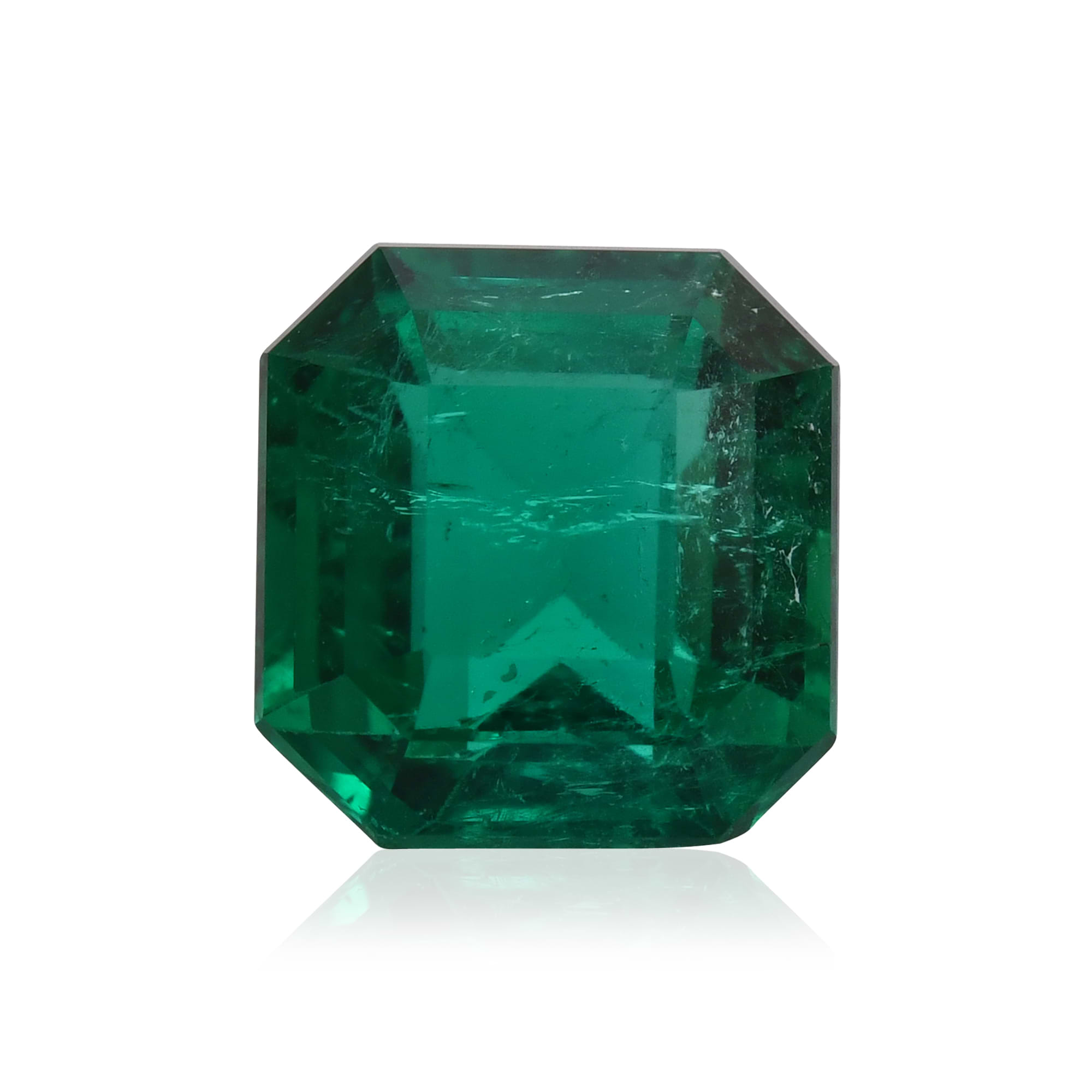
What an emerald stone is worth, and why
Price per carat in emerald is set by four things, and weight is the one that matters least on its own.
- Color does most of the work. The most valuable green is vivid and deeply saturated but still open enough to transmit light. Greater intensity increases value, and a slight yellow warmth is the classic Colombian signature.
- Clarity is graded as a treatment, not a grade. What you are reading is the degree of oil, from none through minor, moderate and significant. Less treatment means more of what you see is the stone.
- Origin carries its own premium. Colombia prices above everything else, and within Colombia the Muzo name prices above the rest.
- Size is genuinely scarce. Clean emerald above 2 carats is far rarer than the weight suggests, so price per carat steps up at the weight breaks.
Where emeralds come from
- Colombia is the benchmark, producing a warm, yellow-green that the trade has treated as the ideal for five centuries. Muzo is the most celebrated district and the name that moves price on its own.
- Zambia is now the second largest source. Higher iron gives a cooler, bluer green, and the rough tends to form cleaner, so many Zambian stones need less oil than comparable Colombian material.
- Brazil produces large quantities across a wide quality range, generally lighter and more included.
- Ethiopia is a newer source, with strong saturation and material that is still establishing itself in the market.
Origin affects price separately from appearance, which is why a laboratory origin opinion matters once a stone reaches any real value.
Reading the oil line on a certificate
This is the single most useful line on an emerald report and the one that explains most unexplained price gaps.
- None is rare and commands a large premium
- Minor is common in fine stones and barely affects value
- Moderate is normal commercial material
- Significant means the stone leaned heavily on treatment, and it should be priced well below a similar looking stone with minor oil
Oil is not permanent and can be replaced by a jeweler after many years. That is maintenance, not damage, and it applies to nearly every emerald from every source.
Shape, and what you actually get for the weight
Emerald is cut in the step cut named after it for a reason. Rough emerald crystals are long and hexagonal, the shape wastes less, and the clipped corners protect the most vulnerable part of the stone.
- Emerald cut shows color depth and the jardin rather than sparkle, and is the traditional choice
- Oval, pear and marquise face up larger than a round or cushion of the same weight, so they give more visible spread per carat
- Round and radiant return more light, which suits paler or cooler material
- Heart and cushion hold color well through the center and suit deeper greens
Emerald is also less dense than ruby or sapphire, so a one carat emerald faces up slightly larger than a one carat sapphire. Compare by millimeter rather than carat when you are matching a stone to a setting.